
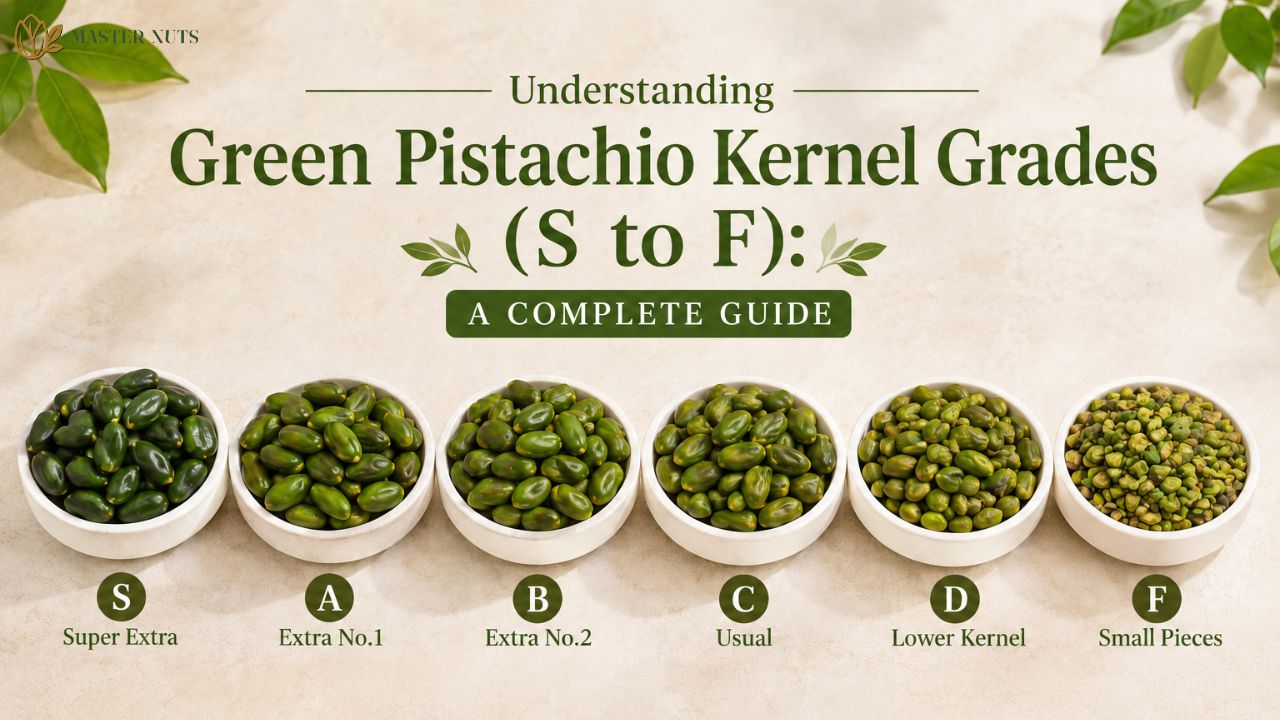
Green pistachio kernels are one of the most valuable ingredients used in premium desserts, gelato, pastries, chocolate, and food manufacturing. But if you have ever sourced pistachios for your business, you have probably encountered grading labels like:
- S Grade
- A Grade
- B Grade
- C Grade
- D Grade
- F Grade
For many B2B buyers, these grades can initially seem confusing. However, understanding pistachio grading is essential because it directly affects:
- Product appearance
- Flavor quality
- Production cost
- Customer perception
- Profit margins
Choosing the wrong grade can either unnecessarily increase your costs or reduce the quality of your final product.
This guide explains what pistachio kernel grading means, the differences between grades S to F, and how to choose the right option for your business.
What Does Pistachio Grading Mean?
Green pistachio kernel grading is mainly based on:
- Green color intensity
- Kernel appearance
- Purity
- Size consistency
- Percentage of green kernels
In most commercial grading systems, the greener the kernel, the higher the grade and price.
Why?
Because bright green pistachios are considered:
- More visually attractive
- More premium
- Better for luxury desserts and gelato
- Higher in perceived quality
As the grade moves from S toward F:
- Green intensity decreases
- Yellow and brown tones increase
- The product becomes more suitable for industrial or cost-sensitive applications
Why Green Color Matters in Food Businesses
For many food products, visual appearance is almost as important as flavor.
For example:
- Premium pistachio gelato is expected to have a natural green color
- Luxury pastries often use bright green garnish for presentation
- High-end chocolate brands use vivid green kernels to signal premium quality
Using a lower-grade pistachio in these products may affect customer perception even if the flavor is still acceptable.
On the other hand, some industrial applications prioritize cost efficiency over appearance, making lower grades more practical.
Understanding Pistachio Kernel Grades (S to F)
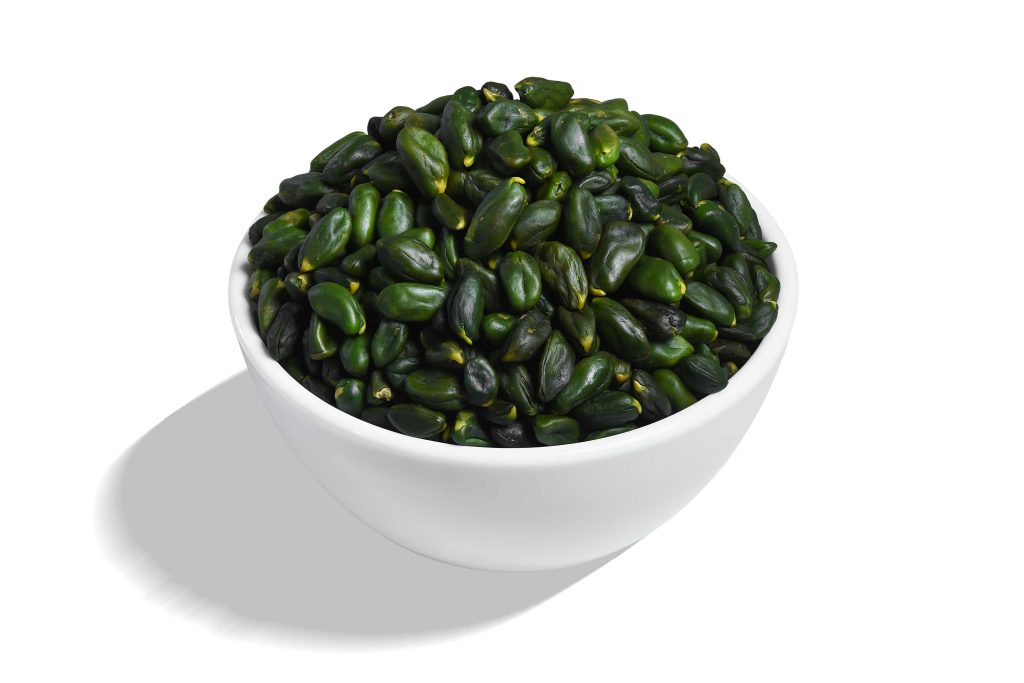
S Grade Pistachio Kernel
Characteristics
- Deep, vibrant green color
- Minimal yellow tones
- Premium appearance
- Highest purity level
Best Applications
- Luxury gelato
- Premium pastries
- Gourmet desserts
- High-end chocolate
- Decorative toppings
Business Insight
S Grade is typically the most expensive option because of its strong visual appeal and premium positioning.
Brands targeting luxury customers often choose S Grade to enhance product presentation and perceived quality.
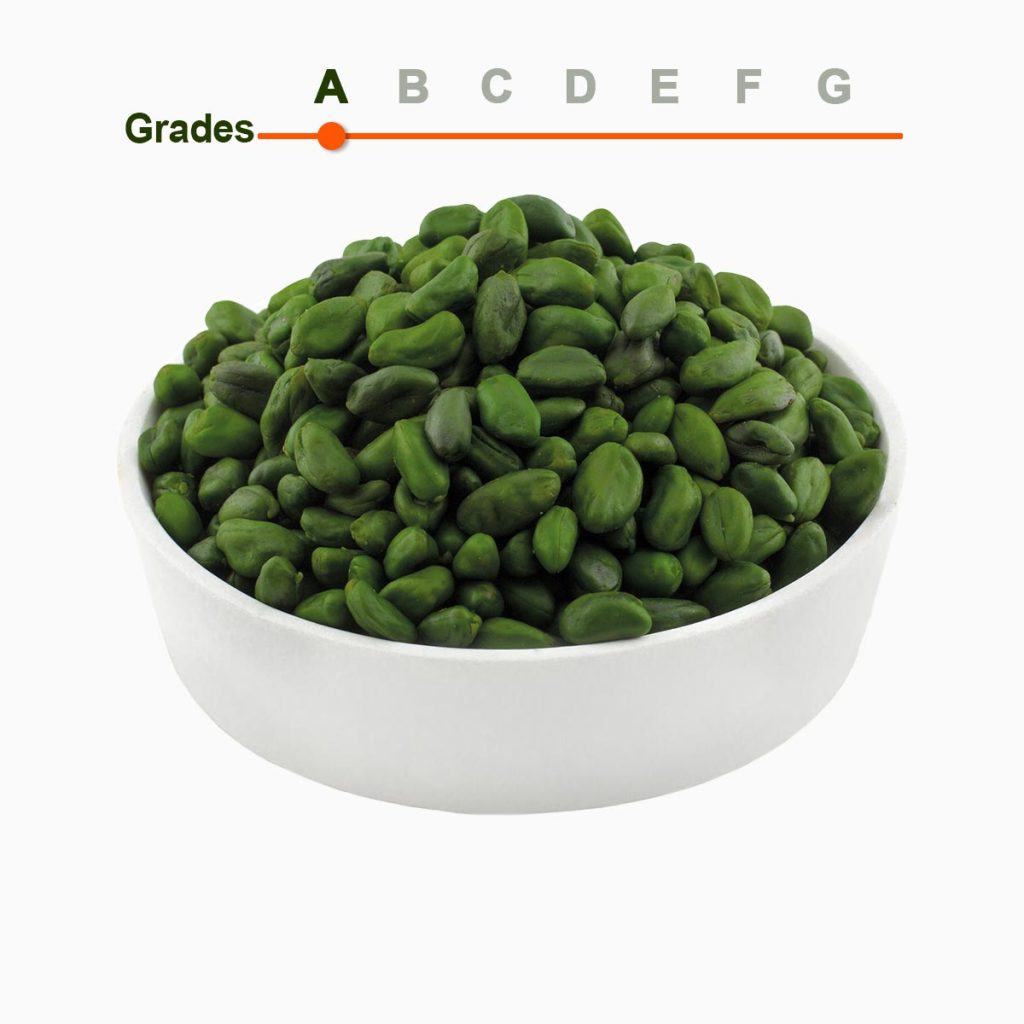
A Grade Pistachio Kernel
Characteristics
- Strong green color
- Slightly less intense than S Grade
- Excellent overall appearance
Best Applications
- Premium bakery products
- Pistachio creams
- High-quality desserts
- Premium fillings
Business Insight
A Grade often offers one of the best balances between quality and cost.
Many professional bakeries and dessert brands use A Grade because it still delivers strong visual appeal without the premium pricing of S Grade.
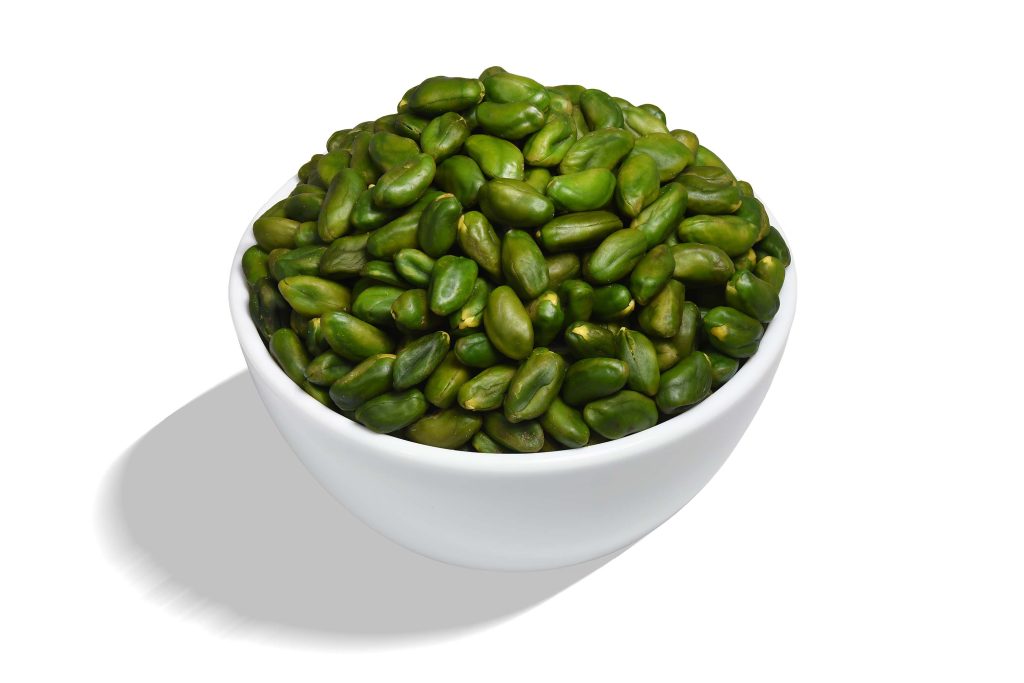
B Grade Pistachio Kernel
Characteristics
- Medium green color
- More yellow-green tones
- Good flavor consistency
Best Applications
- Pistachio paste production
- Bakery products
- Commercial dessert manufacturing
- Ice cream production
Business Insight
B Grade is commonly used in production environments where pistachios are processed further and appearance is less critical.
For example, once pistachios are turned into paste, slight color differences become less noticeable.
C Grade Pistachio Kernel
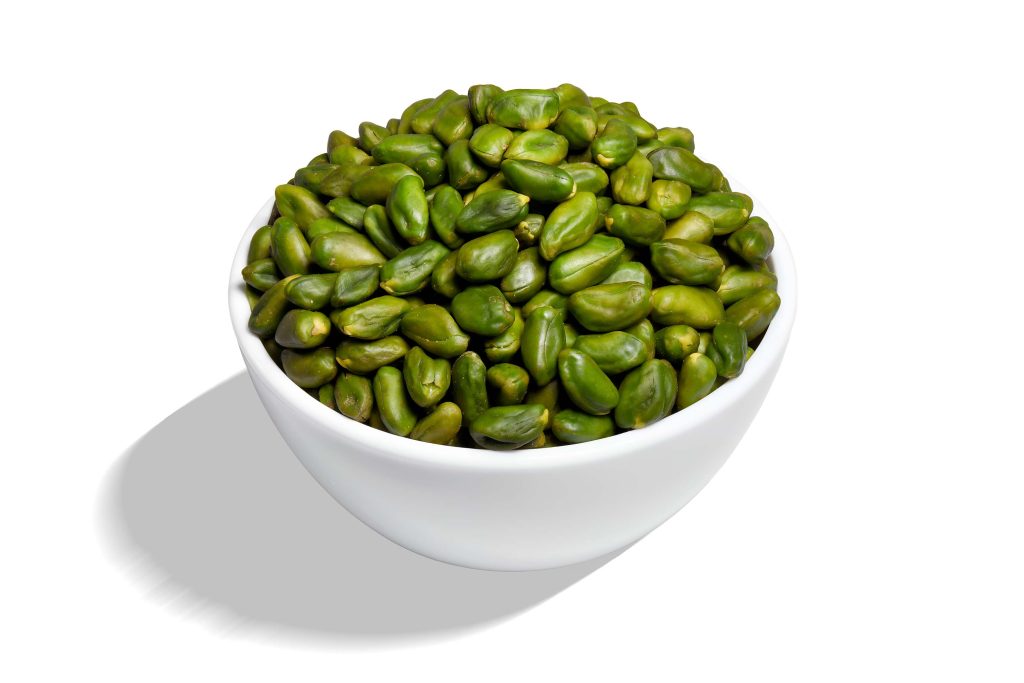
Characteristics
- Lighter green color
- Noticeable yellow tones
- Less visual uniformity
Best Applications
- Industrial baking
- Confectionery production
- Large-scale manufacturing
- Flavored products
Business Insight
C Grade is often chosen for products where pistachio is only one part of the recipe and visual appearance is not the main selling point.
It allows manufacturers to reduce raw material costs while still maintaining pistachio flavor.
D Grade Pistachio Kernel
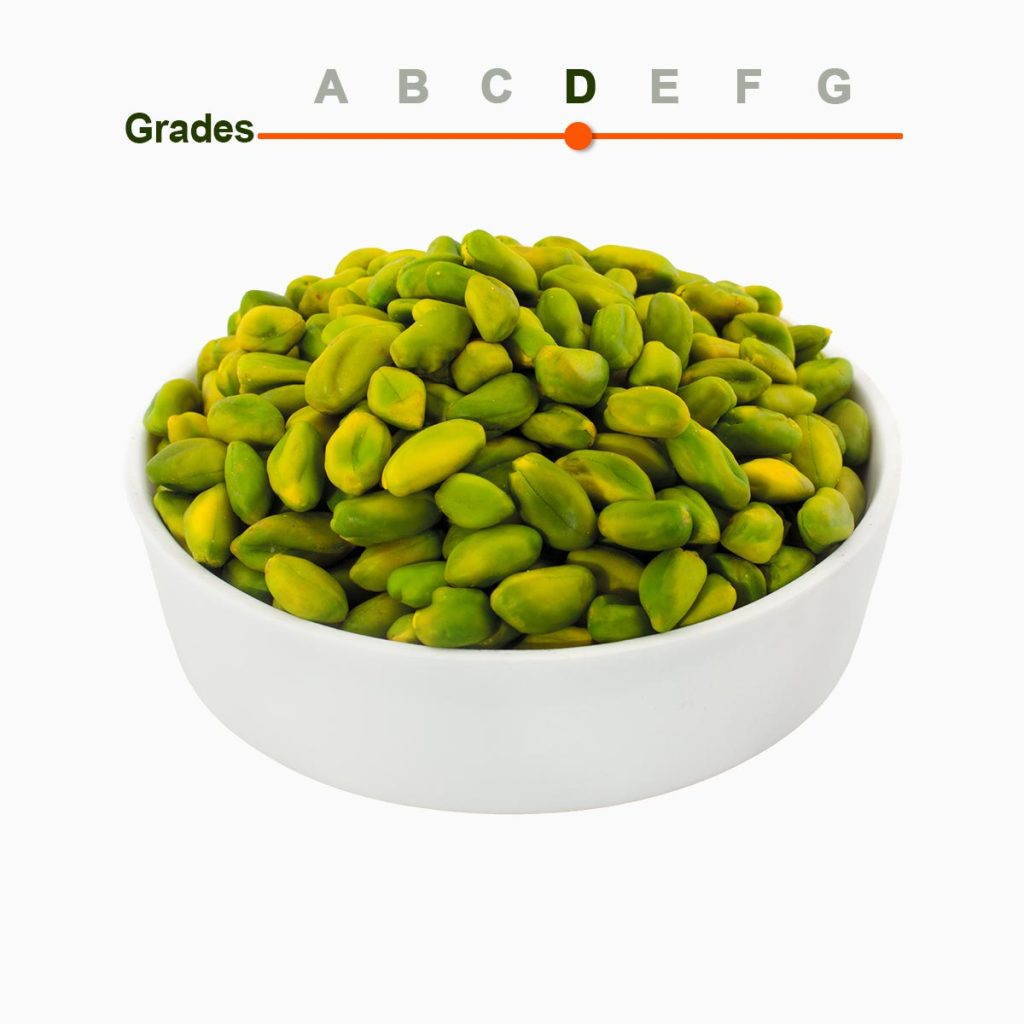
Characteristics
- Limited green color
- Higher yellow and brown tones
- Lower visual quality
Best Applications
- Industrial food processing
- Blended ingredients
- Flavor-focused manufacturing
Business Insight
D Grade is typically used where:
- Pistachios are heavily processed
- Appearance is hidden
- Cost efficiency is prioritized
Examples include:
- Industrial fillings
- Mass-market products
- Processed spreads
F Grade Pistachio Kernel
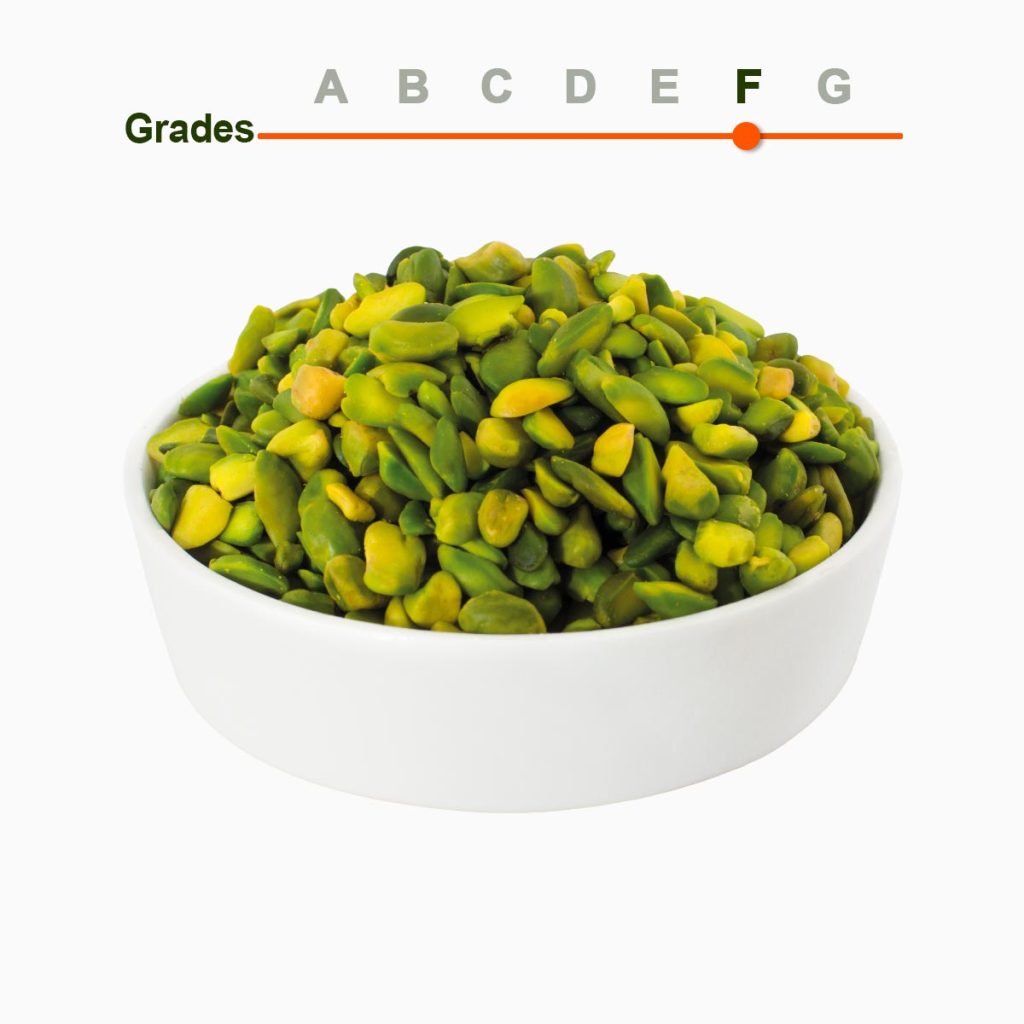
Characteristics
- Minimal green appearance
- Mostly yellow or brownish color
- Lowest visual grade
Best Applications
- Industrial pistachio powder
- Flavoring applications
- Bulk ingredient manufacturing
Business Insight
F Grade is usually the most economical option and is commonly used when:
- Color does not matter
- Pistachio is blended with other ingredients
- Cost control is the primary goal
Pistachio Kernel Grades Comparison Table
| Grade | Green Color Intensity | Visual Quality | Typical Usage | Price Level |
| S Grade | Extremely high | Luxury premium | Gelato, gourmet desserts | Very High |
| A Grade | High | Premium | Bakery, fillings, desserts | High |
| B Grade | Medium | Good commercial quality | Paste, bakery production | Medium |
| C Grade | Moderate | Standard industrial | Manufacturing, confectionery | Medium-Low |
| D Grade | Low | Industrial quality | Processed foods | Low |
| F Grade | Very low | Basic industrial | Powder, flavoring | Lowest |
Which Pistachio Grade Is Best for Different Businesses?
Gelato Shops
Recommended Grades:
- S Grade
- A Grade
Why?
Color is extremely important in premium gelato presentation. Customers expect vibrant natural green pistachio gelato.
Bakeries and Pastry Shops
Recommended Grades:
- A Grade
- B Grade
Why?
Bakeries need a balance between:
- Appearance
- Flavor
- Cost efficiency
A Grade works well for premium pastries, while B Grade is often suitable for fillings and baked applications.
Chocolate and Dessert Brands
Recommended Grades:
- S Grade for decoration
- B or C Grade for internal fillings
Why?
Many brands use premium visible pistachios externally while controlling costs internally.
Food Manufacturers
Recommended Grades:
- C Grade
- D Grade
- F Grade
Why?
Industrial production often focuses more on:
- Price stability
- Bulk purchasing
- Processing efficiency
Appearance may not matter after grinding or blending.
How to Choose the Right Grade for Your Business
Choosing the correct pistachio grade depends on your product goals, production process, and market positioning.
Choose S or A Grade If:
- Your product is premium
- Pistachio is visually visible
- Appearance impacts customer perception
- You target luxury customers
Examples:
- Luxury gelato
- Gourmet pastries
- High-end chocolates
Choose B or C Grade If:
- Pistachio is part of a recipe
- Processing reduces visual importance
- You need balanced cost and quality
Examples:
- Pistachio fillings
- Bakery products
- Pistachio cream
Choose D or F Grade If:
- Cost efficiency is the priority
- Pistachio is heavily processed
- Appearance is not visible
Examples:
- Industrial food manufacturing
- Powder production
- Large-scale processed foods
Final Thoughts
Understanding green pistachio kernel grades is essential for making smarter purchasing decisions in the food industry.
Higher grades offer:
- Better color
- Stronger premium perception
- Greater visual impact
Lower grades offer:
- Better cost efficiency
- Practicality for industrial use
- Suitable performance in processed products
The best grade for your business is not always the highest grade—it is the one that matches your product goals, customer expectations, and production economics.
Before placing large orders, many businesses test multiple grades to compare:
- Appearance
- Flavor performance
- Production behavior
- Cost impact
This approach helps optimize both quality and profitability.
Looking for Green Pistachio Kernels?
Whether you need premium S Grade kernels for luxury desserts or industrial-grade pistachios for large-scale manufacturing, working with the right supplier ensures consistency, stable quality, and better production results.
👉 Request pricing, samples, or technical specifications to find the right pistachio grade for your business.
Leave a Reply