
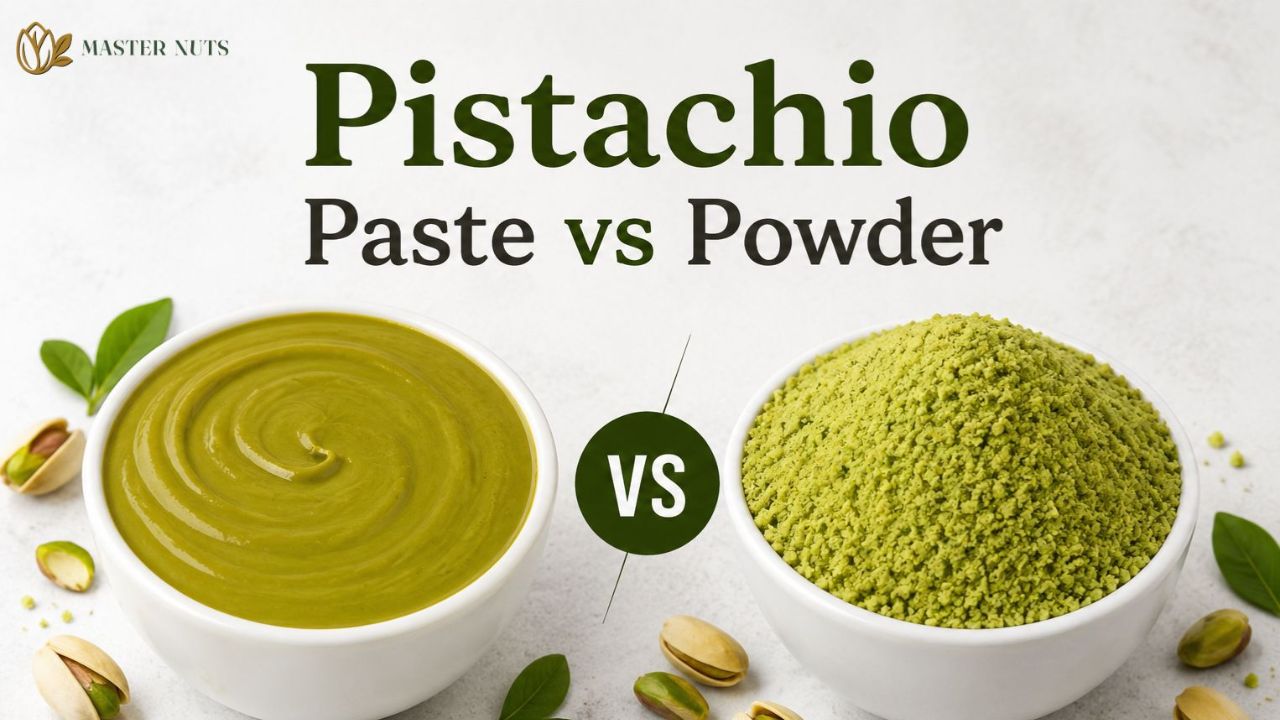
Pistachio has become one of the most valuable ingredients in premium desserts, bakery products, gelato, and confectionery across the UAE and Middle East. But for many food businesses, one important question comes up early in product development:
Should you use pistachio paste or pistachio powder?
While both products come from pistachios, they behave very differently in recipes, production, texture, flavor delivery, and even cost efficiency.
For bakeries, gelato shops, cafes, and food manufacturers, choosing the wrong format can affect:
- Product consistency
- Flavor intensity
- Texture
- Shelf life
- Production efficiency
- Final product cost
This guide compares pistachio paste and pistachio powder from a practical business perspective to help you choose the right option for your products.
What Is Pistachio Paste?
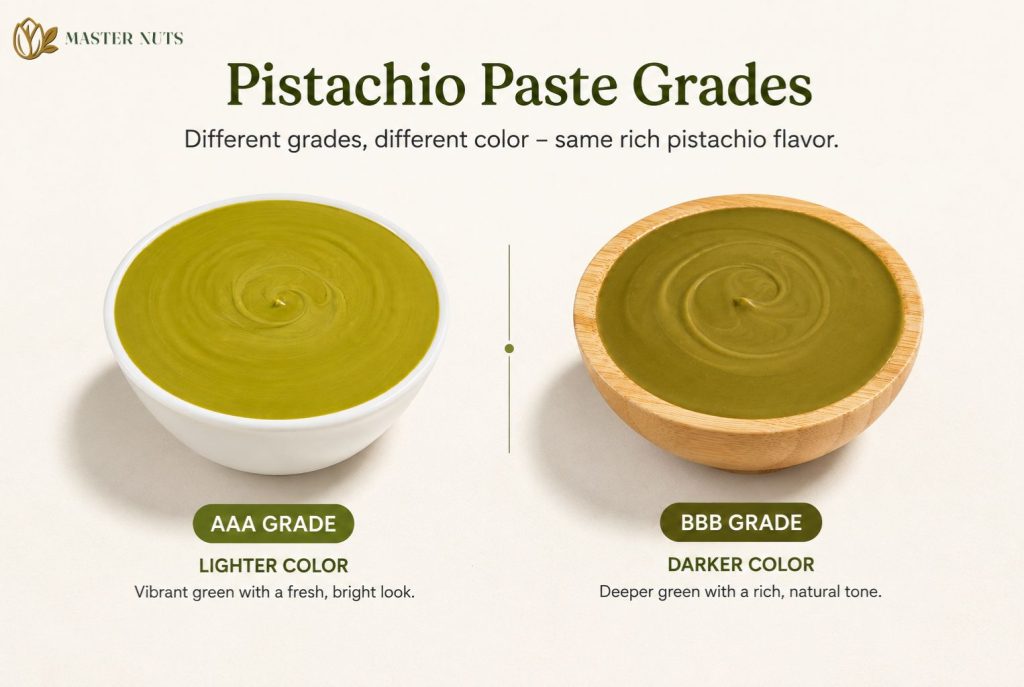
Pistachio paste is made by grinding pistachio kernels into a smooth, oily paste. Depending on the grade and production method, the paste can range from bright green premium paste to darker, more roasted-looking versions.
Some suppliers also offer different commercial grades such as:
- AAA Pistachio Paste
- BBB Pistachio Paste
- Standard Industrial Grade Paste
These grades usually differ in:
- Color intensity
- Percentage of green kernels
- Flavor strength
- Oil content
- Price
Premium grades are often used in luxury desserts and artisanal gelato, while commercial grades are preferred for industrial manufacturing where cost control is important.
What Is Pistachio Powder?
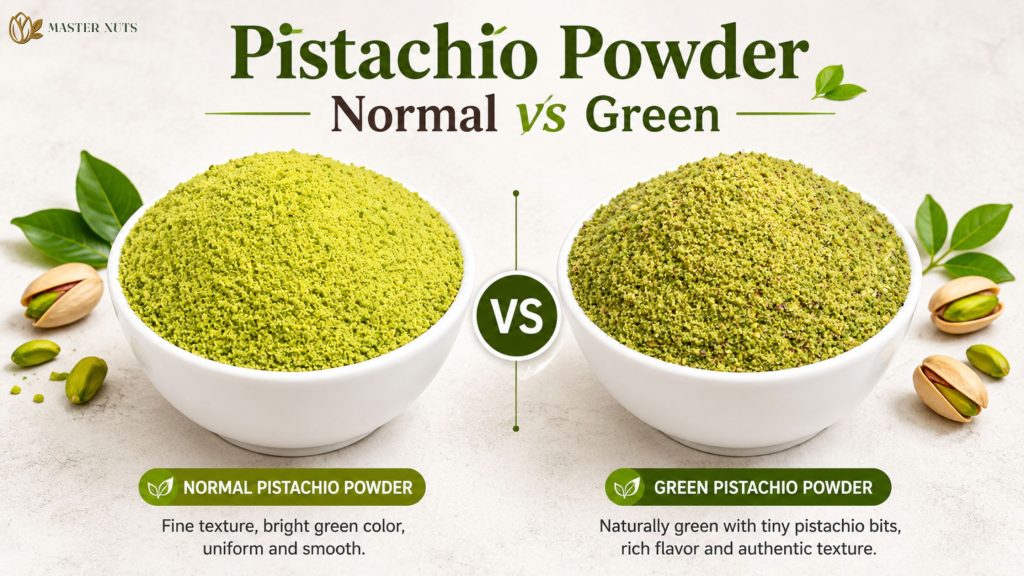
Pistachio powder is produced by grinding pistachios into a dry, fine texture similar to flour or meal.
Unlike paste, pistachio powder contains far less free oil on the surface, making it easier to blend into dry recipes and bakery mixes.
The texture can vary from:
- Ultra-fine powder
- Medium grind
- Coarser pistachio meal
Color also varies depending on the percentage of green kernels used.
👉Pistachio Powder Product Page
Pistachio Paste vs Powder: Key Differences
| Feature | Pistachio Paste | Pistachio Powder |
| Texture | Smooth, creamy | Dry, fine |
| Fat Content | High | Lower surface oil |
| Flavor Intensity | Strong and rich | More subtle |
| Moisture Impact | Adds richness and moisture | Keeps recipes dry |
| Color Quality | Usually more vibrant | Depends on grind and grade |
| Best Applications | Gelato, fillings, creams | Baking, coatings, toppings |
| Processing Ease | Better for emulsions | Better for dry mixing |
| Cost | Usually higher | Often more economical |
Flavor Comparison
Pistachio Paste: Richer and More Intense
Because pistachio paste retains more natural oil, it usually delivers:
- Stronger aroma
- Deeper pistachio flavor
- Creamier mouthfeel
This makes it ideal for premium products where pistachio is the hero flavor.
For example:
- Pistachio gelato
- Pistachio cream fillings
- Spreadable pistachio creams
- Luxury desserts
In high-end cafes and dessert shops, customers often expect a bold pistachio flavor profile. Paste performs much better in these cases.
Pistachio Powder: Balanced and Controlled
Pistachio powder delivers a lighter flavor profile and works better when pistachio is part of a broader recipe.
For example:
- Sponge cakes
- Cookies
- Macarons
- Bakery doughs
It allows manufacturers to add pistachio flavor without dramatically changing texture or fat levels.
This is especially important in industrial baking where recipe consistency matters.
Texture and Processing Differences
Why Gelato Shops Prefer Pistachio Paste
Gelato businesses usually prefer paste because:
- It blends smoothly into milk and cream bases
- Natural oils improve mouthfeel
- Flavor disperses evenly
Premium pistachio gelato almost always uses pistachio paste rather than powder.
High-grade AAA pistachio paste is especially popular because of its:
- Bright green color
- Intense flavor
- Premium appearance
Why Bakeries Often Prefer Pistachio Powder
In bakery production, too much oil can disrupt recipes.
Pistachio powder works better because it:
- Maintains dough structure
- Reduces excess moisture
- Mixes evenly with flour
For products like:
- Pistachio cookies
- Cake batters
- Pastry dough
- Macarons
powder is usually more practical and cost-efficient.
Use Cases by Food Business Type
Gelato Shops
Best Choice: Pistachio Paste
Why?
- Better creaminess
- Stronger flavor
- Better color performance
Many gelato brands in the UAE use premium green pistachio paste to create a more authentic Italian-style product.
Bakeries
Best Choice: Pistachio Powder
Why?
- Easier mixing
- Better baking consistency
- Lower oil interference
Powder is particularly useful in large-scale bakery production.
Pastry & Dessert Brands
Best Choice: Combination of Both
Many pastry kitchens actually combine paste and powder:
- Paste for flavor depth
- Powder for structure and decoration
For example:
- Pistachio éclair filling → paste
- Pistachio sponge layer → powder
- Pistachio topping → powder or diced pistachios
Food Manufacturers
Depends on Production Goals
Manufacturers usually choose based on:
- Production line compatibility
- Cost targets
- Shelf life requirements
- Product positioning
Mass-market products may use commercial-grade powder for efficiency, while premium SKUs may use AAA pistachio paste.
Pros and Cons
Pistachio Paste
Pros
- Rich flavor
- Creamy texture
- Premium appearance
- Better for luxury desserts
- Strong aroma
Cons
- Higher cost
- Higher oil content
- Can affect bakery structure
- Requires careful storage
Pistachio Powder
Pros
- Easy to mix
- Better for dry recipes
- More cost-efficient
- Longer handling flexibility
- Good for large-scale baking
Cons
- Less intense flavor
- Less creamy texture
- Premium color may be weaker
- Not ideal for gelato bases
How to Choose the Right Option for Your Business
Choose Pistachio Paste If:
- You produce gelato or ice cream
- Pistachio is your main flavor
- You want premium positioning
- Texture richness matters
- You need strong aroma and color
Choose Pistachio Powder If:
- You run a bakery
- You need dry ingredient compatibility
- You produce cakes or cookies
- Cost control is important
- You need scalable production consistency
Use Both If:
- You produce layered desserts
- You want flavor + structure balance
- You create premium pastries
- You need different pistachio textures in one product
Many successful dessert brands in the Middle East use multiple pistachio formats together to achieve better product complexity and visual appeal.
Final Thoughts
There is no universal “better” option between pistachio paste and pistachio powder. The right choice depends entirely on:
- Your product category
- Production process
- Target market
- Budget
- Desired flavor intensity
For premium gelato and fillings, pistachio paste is usually the superior option.
For bakery applications and dry mixes, pistachio powder often delivers better operational performance.
The best approach for many food businesses is to test both formats and evaluate:
- Flavor performance
- Recipe stability
- Production efficiency
- Customer response
Looking for High-Quality Pistachio Ingredients?
Whether you need premium AAA pistachio paste for gelato or cost-efficient pistachio powder for bakery production, choosing the right supplier is critical for consistency and long-term product quality.
👉 Request pricing, samples, or technical specifications to find the right pistachio ingredient for your business.
Leave a Reply