
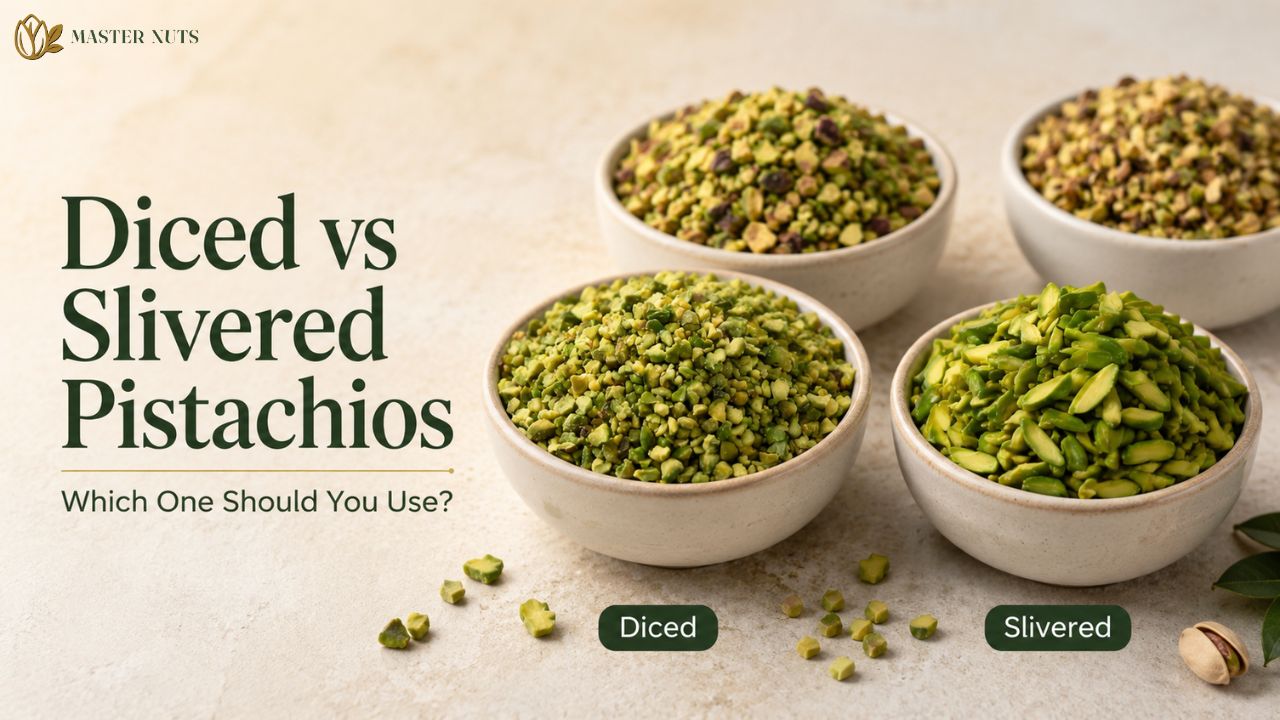
A pistachio topping can change the whole look of a dessert.
Same nut. Different cut. Different result.
For bakeries, cafes, dessert shops, chocolate brands, and food manufacturers, the choice between diced and slivered pistachios affects more than decoration. It affects bite, portion control, cost, production speed, and how premium the final product feels.
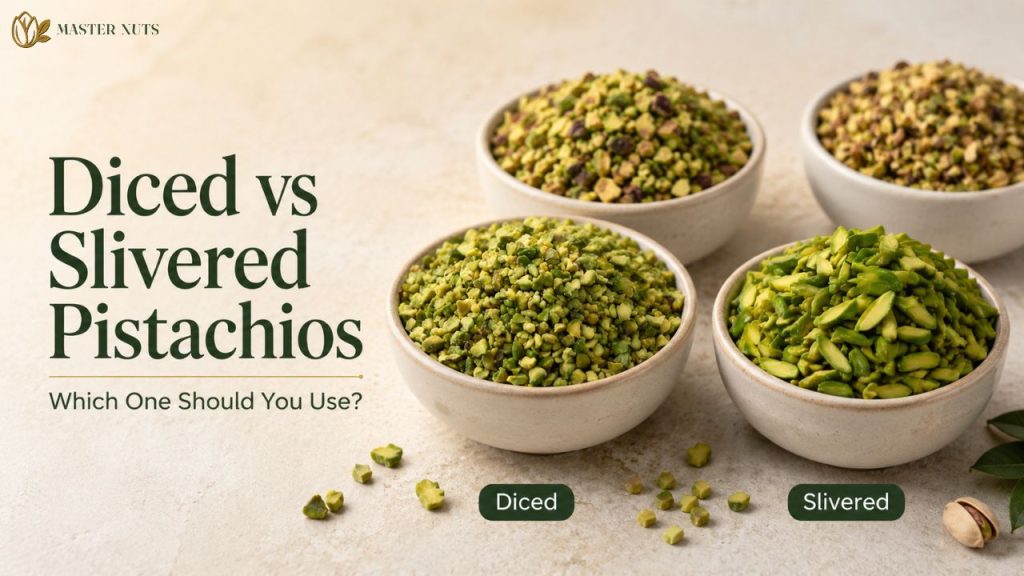
Diced pistachios give you a stronger crunch and better coverage.
Slivered pistachios give you a cleaner, more refined look.
Both have a place in professional food production. The right choice depends on the product sitting in front of you.
- What are diced pistachios?
- What are slivered pistachios?
- Shape: small pieces vs thin slices
- Texture: crunch vs soft bite
- Look: bold coverage vs clean finish
- Usage in bakery products
- Usage in desserts
- Usage in chocolate and confectionery
- Cost and waste control
- Which one should you use?
- When to use both
- How to choose for your business
- Need diced or slivered pistachios for production?
What are diced pistachios?
Diced pistachios are pistachio kernels cut into small pieces.
Common sizes include 2 to 4 mm and 4 to 6 mm. The exact size matters because it changes how the topping behaves on the product.
Smaller diced pistachios work well when you need even coverage. Larger pieces give more bite and a stronger pistachio presence.
Bakeries often use diced pistachios because they’re easy to apply at speed. You can sprinkle them over 100 croissants, cookies, or cake slices without slowing down the team.
That matters during morning production.
What are slivered pistachios?
Slivered pistachios are thin slices of pistachio kernel.
They look longer and more delicate than diced pieces. The shape is flatter, so they sit nicely on pastries, cakes, and Middle Eastern desserts.
Slivered pistachios are often used when appearance carries more weight.
Think baklava. Kunafa. Premium cakes. Hotel dessert trays. Products where the customer sees the topping before anything else.
The texture is lighter than diced pistachios. You still get pistachio flavor, but the bite is softer.
Shape: small pieces vs thin slices
Shape is the first difference.
Diced pistachios are small, block-like pieces. They create a rougher texture on the surface of a product.
Slivered pistachios are thin, flat slices. They create a cleaner line and a more elegant finish.
This affects how each one looks on different products.
A pistachio cookie can look better with diced pistachios because the small pieces spread across the surface.
A slice of pistachio cake can look better with slivered pistachios because the long slices feel more intentional.
And yes, customers notice. Maybe they don’t name the cut, but they feel the difference.
Texture: crunch vs soft bite
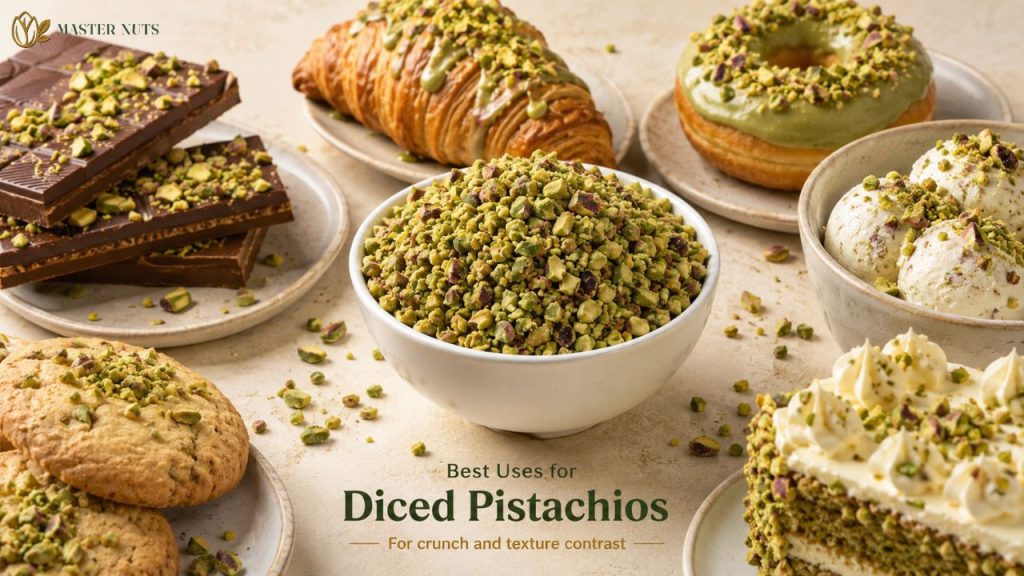
Diced pistachios give a stronger crunch.
That makes them useful for products that need texture contrast, like:
- Chocolate bars
- Cookies
- Croissants
- Donuts
- Ice cream toppings
- Cake decoration
Slivered pistachios give a lighter bite.
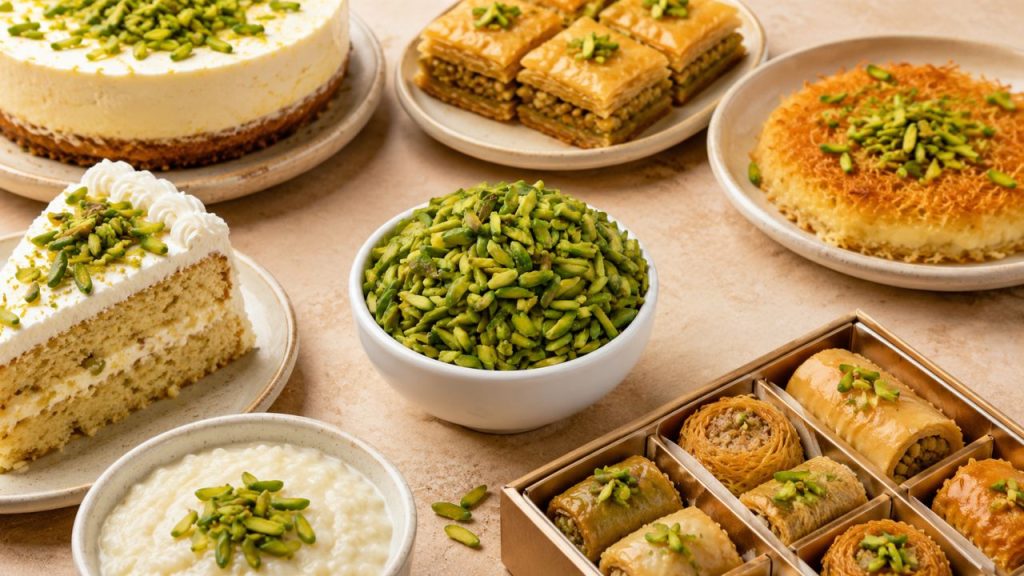
They work better when the dessert already has a soft or layered texture. They don’t fight the product. They sit on top and make it look finished.
Use slivered pistachios for:
- Baklava
- Kunafa
- Cheesecake
- Cream cakes
- Rice pudding
- Premium pastry boxes
Texture matters because it changes the eating experience.
If your product needs crunch, use diced. If your product needs a neat finish, use slivered.
Look: bold coverage vs clean finish
Diced pistachios create coverage.
They fill space quickly. A small amount can make a pastry look richer because the pieces spread well.
This is useful when you want pistachio to be visible across the whole product.
Slivered pistachios create shape.
They don’t cover as densely as diced pistachios, but they look more refined. They work well when you want a controlled, decorative style.
For example, a bakery selling pistachio croissants might use diced pistachios on top because the product needs to look full and generous.
A hotel pastry kitchen might use slivered pistachios on plated desserts because the finish needs to look cleaner.
Different jobs. Different cuts.
Usage in bakery products
Bakeries use diced pistachios when speed and coverage matter.
Good examples:
- Pistachio croissants
- Cookies
- Muffins
- Donuts
- Danish pastries
- Pound cakes
- Pistachio rolls
Diced pistachios are also easier to portion.
If your staff uses 5 grams per pastry, the result is fairly consistent. That helps with food cost control.
Slivered pistachios are better for bakery products where design matters.
Good examples:
- Cream cakes
- Tart slices
- Premium pastry boxes
- Layered cakes
- Gift desserts
They’re also useful when you want a more delicate surface.
A thick layer of diced pistachios can make some pastries look heavy. Slivered pieces keep the product lighter.
Usage in desserts
Dessert shops use both cuts, often in the same menu.
Diced pistachios work well on desserts that need texture:
- Ice cream cups
- Chocolate mousse cups
- Brownies
- Puddings
- Mini cakes
They give a clear pistachio bite.
Slivered pistachios work well on desserts that need a polished top:
- Kunafa cups
- Baklava plates
- Cheesecake slices
- Mahalabia
- Saffron milk cake
In Middle Eastern desserts, slivered pistachios often feel more traditional. They sit nicely over syrup, cream, and layered pastry.
For cafes, diced pistachios are usually more practical for fast service. For premium dessert boxes, slivered pistachios often look better.
Usage in chocolate and confectionery
Chocolate brands often prefer diced pistachios.
The reason is simple: diced pieces mix better into bars, pralines, clusters, and coated products.
They also give a more noticeable bite.
Use diced pistachios for:
- Chocolate bars
- Truffles
- Pistachio clusters
- Chocolate bark
- Date-filled chocolates
- Nougat
Slivered pistachios can still work in chocolate, mainly as surface decoration.
For example, a chocolate slab topped with slivered pistachios can look more premium. But for internal texture, diced pistachios usually perform better.
Cost and waste control
Diced pistachios are often easier to manage in production.
They’re simple to weigh, sprinkle, and spread. This helps reduce overuse.
Slivered pistachios need more careful handling. Thin pieces can break if they’re moved too roughly. They also require a cleaner application if the product is positioned as premium.
So if your bakery produces 1,000 pistachio items per day, diced pistachios may save time.
If your team produces 100 high-end dessert boxes per day, slivered pistachios may be worth the extra care.
Which one should you use?
Use diced pistachios when you need:
- Stronger crunch
- Fast topping application
- Better surface coverage
- Easier portion control
- A fuller pistachio look
Use slivered pistachios when you need:
- A cleaner finish
- A premium dessert look
- Light texture
- Better presentation for cakes and Arabic sweets
- A more delicate topping
Here’s the practical guide.
| Product type | Better choice | Why |
| Pistachio croissant | Diced pistachios | Better coverage and crunch |
| Cookies | Diced pistachios | Easy mixing and visible pieces |
| Chocolate bars | Diced pistachios | Stronger bite inside chocolate |
| Baklava | Slivered pistachios | Cleaner traditional finish |
| Kunafa | Slivered pistachios | Works well on syrup and cream |
| Cheesecake | Slivered pistachios | Neater top decoration |
| Ice cream cups | Diced pistachios | Better texture and topping spread |
| Premium cake slices | Slivered pistachios | More refined look |
When to use both
Some products work better with both cuts.
A pistachio cake can use pistachio paste in the cream, diced pistachios between layers, and slivered pistachios on top.
A chocolate dessert can use diced pistachios inside and slivered pistachios on the surface.
This gives the product more texture and a better finish.
For higher-margin desserts, using both can help the product feel richer without overloading one ingredient.
How to choose for your business
Start with the job the pistachio needs to do.
If the pistachio is there for crunch, use diced.
If the pistachio is there for presentation, use slivered.
If you’re managing high-volume bakery production, diced pistachios are usually easier to control.
If you’re selling premium desserts, cakes, or Arabic sweets, slivered pistachios can improve the final look.
Then test the cost per finished item.
Don’t compare only price per kilogram. Compare how much you use per product, how much waste you get, and how the final item sells.
A topping that costs slightly more can still make sense if it helps you sell the product at a better price.
Need diced or slivered pistachios for production?
At Master Nuts, we supply diced and slivered pistachios for bakeries, cafes, dessert shops, chocolate makers, and food manufacturers across the UAE and Middle East.
You can choose the cut based on your product, usage, production volume, and target price.
Request pricing, samples, or product specs, and our team will help you choose the right pistachio format for your business.

Leave a Reply