
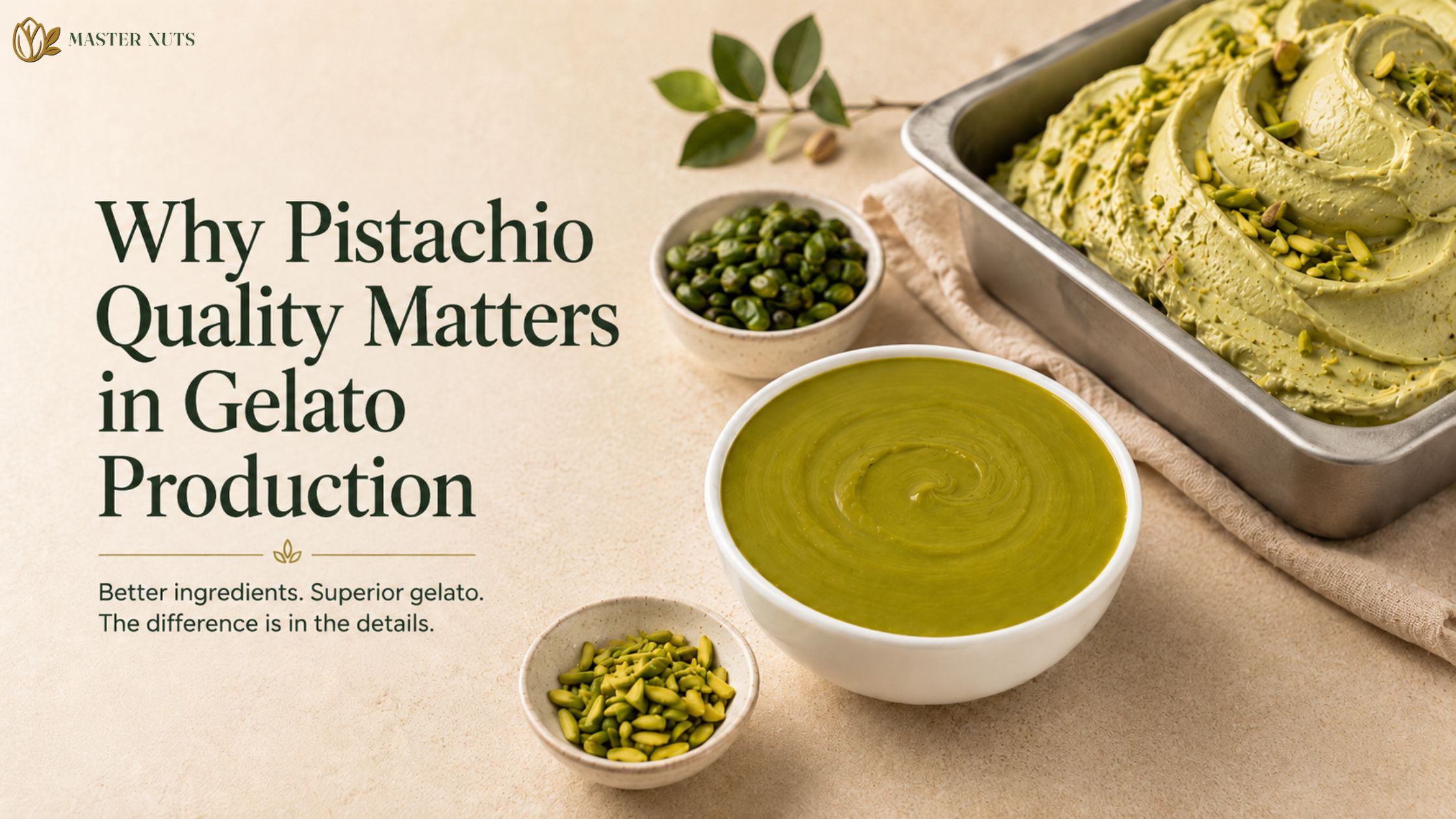
Pistachio gelato is one of the fastest ways to expose ingredient quality.
A weak vanilla can sometimes hide behind sugar.
Pistachio can’t.
If the paste is dull, the gelato looks tired. If the raw pistachio has a flat taste, the final scoop tastes flat too. If the paste has too much oil or uneven texture, the gelato base can feel heavy.
For gelato shops, cafes, hotels, and food manufacturers, pistachio quality shapes the product before the customer takes the first spoon.
- Good gelato starts with raw material
- Flavor gets muted when gelato is frozen
- Color sells before flavor does
- Texture depends on fat and processing
- Real example: the gelato shop adding a second branch
- Real example: the hotel buffet problem
- Real example: food manufacturing and repeat orders
- Grade selection matters
- How to test pistachio paste for gelato
- What buyers should ask suppliers
- Choosing the right paste for your gelato business
- Need pistachio paste for gelato production?
Good gelato starts with raw material
The quality of pistachio paste depends on the kernels used to make it.
Better kernels usually give better color, cleaner taste, and a smoother paste. Lower-grade kernels can still work in some recipes, but they need to match the product.
A gelato shop selling premium pistachio gelato in Dubai Mall has a different need than a factory producing pistachio-flavored cups for retail shelves.
The raw material affects:
- Color in the tray
- Flavor after freezing
- Mouthfeel
- Recipe stability
- Selling price
- Customer repeat purchase
That last one matters most.
A customer may try a weak pistachio gelato once. They rarely come back for a second scoop.
Flavor gets muted when gelato is frozen
Cold temperature makes flavor quieter.
That’s why pistachio paste must be strong enough before freezing. A paste that tastes mild in the bucket will usually taste weaker in the display cabinet.
Good pistachio paste has a clear nutty taste. It should feel natural, clean, and rich without bitterness.
Poor paste can taste:
- Stale
- Bitter
- Burnt
- Too oily
- Too sweet if mixed with fillers
And once it’s in the gelato base, fixing it is hard.
You can add more paste, but that increases cost. You can add flavoring, but customers who know pistachio will notice. You can add color, but then the product starts feeling less authentic.
A strong paste gives the recipe more room to breathe.
Color sells before flavor does
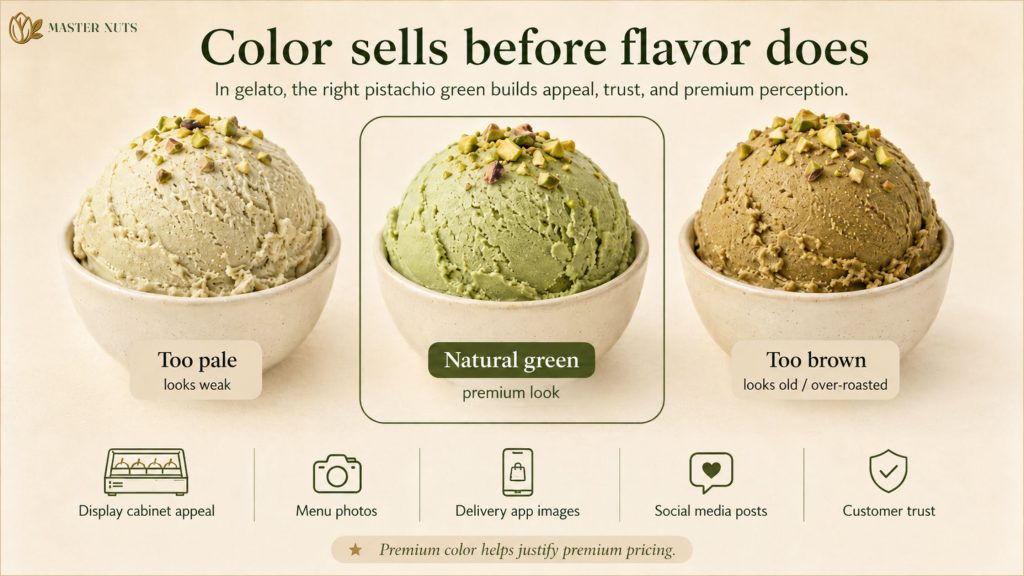
Gelato is visual.
Customers choose with their eyes first, especially when they’re standing in front of 12 or 24 flavors.
Pistachio has a specific expectation. People expect a natural green tone. Too pale, and it looks weak. Too bright, and it looks artificial. Too brown, and people may think it’s old or over-roasted.
For gelato shops, good color helps with:
- Display cabinet appeal
- Menu photos
- Delivery app images
- Social media posts
- Customer trust
Color also affects pricing.
A premium pistachio scoop has to look premium. If the color feels cheap, the price feels harder to defend.
Texture depends on fat and processing
Pistachio is naturally rich in oil.
That oil can make gelato feel creamy and full. But the paste has to be processed well.
A good pistachio paste blends into the gelato base without leaving an oily layer or grainy mouthfeel. The texture should feel smooth after freezing and holding.
Poor paste can create problems like:
- Heavy mouthfeel
- Weak mixing
- Oily finish
- Grainy texture
- Uneven product from batch to batch
This matters more when you scale.
One small batch may survive a paste problem. Daily production won’t forgive it.
Real example: the gelato shop adding a second branch
A gelato shop starts with 1 location.
The owner buys pistachio paste from different traders based on weekly price. Some weeks the paste is green. Some weeks it’s darker. Some weeks the flavor is stronger.
At first, the team adjusts the recipe by feel.
Then the shop opens a second branch.
Now the problem grows.
Branch 1 has a greener pistachio gelato. Branch 2 has a darker one. Customers take photos. Staff get questions. The owner has to explain why the same flavor looks different in 2 locations.
This is where quality consistency becomes a business issue.
A stable pistachio paste grade helps both branches serve the same product.
Real example: the hotel buffet problem
A hotel pastry team serves pistachio gelato during weekend brunch.
The product sits in front of guests for hours. The color has to hold. The texture has to stay clean. The taste has to feel premium because guests connect pistachio with luxury desserts.
If the paste is weak, the gelato gets ignored.
If the paste is oily, the texture feels wrong.
If the color is dull, the whole tray looks cheaper than the rest of the dessert station.
For hotels, ingredient quality affects the guest experience. The guest won’t ask which paste was used. They’ll just decide whether the dessert felt worth it.
Real example: food manufacturing and repeat orders
A food manufacturer produces pistachio gelato cups for cafes and small retailers.
The buyer expects the same product every month.
If the pistachio paste changes too much, the finished cup changes too. That creates complaints from distributors and customers.
For manufacturers, the main risk is repeatability.
They need paste that behaves the same way in mixing, freezing, storage, and packaging. A cheaper paste can become expensive if it creates rework, waste, or rejected batches.
Grade selection matters
Different pistachio paste grades fit different gelato goals.
AAA pistachio paste
AAA paste is usually better for premium gelato.
It has a cleaner green color and stronger visual appeal. It works well for gelato shops, hotel dessert menus, and brands that want pistachio to sit at the top of the menu.
Use it when the final product needs to look and taste premium.
BBB pistachio paste
BBB paste can work well for commercial gelato.
It may be darker or less green than AAA, but it can still give solid flavor. Many businesses choose BBB when they need a better cost per batch.
Use it when you need balance between taste, color, and production cost.
Brown pistachio paste
Brown paste often has a more roasted look and taste.
It can work in certain gelato styles, especially if the brand wants a deeper roasted profile. But it won’t give the same natural green look.
Use it when color is less central to the product.
USA pistachio paste
USA paste can fit businesses that want stable supply and a specific origin profile.
The color and flavor can differ from other origins, so testing matters.
Use it when supply planning is part of the buying decision.
How to test pistachio paste for gelato
Don’t judge paste only from the container.
Test it in the actual gelato base.
Check these points:
- Color after mixing
- Color after freezing
- Flavor after 24 hours
- Texture in the display tray
- Melting behavior
- Oil separation
- Cost per finished batch
- Staff and customer feedback
The 24-hour test is useful.
Some pastes taste good right after production but lose strength after freezing. Others hold flavor better.
Gelato needs that second type.
What buyers should ask suppliers
Before buying pistachio paste in bulk, ask for clear details.
Useful questions:
- Which grade is this paste?
- What is the origin?
- Is it suitable for gelato?
- What packaging sizes are available?
- How stable is the color across batches?
- Can I test samples first?
- Do you have AAA, BBB, brown, or USA paste?
- What is the recommended storage condition?
A good supplier should answer these without making the buyer chase basic information.
Choosing the right paste for your gelato business
Choose AAA paste if your gelato is positioned as premium and the color must look clean in the tray.
Choose BBB paste if you need a more cost-aware option for regular production.
Choose brown paste if your recipe benefits from a roasted profile and the green color has less weight.
Choose USA paste if origin, supply, or repeat purchasing is part of your sourcing plan.
The best choice comes from testing, tasting, and calculating the cost per finished batch.
Need pistachio paste for gelato production?
At Master Nuts, we supply pistachio paste for gelato shops, bakeries, cafes, hotels, and food manufacturers across the UAE and Middle East.
You can compare different grades, including AAA, BBB, brown, and USA pistachio paste, based on your gelato recipe, target price, and desired final look.
Request pricing, samples, or product specifications, and our team will help you choose the right pistachio paste for your production.
Leave a Reply