

A pistachio inclusion has to fit the chocolate before it can improve the product. Whole kernels may look generous in a thick bar and crowd a thin mould. Slivers create visible lines. Diced pieces spread smaller points through each portion.
The best starting cut comes from the bar geometry, desired bite and production method. Put those requirements in the brief before asking for samples.
- Read each shape as a different design tool
- Match the cut to the bar dimensions
- Compare distribution across finished portions
- Taste the bite at selling temperature
- Follow breakage through the line
- Consider roasting and ingredient condition
- Calculate cost per accepted bar
- Turn the chosen cut into a receiving standard
Read each shape as a different design tool
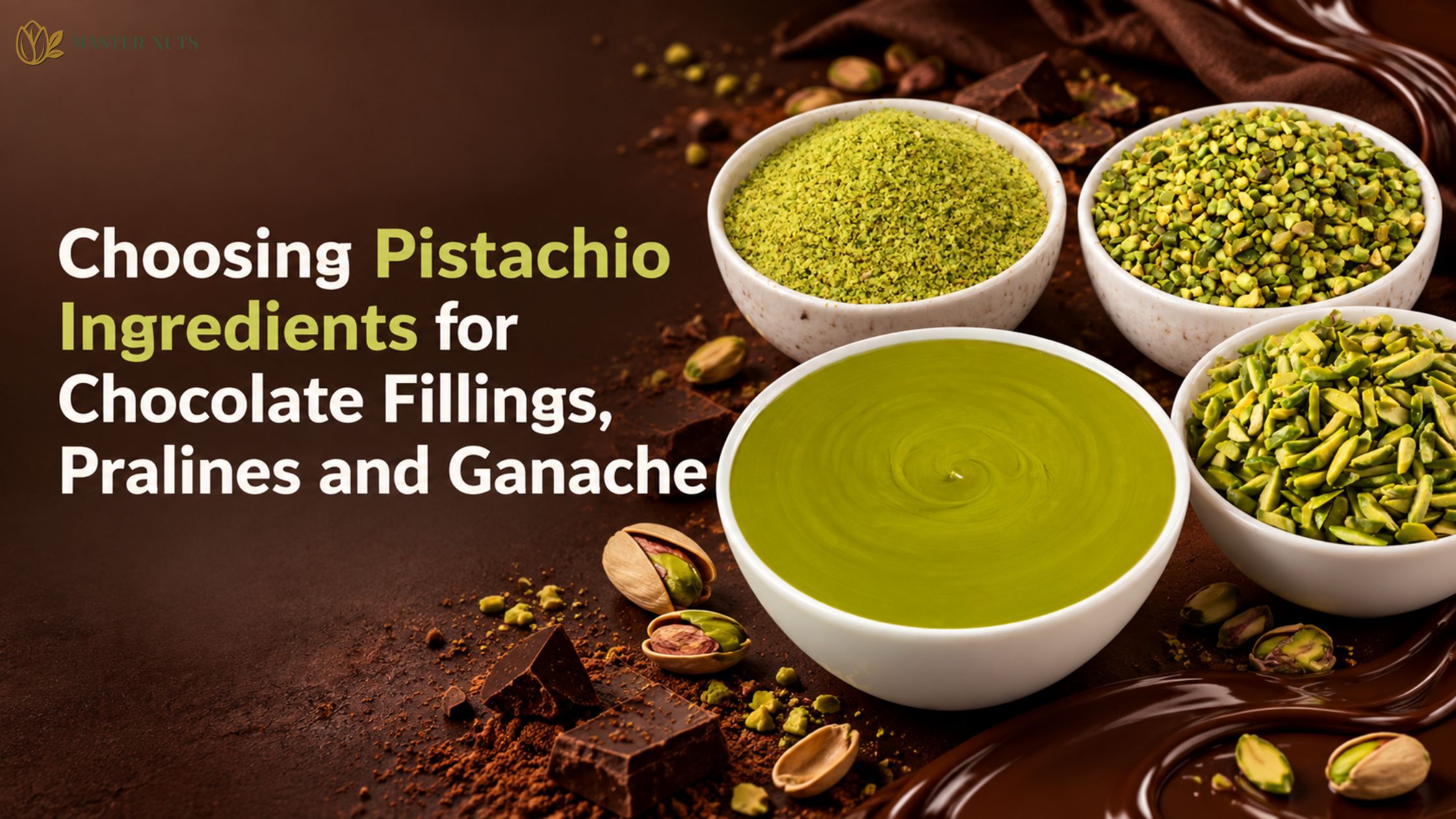
Diced pistachios are irregular pieces sold within a stated cut range. They create a scattered pattern and can place several small pieces in one portion.
Slivers are elongated strips. Their length makes them visually distinct, whether they sit inside the chocolate or on the surface. Breakage changes that effect, so the incoming sample and the pieces after handling should both be reviewed.
Whole kernels create a clear focal inclusion and a larger bite. They need enough space within the mould, cluster or confection. Halves and pieces may give a similar natural appearance with a different fit and cost.
| Format | Useful starting point | Production question |
| Diced | Distributed inclusions in bars, clusters and centres | Does each portion receive an acceptable amount without excess fines? |
| Slivered | Visible lines, surface designs and selected inclusions | Do the strips keep enough length through transfer and depositing? |
| Whole kernels | Thick bars, clusters or pieces built around a clear nut inclusion | Does the kernel fit the mould and create a comfortable bite? |
| Halves and pieces | Natural irregular appearance with more placement options | Can the allowed size range run consistently through the process? |
Match the cut to the bar dimensions
Measure the mould cavity, finished bar thickness and the width of each break segment. Then compare those dimensions with a representative sample.
A large inclusion can touch both sides of a thin bar, leave an uneven surface or weaken a break line. Smaller diced pieces have more places to settle, though they still need a distribution check. Long slivers may bridge across narrow spaces or protrude from a shallow layer.
Make a pilot batch and cut several bars through the centre. Inspect the chocolate around each piece, the surface and the planned snap lines. Use the result to set an acceptable size description for purchasing.
For filled bars, include the shell and filling depth in the check. An inclusion can fit the outer mould and still crowd the centre or block a depositor.
Compare distribution across finished portions
Equal ingredient weight does not guarantee equal customer experience. Whole kernels may be placed individually. Diced pieces and slivers often move through a hopper or mixture, where settling and refill practices can change distribution.
Sample finished pieces from the beginning, middle and end of the run. Count or weigh the inclusions where practical, and record any bar that misses the visual or bite target.
For surface application, prepare matching bars and apply equal weighed amounts of each cut. Then adjust each format to the lowest amount that meets the design. The second result belongs in the commercial cost comparison.
Photograph bars under the same light and from the selling angle. A top view shows coverage. A broken cross-section shows how the pieces sit inside the chocolate.
Taste the bite at selling temperature
Piece shape changes the way the customer meets the nut. A whole kernel creates a larger interruption in the chocolate. Diced pieces spread smaller bites. Slivers sit between those experiences, depending on thickness and breakage.
Serving temperature affects both chocolate firmness and perceived nut texture. Test at the conditions used for sale and consumption. Repeat the review after the normal storage period because moisture movement and fat migration can alter the finished bite.
Keep flavour scoring separate from shape. Cut size alone does not establish stronger pistachio flavour. Kernel treatment, freshness, dose and the chocolate recipe also affect the result.
Follow breakage through the line
Take a sample from the incoming bag, after transfer and after mixing or depositing. Compare the size distribution at each stage. This shows whether fines arrived with the ingredient or formed in your process.
Drop height, augers, narrow bends and repeated handling can damage pieces. Slivers deserve a close check because loss of length changes their visual role. Whole kernels can chip, and diced pieces can produce extra fines.
Record the equipment path used in the trial. A hand-mixed bench bar gives no evidence about hopper flow, feeder settings or depositor clearance. Use the equipment manufacturer’s particulate guidance and confirm performance on the actual line before full production.
Material recovered from the floor, guards or unsuitable contact areas should follow the site’s hygiene and waste procedure. Count unrecoverable material in the yield record.
Consider roasting and ingredient condition
Compare like with like. A raw diced sample and a roasted whole kernel differ in more than shape. Record kernel type, treatment, colour and lot before judging flavour or texture.
If the process includes roasting, establish the profile for each format. Smaller pieces can respond differently from whole kernels because their surface area and mass differ. Validate the result through sensory review and the company’s normal process controls.
Chocolate quality also depends on the ingredient’s storage history. Inspect aroma, pack condition and any sign of moisture or foreign odour before the trial.
Calculate cost per accepted bar
Compare the landed price, amount issued, material lost and number of bars that pass the brief. Add manual placement time for whole kernels or decorative slivers. Add sorting, line stops and rejected bars where they occur.
A larger piece may communicate a premium design with fewer placements. Diced material may distribute through a mechanised process with less manual work. The measured trial decides which effect applies to your line.
Packaging size and opened-pack handling can change waste too. Select a commercial pack that fits usage and storage after the ingredient has passed the product test.
Turn the chosen cut into a receiving standard
Keep the approved product code, kernel type, cut description, treatment and lot. Add a photograph of the accepted bar, the inclusion dose and any limit for fines, breakage or oversized pieces that affects production.
Master Nuts supplies diced pistachios, slivered pistachios and pistachio kernels for chocolate and confectionery production. Share the bar dimensions, application method, expected usage and destination through the inquiry form or WhatsApp to request suitable samples.



Leave a Reply