
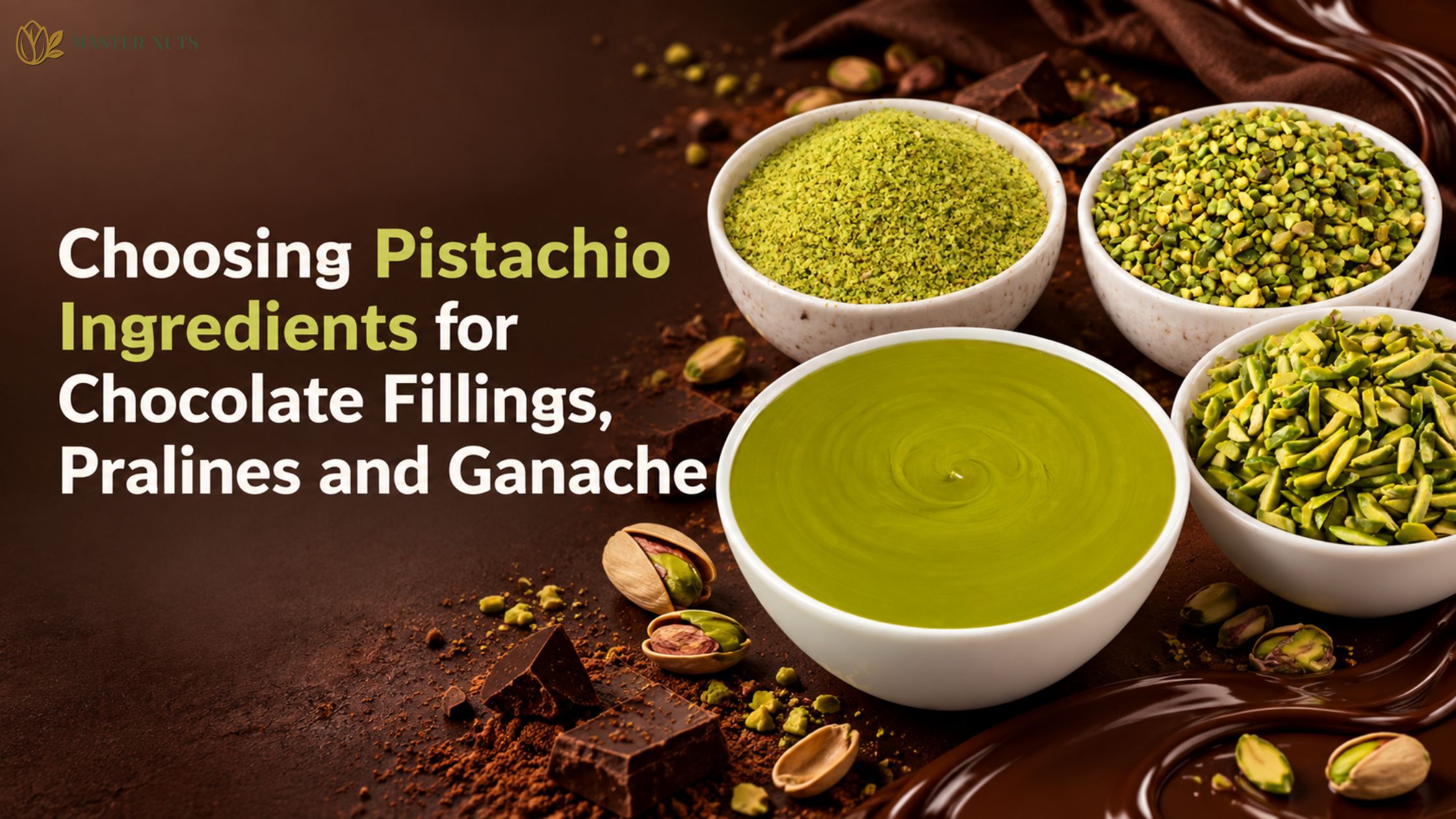
A smooth moulded filling and a nutty praline can carry the same pistachio claim while needing very different ingredients. One product needs an even texture that deposits cleanly. Another may depend on visible pieces and a distinct bite.
Choose the pistachio format after the product structure is clear. The ingredient then becomes part of the formula and process, rather than a garnish decision added at the end.
- Begin with the texture the customer should feel
- Let the filling structure control the choice
- Choose a paste grade through the finished chocolate
- Check particle size and equipment clearance
- Treat colour as a finished-product property
- Watch flavour after set and storage
- Measure the cost of the approved result
- Write an application-specific approval record
Begin with the texture the customer should feel
Pistachio paste spreads the nut through the filling. Master Nuts describes its pistachio paste as 100% pistachio with no added sugar, oil, colour or preservatives. That gives product developers control over sweetness and the rest of the fat system.
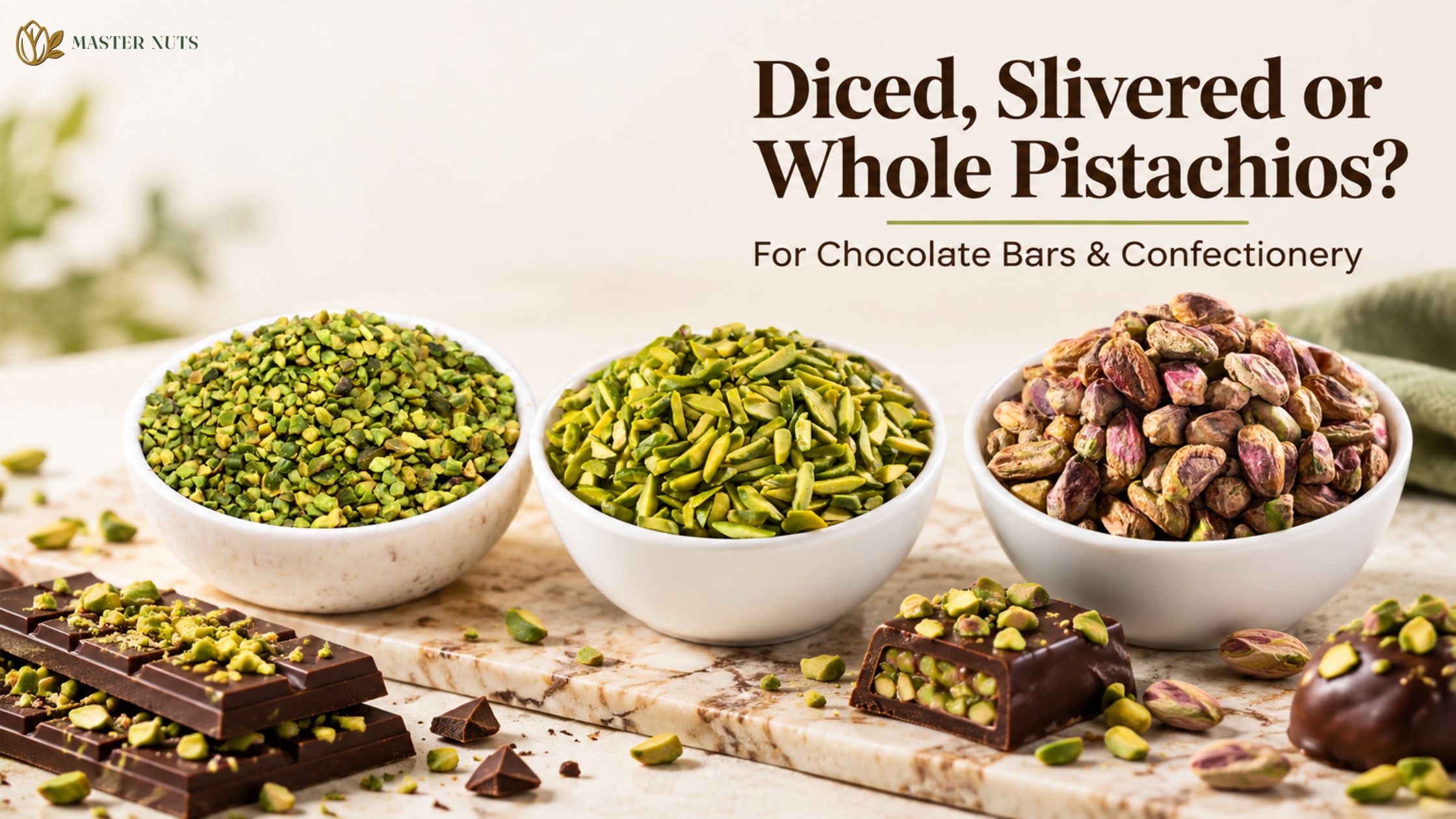
Powder can distribute small pistachio particles through a mixture. It still contains natural pistachio oil, so it will behave differently from a defatted flour. Diced pieces, slivers or kernels create a separate inclusion texture and remain visible when the surrounding product allows it.
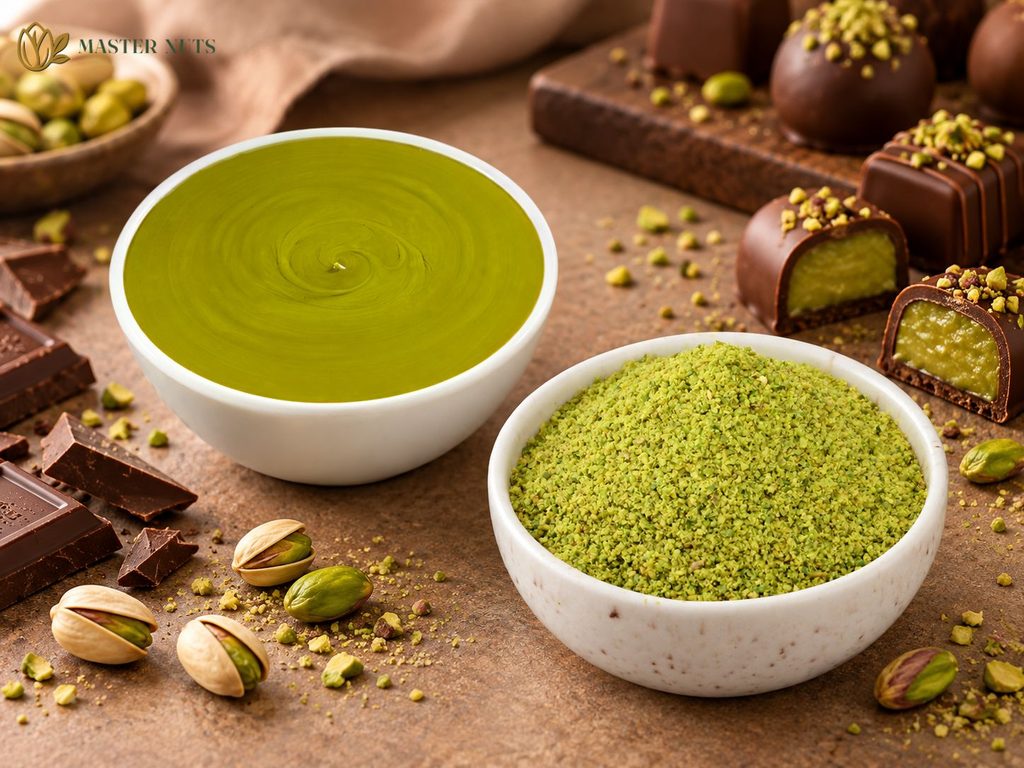
| Product goal | First format to trial | Main check |
| Smooth flavour through the filling | Pistachio paste | Viscosity, flavour at the approved dose and deposit performance |
| Fine pistachio particles in a bakery-style or textured centre | Pistachio powder | Dispersion, particle feel and effect on the fat or moisture balance |
| Noticeable nut pieces in a praline or cluster | Diced pistachios | Piece distribution, bite and equipment clearance |
| Visible lines or decorative pieces | Slivers or selected kernels | Breakage, placement and fit inside the shell or coating |
The table gives a trial starting point. A product can combine paste for distributed flavour with pieces for texture.
Let the filling structure control the choice
Fat-based praline masses and water-containing ganache systems handle ingredients differently. A paste contributes pistachio solids and natural oil. Adding it can change flow, firmness and the way flavour releases alongside cocoa, milk ingredients and sugar.
Ganache adds water to the decision. The complete recipe, emulsification method and storage plan determine stability. A pistachio ingredient should be tested inside that system, and the final product should follow the company’s normal shelf-life and food-safety validation.
Avoid using a supplier’s suggested dose as the finished formula. Begin with a practical range in development, then adjust through controlled trials until flavour, texture and processing meet the brief.
Choose a paste grade through the finished chocolate
Grade names describe the offered material; the finished product decides which one earns approval. Master Nuts currently lists AAA, BBB and USA pistachio pastes. Its product guidance uses AAA as a common starting point for chocolate because of its stronger pistachio flavour, while BBB is often considered for fillings and products where a greener appearance is useful.
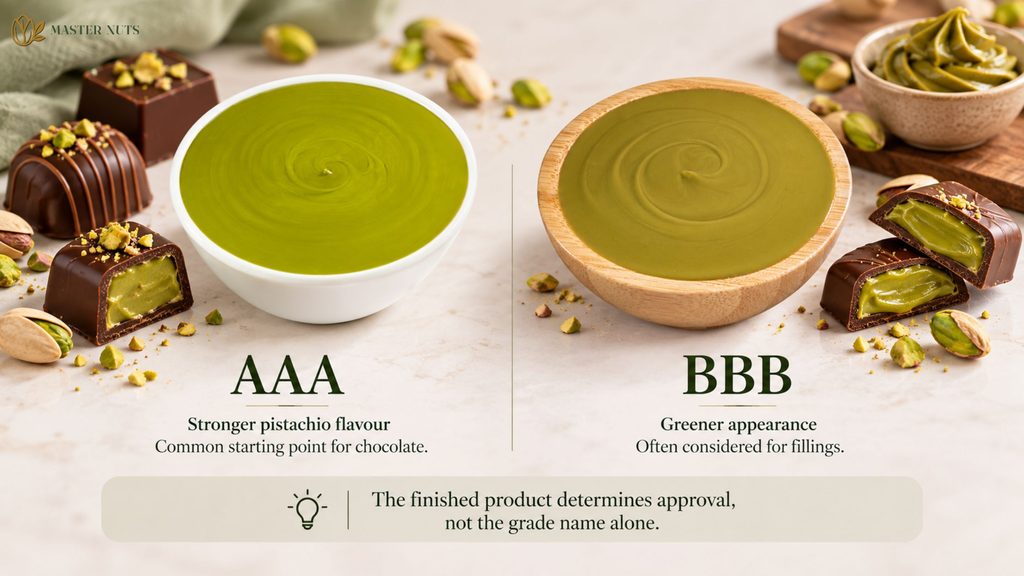
Cocoa, milk solids, sugar and roasting character can change both colour and flavour. Prepare matched batches at the same dose before changing the formula. Review the raw paste first, then score the filled chocolate after setting.
If one candidate reaches the flavour target at a lower dose, repeat the comparison at each candidate’s approved use level. That second trial gives procurement a fair cost-per-finished-unit comparison.
Check particle size and equipment clearance
A hand-filled prototype can hide line problems. Paste and powder need to disperse through the actual mixing sequence. Pieces need room to pass through hoppers, pipes, pumps or depositor nozzles.
For a smooth centre, confirm that the pistachio format and downstream refining process achieve the intended mouthfeel. Record grittiness at serving temperature, since a filling can feel different after setting than it does while warm.
For particulate fillings, compare the largest pieces with the narrowest passage in the system. Use the equipment manufacturer’s guidance and a representative sample. Record interruptions, product left in the system and any change in deposit weight.
The shell geometry matters too. Large pieces can push into a thin chocolate shell or leave an uneven cross-section. Cut several finished units and inspect the centre, wall thickness and distribution.
Treat colour as a finished-product property
Raw pistachio colour rarely carries unchanged into chocolate. White chocolate, cocoa, dairy ingredients and process heat alter what the customer sees.
Use matching sample depth, light and background for the raw comparison. Then photograph the finished centres under one fixed setup. A retained finished-product reference gives quality and purchasing a clearer approval target than a broad colour word.
Colour can also vary from lot to lot because pistachios are agricultural ingredients. Define the acceptable finished appearance and confirm that the selected ingredient range gives production enough room to work.
Watch flavour after set and storage
Warm filling often releases aroma more strongly than a set centre. Taste each candidate at the temperature customers will experience and at the intended age of the product.
Record pistachio character, roasted notes, bitterness, sweetness balance and any foreign flavour. Use coded samples where supplier or grade expectations could influence the panel.
Storage can change the relationship between the centre and chocolate shell. Review texture, oil movement, flavour and appearance at planned intervals. The trial should use the proposed packaging because oxygen, light and heat exposure can affect nut-based products.
Measure the cost of the approved result
Price per kilogram gives only one input. Add the dose, saleable yield, preparation time, residue, line speed and rejected units. A paste that costs more per kilogram may produce a lower cost per accepted chocolate if it reaches the brief at a lower dose or reduces rework.
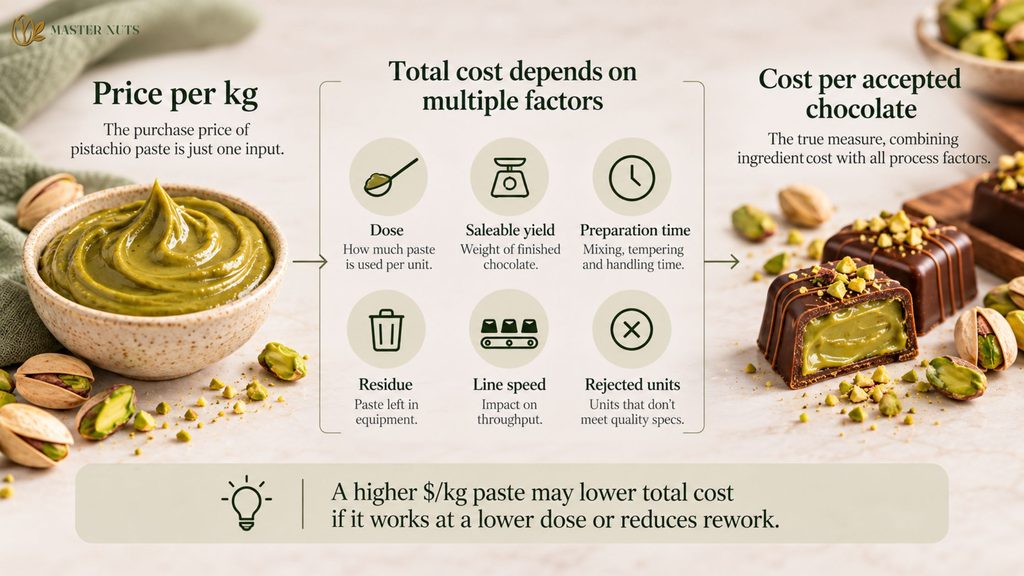
Pieces need their own yield check. Fines, breakage and uneven distribution can change the amount needed to create the approved look and bite. Count accepted units across the beginning, middle and end of the trial.
Keep commercial and sensory decisions connected. Procurement can compare landed cost and lead time after R&D has defined the formula that each sample requires.
Write an application-specific approval record
The record should identify the pistachio product code, lot, format or grade, dose, formula version and key process settings. Add finished-product observations and photographs, together with the approved packaging and review times.
Use the Master Nuts chocolate and confectionery industry page or the pistachio paste page to share your filling type, desired texture, expected usage and delivery destination. Request suitable samples through the inquiry form or WhatsApp and compare them in the real product.
Leave a Reply