
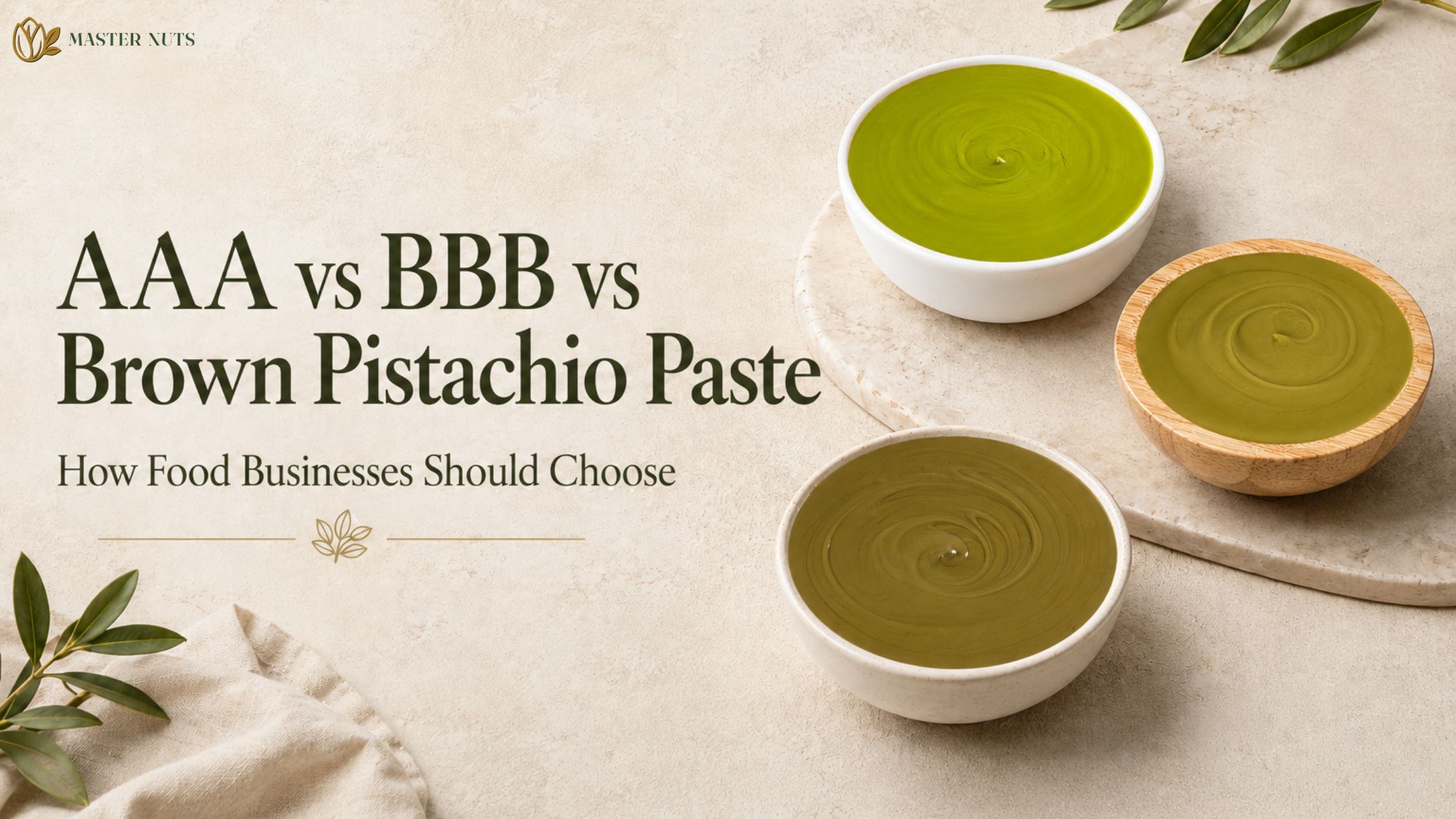
However, AAA, BBB, and Brown pistachio paste names help buyers request samples from a supplier’s range. On the other hand, they do not create a universal grading system across the market.
Firstly, start with the finished product for the selection. Define the required color, pistachio character, texture, ingredient declaration and process behavior, then compare the offered pastes under the same trial conditions.
- Treat each name as a product code
- What to confirm for AAA, BBB and Brown
- Define the finished-product target first
- Selection for gelato and ice cream
- Selection for chocolate and confectionery
- Selection for bakery and pastry
- Run a controlled comparison
- Documents for qualification and receiving
- Avoid three common shortcuts
- Discuss paste samples
- Frequently asked questions
Treat each name as a product code
Additionally, the current Master Nuts Pistachio Paste page presents AAA, BBB, Brown and USA options. However, these names identify products within the current range. Another supplier may use the same letters for a different material.
Moreover, ask for the exact product code, current specification, ingredient declaration and representative sample. In addition, keep the approved documents and sample connected to that code. As a result, the informal grade name will not replace the agreed product definition.
What to confirm for AAA, BBB and Brown
| Paste option | Useful comparison question | Buyer check |
|---|---|---|
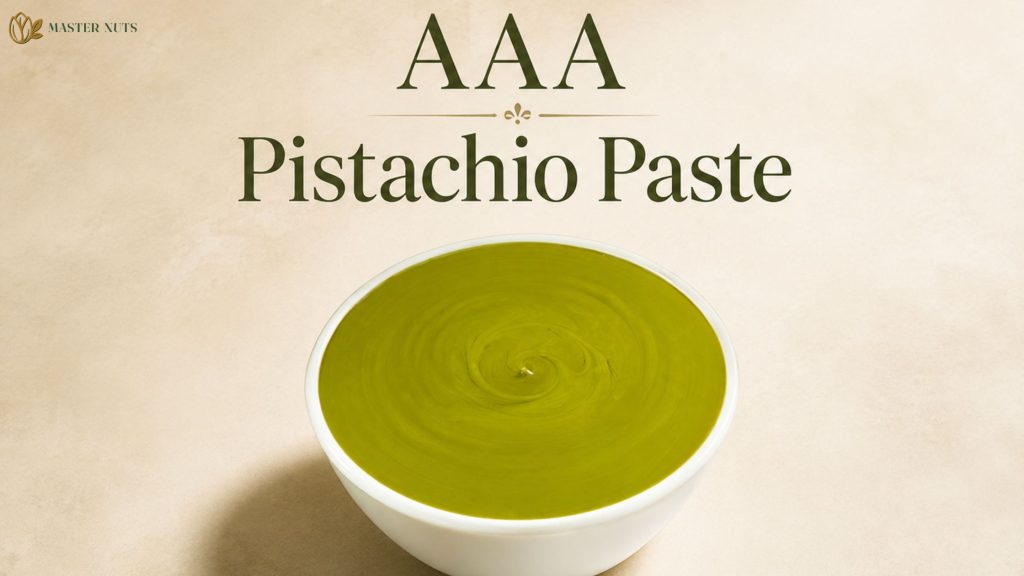
| AAA | Does this sample meet the required green reference and sensory target? | compare the current specification and finished-product trial |
| BBB | How does this separate product reference perform in the same formula? | compare side by side; avoid assuming a fixed color or quality hierarchy |
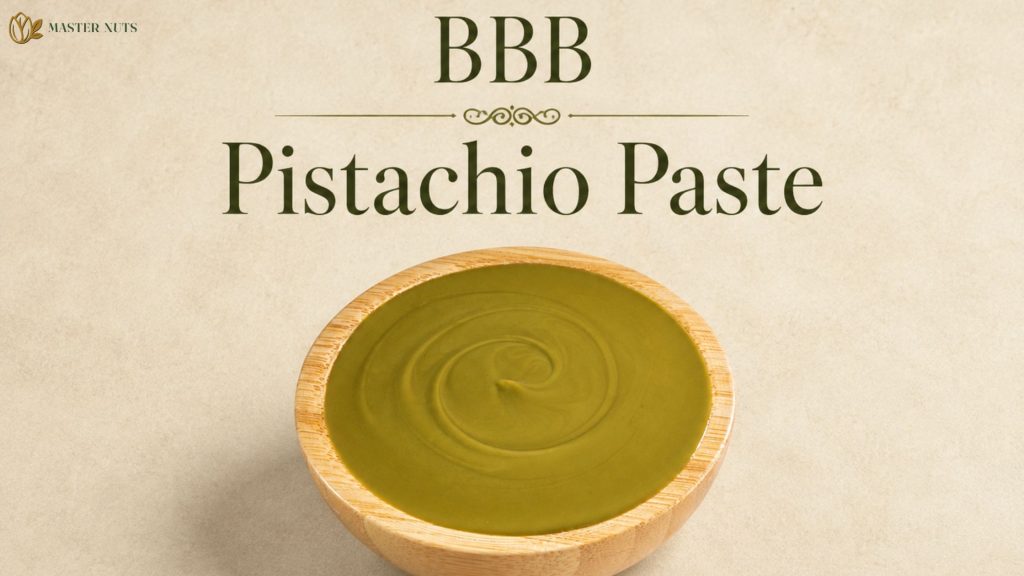
| Brown | Does its darker profile and ingredient declaration fit the intended recipe? | review the current product code, composition and sensory result |
The current Brown Pistachio Paste page describes a brown-toned paste for food manufacturing. The supplied internal product file also indicates that composition may differ from the green paste products. Buyers should confirm the current ingredient declaration before treating the products as direct substitutes.
Define the finished-product target first
Write a short brief before requesting samples:
- finished product and market
- desired visible color
- required pistachio flavor and aroma
- sweetness target for the complete recipe
- texture and particle expectation
- processing steps and temperatures
- allergen and labeling requirements
- packaging, storage and expected production volume
Use a physical color reference where appearance is central. Words such as bright, deep or natural green leave room for different interpretations.
Selection for gelato and ice cream
For gelato and ice cream brands, paste should be tested in the complete base. Sugar, dairy or plant-based ingredients, stabilizers, mixing and freezing can change color, flavor and texture.
Prepare matched batches with the same process. Code the samples so the sensory review is not led by the grade name. Compare:
- color in the finished gelato and under display lighting
- pistachio aroma and flavor
- texture and mouthfeel
- ease of dispersion
- result at serving temperature
- finished-unit cost at the chosen use level
A raw paste comparison is useful for identity and incoming QC. The finished gelato remains the main application decision.
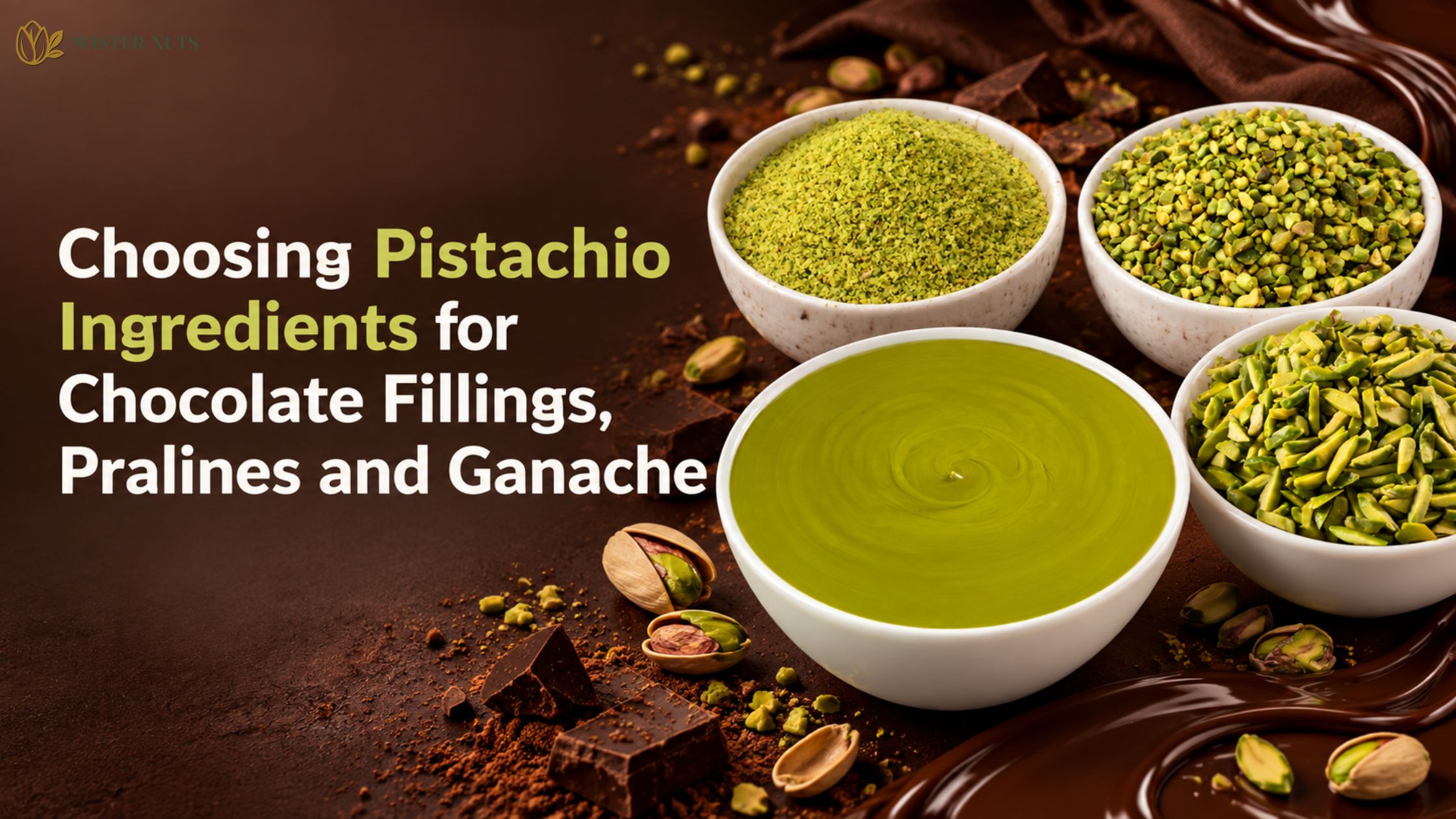
Selection for chocolate and confectionery
For chocolate and confectionery manufacturers, the surrounding formula affects the sensory result. Dark, milk and white chocolate create different color and flavor contexts. Fillings and spreads can also respond differently to the paste’s composition.
Run the candidate in the intended chocolate, praline, filling or confectionery system. Check mixing, texture, pistachio character, appearance and the result after the planned storage period. If the paste ingredient declaration changes the fat or allergen calculation, update the formula and label review before approval.
Selection for bakery and pastry
Bakery teams may use paste in dough, sponge, cream, filling, glaze or post-bake decoration. Heat exposure and contact with other ingredients can change the color and aroma perceived in the finished item.
Test each candidate in the same bakery formula. Record handling during mixing, bake or post-bake use, flavor, appearance, texture and stability across the intended service period. A paste chosen for gelato should receive a separate bakery approval.
Run a controlled comparison
Use one worksheet for all candidates:
- Record supplier, manufacturer, product name, code, lot and sample date.
- Confirm that each sample matches its current specification and ingredient declaration.
- Use the same recipe, batch size, equipment and process settings.
- Set a trial amount for each candidate and document every formula adjustment.
- Review coded finished samples with agreed sensory and color references.
- Record process observations, usable yield and finished-unit cost.
- Repeat key checks after the intended storage or display period.
- Select the product that meets the agreed acceptance points.
Price per kilogram can be recorded as one input. Finished-unit cost also captures use level, added ingredients, yield and process work.
Documents for qualification and receiving
Before commercial approval, request the documents relevant to the product and destination. These may include:
- current product specification
- ingredient and allergen declaration
- manufacturer certification documents within scope
- lot and traceability information
- storage and handling guidance
- a batch document when required
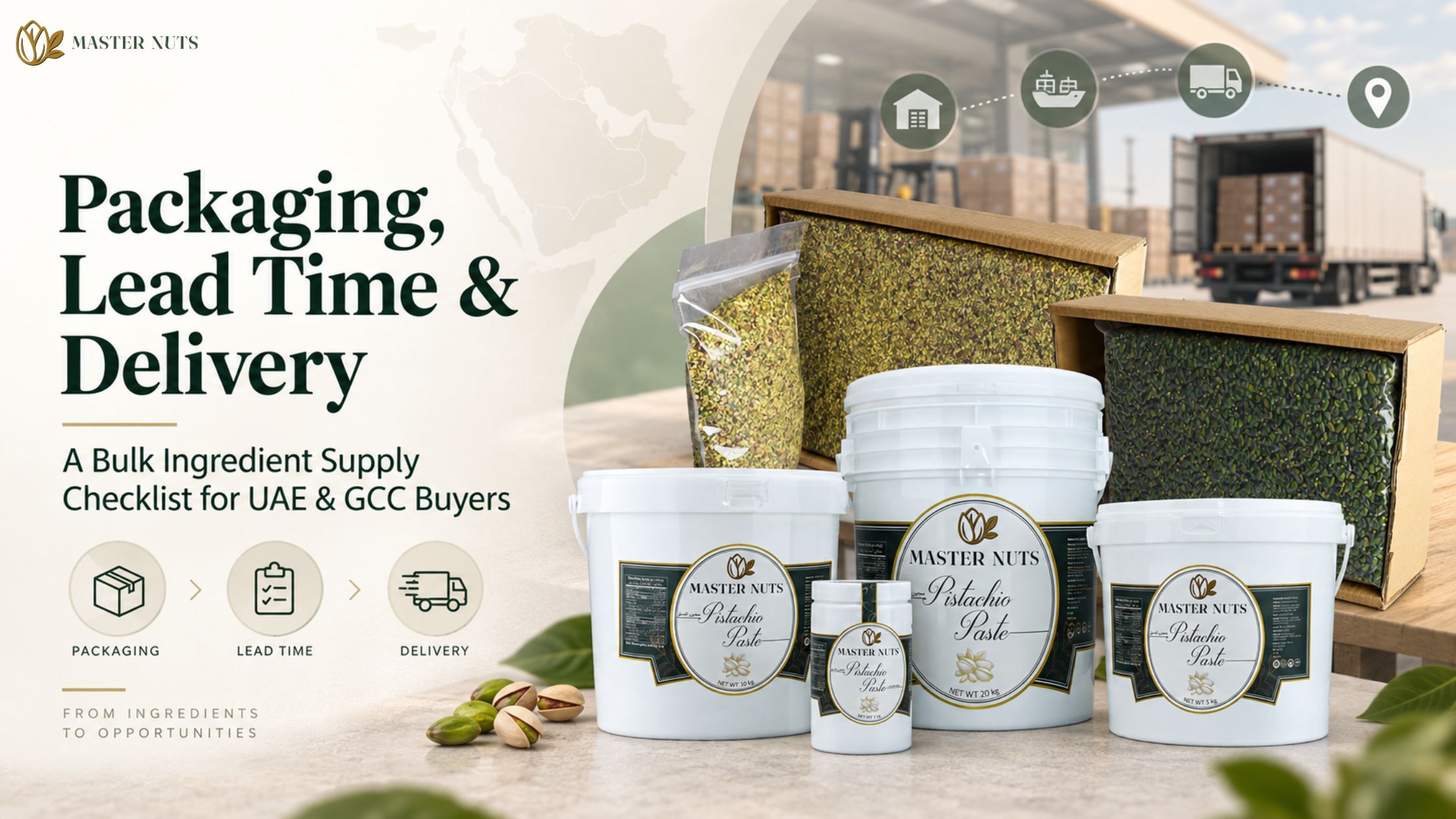
- packaging details
- a process for reporting a change to the approved product
Detailed specifications can be reviewed confidentially during a qualified purchase discussion. Technical limits remain in the controlled document and buyer approval record.
Receiving QC should use the approved product code and reference sample. Check packaging, lot identity, condition, aroma, appearance and the agreed document set. Hold and escalate a delivery when a mandatory acceptance point remains open.
Avoid three common shortcuts
Assuming AAA is a universal top grade: Supplier labels have meaning inside the supplier’s own product system. Use evidence from the offered product.
Choosing by raw color alone: Processing and surrounding ingredients can change the finished result. Compare the completed food.
Using one approval across all applications: A result in gelato does not cover chocolate, bakery or another recipe. Record the approved use.
Discuss paste samples
Share the finished product, desired sensory target, process, expected volume and destination with Master Nuts. Use the form at the bottom of the Pistachio Paste page or contact the team through WhatsApp to discuss current paste options, documents and sample availability.
Frequently asked questions
Is AAA always greener than BBB?
Do not assume a universal hierarchy from the letters. Compare the current supplier specification and physical samples under fixed viewing conditions.
Is Brown pistachio paste simply a darker version of green paste?
Its current ingredient declaration and product specification should be reviewed as a separate product. Confirm composition and application performance before substitution.
Which paste is best for gelato?
The suitable paste is the one that meets the agreed color, sensory, texture, process and cost targets in the complete gelato trial.
Can one approved sample cover future deliveries?
The retained sample supports receiving checks when it remains tied to the product code and specification revision. Therefore, the supplier and buyer should have a clear route for reviewing material or document changes.


Leave a Reply