

A spoonful of pistachio paste is a poor substitute for a production trial. The paste still has to disperse through the base, survive the chosen freezing process, and produce the intended flavor, color and texture at service temperature.
That makes paste selection a joint decision for R&D, production, quality and procurement. Each team sees a different part of the risk. R&D evaluates the recipe. Production watches handling and repeatability. Quality checks product identity and documents. Procurement compares commercial fit and supply.
The useful question is specific: which pistachio paste fits this gelato formula, process and brand target?
- Start with the product brief
- Confirm what the paste actually is
- Evaluate flavor after freezing
- Judge color under controlled conditions
- Check texture, dispersion and free oil
- Compare grades through evidence
- Run a controlled production trial
- Use one trial record
- Questions to ask the supplier
- Choose against the real sales format
- Discuss a gelato trial with Master Nuts
- Frequently asked questions
Start with the product brief
Write the gelato brief before requesting samples. A supplier can make a better recommendation when the finished product and operating conditions are clear.
Record:
- the gelato or ice cream format
- the base used in the trial
- the production and freezing method
- the target flavor profile
- the acceptable color range
- any texture or free-oil concerns
- the intended service or storage format
- the expected purchasing pattern and destination
A display gelato served from a pan has a different evaluation window from a packaged product held through distribution. The same paste can therefore receive different decisions from 2 buyers, even when both trials are technically sound.
Confirm what the paste actually is
Grade names identify only part of the product. Ask for the current product name or code, ingredient declaration, specification revision, allergen statement, packaging information and relevant batch document.
This review matters when a supplier carries several paste options. Two products may have different ingredient declarations, color ranges, particle-size targets or packaging formats while both are sold as pistachio paste.
For the Master Nuts range, the website lists AAA, BBB, Brown and USA options. These names are product references within the supplier’s range. Cross-supplier comparison requires the current specification and sample for each product.
Use the confidential specification to confirm the selected product. Where a batch COA is available or required, check that its product reference and lot information match the material under trial.
Evaluate flavor after freezing
Cold serving temperatures can change how a formulation is perceived. The relevant result is the flavor in the finished gelato at the temperature and holding time used by the business.
Build a short sensory record for each sample:
- pistachio character at first taste
- roasted notes, when present
- bitterness or stale notes
- flavor balance with sugar, dairy ingredients and other components
- aftertaste
- flavor at the normal serving point
Keep the tasting conditions consistent. Use the same base, batch size, dosage basis, process and service temperature. Blind coding can reduce bias when a team already knows which sample carries the higher price or preferred grade name.
The result should describe what the panel observed. Claims such as “stronger” or “cleaner” need a defined comparison and recorded conditions.
Judge color under controlled conditions
Color affects product identity and display presentation. Choose the acceptable color from the intended gelato concept and sales format.
Define the acceptable result for the brand. One concept may require a clear green tone. Another may be built around a roasted profile with a darker appearance. A chocolate-pistachio recipe will mask color differently from a plain dairy base.
Photograph trial batches under the same lighting, background and camera settings. Record color at the points that matter to your operation, such as:
- after mixing
- after freezing
- after the normal hardening step
- during the planned display or service window
Avoid judging a sample from supplier photography alone. Lighting and editing can make small color differences look much larger than they appear in production.
Check texture, dispersion and free oil
The supplied specifications for Master Nuts paste options describe a smooth, paste-like product and include physical criteria for the applicable product. Those figures remain in confidential qualification files.
In the trial, record what production staff can observe:
- ease of weighing and transfer
- mixing time and dispersion
- visible particles or graininess
- free oil before use
- residue left in the container or mixing equipment
- texture of the frozen product
- any separation observed during the business’s normal holding period
Treat an observation as a signal for investigation. A texture problem can come from the paste, the base, dosage, solids balance, processing conditions or several factors together. Repeat the test after checking the process record before rejecting a material on one batch.
Compare grades through evidence
The current range gives buyers several starting points. The safest comparison uses the specification, a current reference sample and a controlled gelato trial.
| Option in the current range | What to confirm before approval | Trial focus |
|---|---|---|
| AAA | Current ingredient declaration, product code, specification and reference sample | Target color, frozen flavor, dispersion and finished-batch cost |
| BBB | Current ingredient declaration, product code, specification and reference sample | Recipe fit, frozen flavor, color and handling in routine production |
| Brown | Current ingredient declaration and whether the formulation differs from other paste options | Roasted profile, final color, recipe compatibility and label implications |
| USA | Current specification, ingredient declaration and product identity | Finished-product profile, repeatability and commercial availability |
The buyer’s formula and acceptance criteria determine the ranking for a specific project.
The Brown Pistachio Paste page is useful when the product concept calls for a darker paste option. Confirm its current composition and specification before treating it as interchangeable with another grade.
Run a controlled production trial
Use a trial sheet that another team member could repeat. A useful method has 7 steps.
1. Lock the control formula
Choose the current approved paste or a defined control batch. Record the formula, process and acceptance criteria before testing alternatives.
2. Code each sample
Record the supplier, product name, grade, sample or lot reference, receipt date and condition. Keep sample identity available for traceability even if the tasting panel uses blind codes.
3. Standardise the comparison
Use the same base, batch size, equipment and process conditions. If the test includes different dosage levels, label each one clearly and change only that variable.
4. Record process observations
Note weighing, transfer, mixing, dispersion and any oil or residue. A production team may find an operational difference that a sensory panel misses.
5. Assess the finished product
Score flavor, aftertaste, color, texture and any relevant holding or melting observations at defined times. Use the business’s normal service conditions.
6. Repeat the leading option
One successful batch is useful evidence. A repeat trial checks whether the result can be produced again under the same conditions.
7. Calculate finished-batch cost
Use the trial dosage, usable yield, freight and any recorded waste or rework to calculate cost per finished batch or saleable unit. Keep price per kilogram as one source input.
Use one trial record
| Review point | Method or evidence | Result | Status |
|---|---|---|---|
| Product identity | Product code, grade, specification revision and sample reference | Record reference | ☐ Pass ☐ Open |
| Ingredient and allergen review | Current supplier documents | Record outcome | ☐ Pass ☐ Open |
| Flavor after freezing | Coded sensory check at defined service point | Record score and notes | ☐ Pass ☐ Open |
| Color | Standard lighting and agreed visual reference | Record score or photo reference | ☐ Pass ☐ Open |
| Dispersion and handling | Production observation | Record mixing and transfer notes | ☐ Pass ☐ Open |
| Frozen texture | Defined production and service conditions | Record observations | ☐ Pass ☐ Open |
| Repeat trial | Second controlled batch | Compare with first result | ☐ Pass ☐ Open |
| Finished-batch cost | Trial dosage, yield and landed input cost | Record calculation | ☐ Pass ☐ Open |
Questions to ask the supplier
Send the product brief with the request. Ask:
- Which current paste options match the target flavor and color?
- What is the exact product name or code for each sample?
- Which ingredient declaration and allergen statement apply?
- Can the confidential specification be reviewed during qualification?
- Is a batch COA available for the selected product when required?
- How should the unopened product be stored?
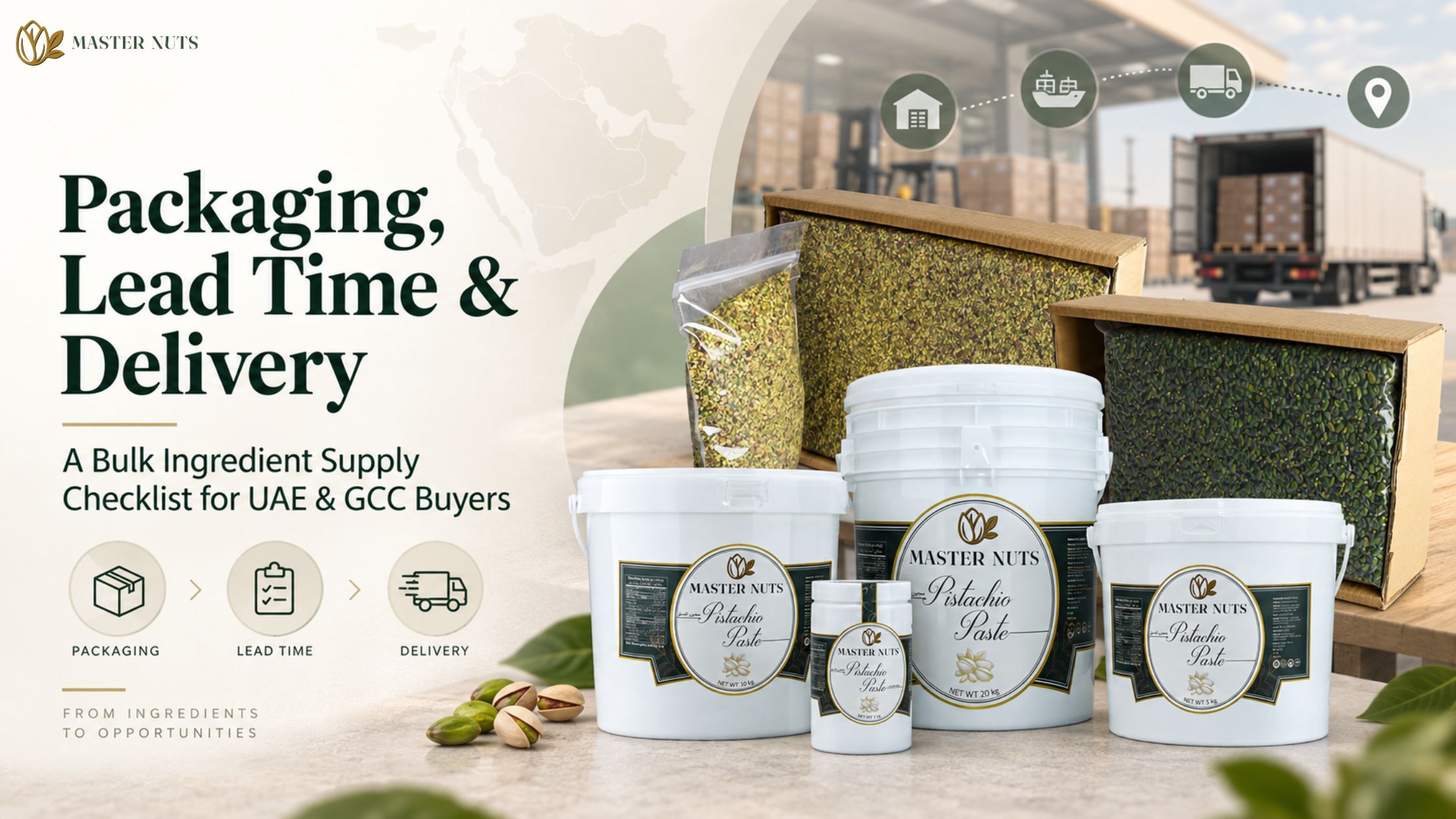
- Which packaging applies to the quoted option?
- Can later orders be tied to the same approved product reference?
- What delivery estimate applies to the destination and order timing?
Master Nuts usually estimates delivery at around 20 days after final order confirmation. The sales team confirms the plan for the selected product, availability, destination and shipment route.
Choose against the real sales format
A gelato shop can weight display appearance and service texture heavily. A multi-site brand may give more weight to repeatable product identity and a trial method that each location can follow.
A packaged ice cream producer may need a longer evaluation window based on its own storage and distribution study. A hotel or dessert manufacturer may select a paste around a specific menu concept, portion format or paired flavor.
The Gelato & Ice Cream Brands page connects paste with other relevant formats, including diced pistachios, kernels and powder. Those products can be assessed separately when the finished item also needs visible pieces or a surface garnish.
Discuss a gelato trial with Master Nuts
Share the gelato format, base, target flavor and color, production method, expected volume and delivery destination. If you already have an approved control paste, describe the acceptance criteria you need to match.
Use the form at the bottom of the Pistachio Paste page or contact Master Nuts through WhatsApp. The sales team can confirm available options, documents and sample availability for the proposed trial.
Frequently asked questions
Is AAA always the best pistachio paste for gelato?
AAA is a supplier-specific product label. Approval comes from comparing the current specification and sample against your formula, process, color target and frozen sensory result.
Can a paste be approved by tasting it from the container?
Container tasting can identify obvious flavor or aroma issues. Final approval needs a controlled trial in the intended gelato base because freezing, dosage and the rest of the formula affect the result.
Should gelato buyers compare paste by price per kilogram?
Price per kilogram is one input. Use trial dosage, usable yield, freight, waste and any rework to calculate cost per finished batch or saleable unit.
Which documents should a buyer request?
Start with the product specification, ingredient declaration, allergen information, packaging and storage guidance. Ask whether a batch COA or other approval document is available for the selected product and lot when your quality process requires it.
How should 2 paste samples be compared?
Use the same base, equipment, batch size, process and service conditions. Code the samples, define acceptance criteria first, record observations at fixed times and repeat the leading trial before approval.


Leave a Reply