
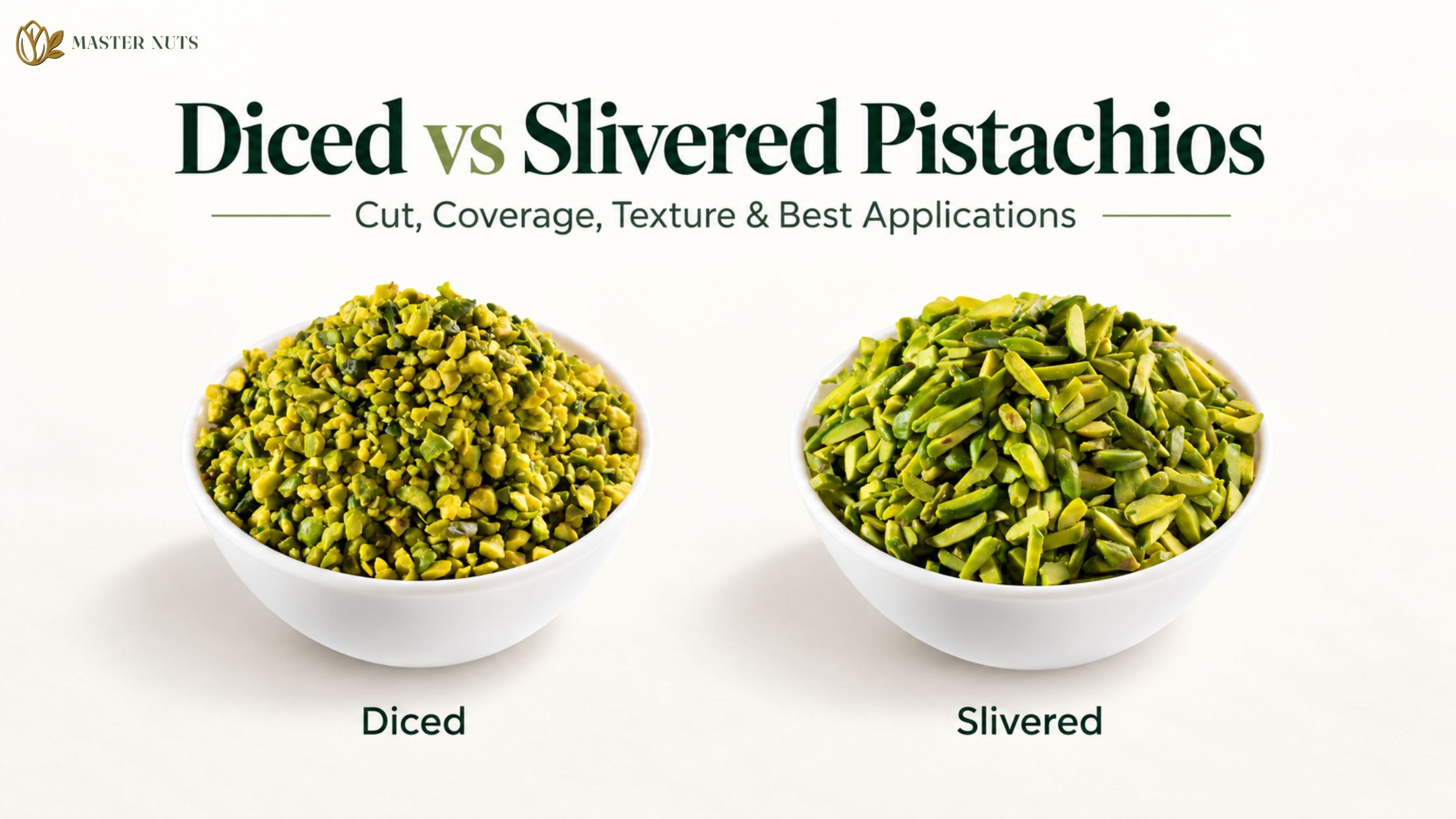
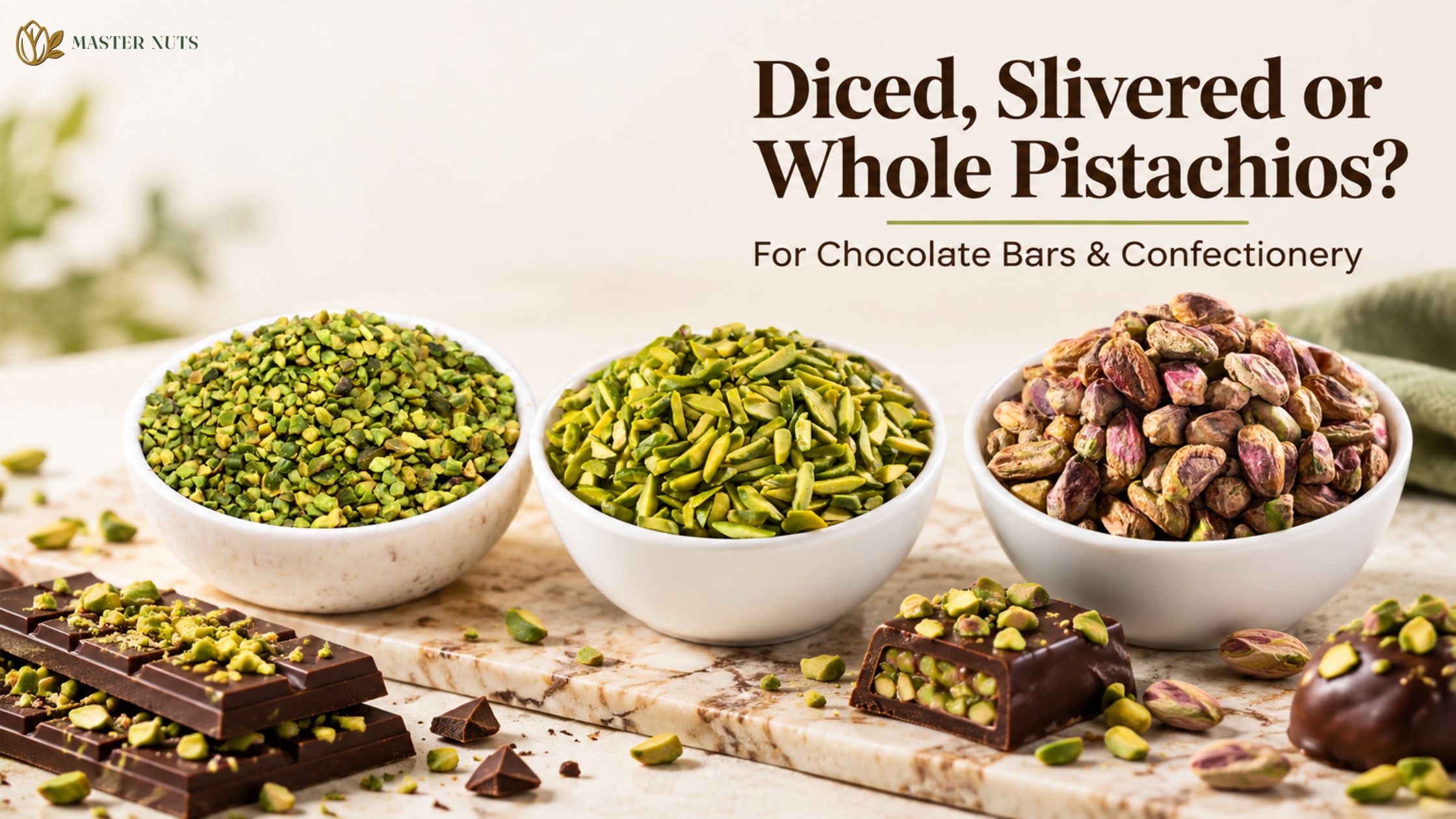
Diced pistachios are short, irregular pieces. Slivered pistachios are narrow, elongated strips. That difference changes the pattern on a pastry and the way a nut piece sits inside a filling. It also changes what the team needs to watch during handling.
Start with diced pieces when the brief calls for scattered nut inclusions or a granular topping. Start with slivers when the design needs visible lines or a deliberately arranged garnish. Both can work across bakery, confectionery and desserts, with the final choice settled in the actual product.
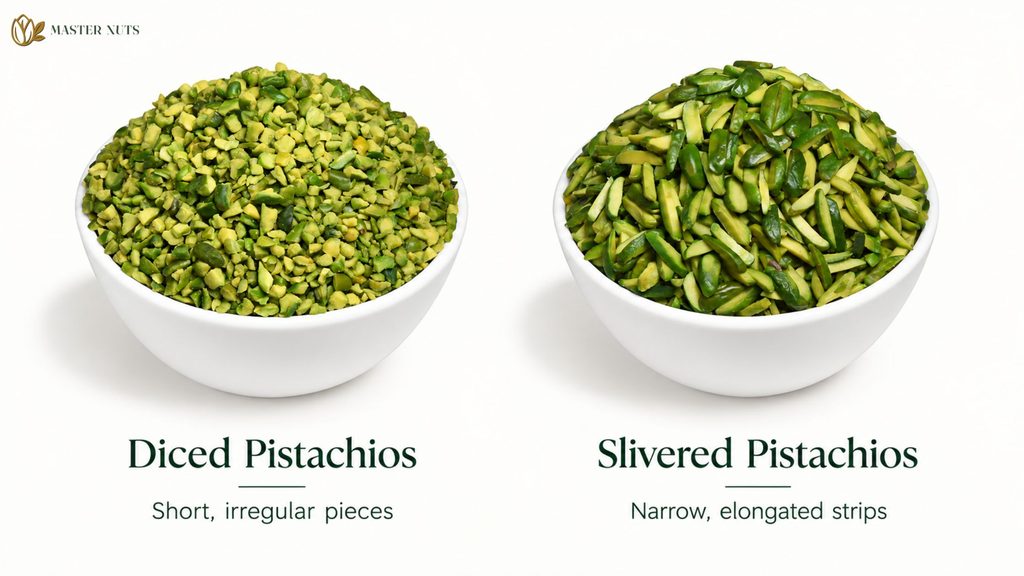
Compare shape before comparing performance
The word diced describes a cut format. Commercial pieces vary in shape, and the quoted size range helps define the material more closely. Master Nuts lists green peeled diced options in 2–4 mm and 4–6 mm, alongside normal diced kernels.
Slivers have a different shape: their length and thickness both affect appearance and handling. They’re also distinct from broad flakes. Ask for a representative sample if the supplier’s terminology leaves the cut unclear.
| Production question | Diced pieces | Slivers |
|---|---|---|
| What pattern do they make? | Scattered, granular pieces | Longer visible lines and strips |
| What dimensions need checking? | Quoted range, oversize pieces and fines | Length, thickness and broken pieces |
| Where should the trial begin? | Mixed inclusions, scattered toppings and coatings | Arranged garnishes, visible strips and selected inclusions |
| What can change during handling? | Piece distribution and amount of fines | Length distribution and breakage |
The diced pistachio size guide covers the smaller-versus-larger diced decision separately. Here, the comparison is between cut shapes.
Measure coverage on the food
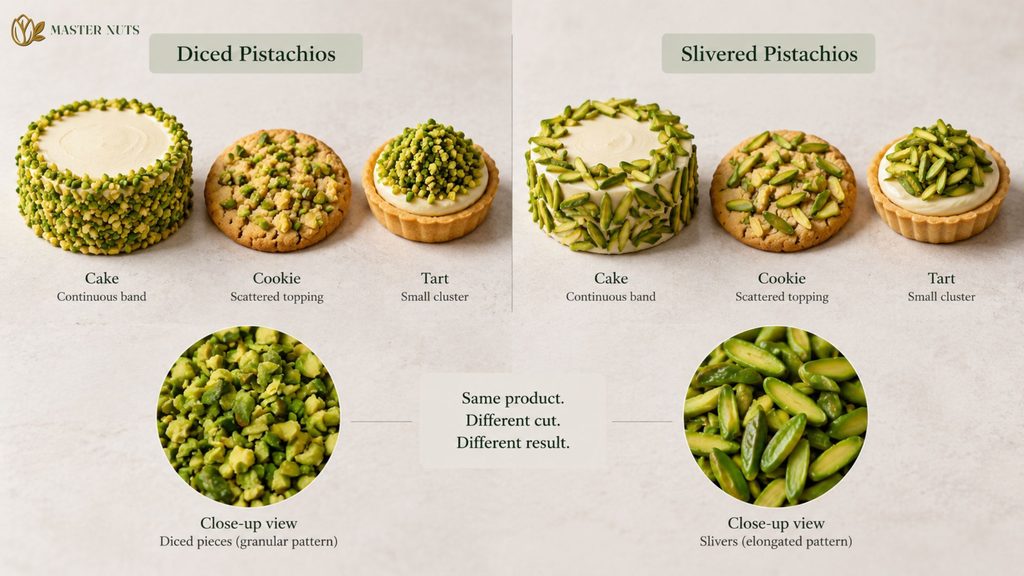
A topping has several possible targets. You might want a continuous band around a cake, scattered green points on a cookie or a small cluster on a tart. Each target rewards a different arrangement of pieces.
Spread equal weighed portions of diced pieces and slivers over matching products. Keep the coated area, application method and surface condition the same. Photograph them from above and from the customer’s viewing angle.
Diced pieces can build a granular pattern. Slivers can spread across a surface or overlap in a small area, depending on how they land. A longer piece may cover more visible area individually, while gaps and overlap alter the result for the whole portion.
Next, adjust the portion of each cut until both meet the agreed design. Record the grams used and the material that falls away. This second comparison shows the ingredient requirement for an acceptable finish. A universal claim that diced pistachios give better coverage would miss these differences.
Texture depends on the finished food
A thick diced piece can give a distinct nut bite. A thin sliver presents a different cross-section to the teeth. Freshness, moisture, roasting and the surrounding food also affect what the customer feels.
Taste both cuts at serving temperature and after the normal holding period. Syrup-soaked pastry, a frozen dessert and a chocolate bar put the same ingredient through different conditions. A topping that feels crisp when applied may behave differently after contact with the food.
For a layered dessert, judge whether the pieces make spooning and portioning comfortable. For a chocolate bar, check the broken cross-section and how the inclusions sit within the bar thickness. Record the bite you want in plain terms that another reviewer can recognize.
Where each cut earns a trial
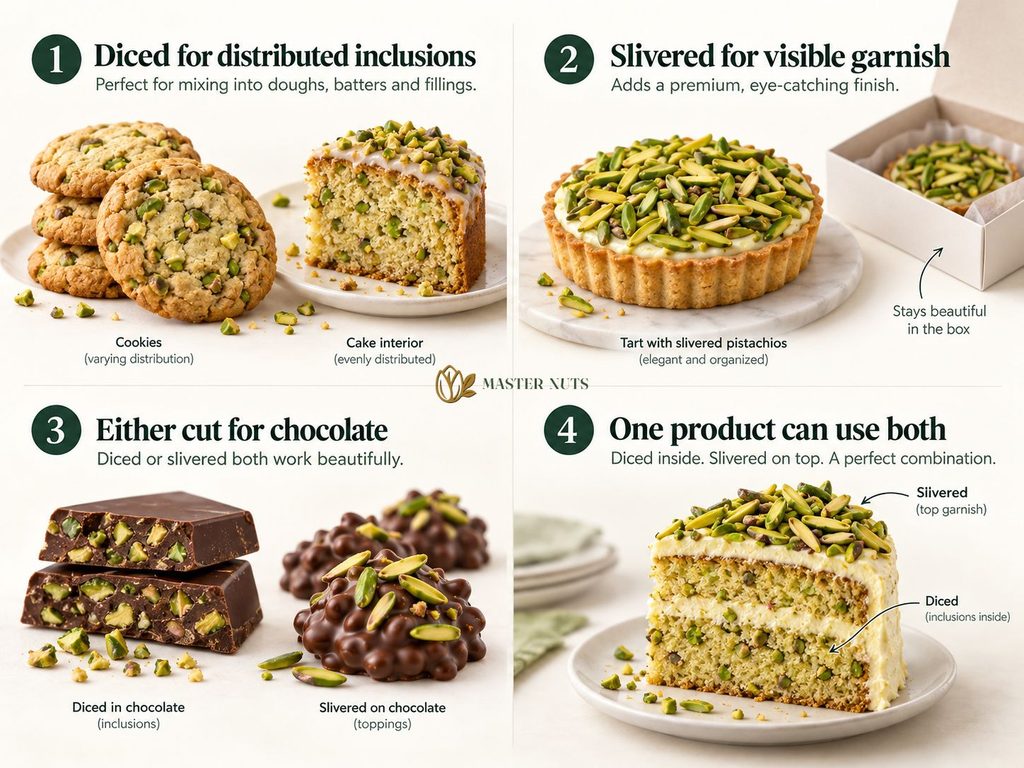
In cookies and mixed bakery fillings, diced pieces are a useful starting point for distributed inclusions. Check several portions from the batch, including pieces taken near the beginning and end of production. Uneven distribution can leave one item crowded with nuts and another sparse.
Slivers suit a pastry design that needs visible strips on a tart, cake or baklava portion. Try the intended placement method and inspect the garnish after the product has been boxed and moved. The finished design needs to survive the route to the customer.
For chocolate clusters and bars, either cut can be tested as an inclusion or topping. Long slivers need enough room within the product and equipment. Larger diced pieces also need a fit check. The chocolate and confectionery page provides the broader ingredient context.
A product can use both cuts for separate jobs. For example, a cake brief could call for diced inclusions in one layer and a slivered garnish on top. Cost and approve each use separately so the added handling has a clear purpose.
Check what happens between the bag and the tray
Weighing a sample by hand gives little evidence about a full topping station. Run the normal scoops, hoppers, transfer containers and applicators, including routine stops and refills. Look for bridging, uneven flow and damage to the selected cut.
Measure the work against accepted output. Record topping time, ingredient issued and the finished units that meet the brief. If the team needs to rearrange slivers or remove oversized diced pieces, include that work.
Separate fines already present in the bag from fragments created during handling. Both affect the usable material, but they point to different actions. Supplier acceptance criteria can address incoming size distribution; transfer height or handling changes may address damage on the line.
Any reuse of fallen or recovered ingredients must follow the site’s hygiene procedure. Treat material that cannot be returned to production as a loss in the cost record.
Give procurement a repeatable cut specification
Retain the approved sample identity, a photograph of the finished appearance and the agreed dimensions. Include acceptable breakage or fines where they affect the process, along with the portion and application method that produced the result.
Ask Master Nuts about diced pistachios or slivered pistachios through the product-page form or WhatsApp. Share the finished food, whether the nut is inside or on top, the planned handling method and your expected usage. Request representative samples for the comparison before selecting the cut.

Leave a Reply