
Kernel approval requires a product definition, current reference sample and acceptance method.
This matters because grade systems can differ between suppliers. One company’s A grade may use a different color band, size distribution or product code from another company’s A grade.
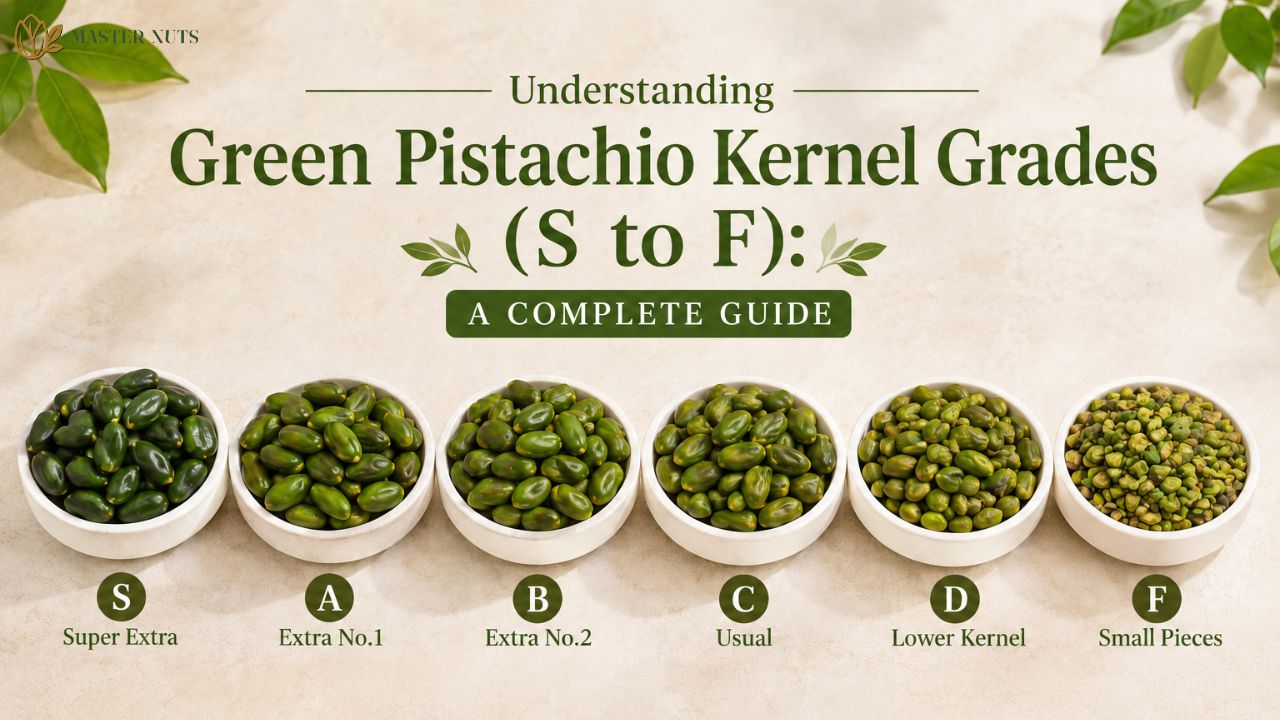
The current Master Nuts Green Pistachio Kernel range lists S, A, B, C, D and F. Color is the main visible grading basis. The current specification for the quoted product remains the controlling document.
- What the grade letters describe
- How to read the Master Nuts range
- Start with visibility in the finished product
- Selection by application
- Approve a physical reference sample
- Set an incoming color check
- Use an operational approval table
- Compare formats after choosing the color band
- Questions to send with a grade request
- Discuss the required kernel grade with Master Nuts
- Frequently asked questions
What the grade letters describe
The reviewed manufacturer specification sorts peeled green kernels by color. It describes a progression from very green kernels through light green and yellow-toned selections.
Color grade should be kept separate from other acceptance points. A buyer may also need to review:
- whole versus processed format
- kernel size and distribution
- broken pieces
- surface condition
- taste and aroma
- foreign-material criteria
- contaminant and microbiological criteria
- allergen declaration
- packaging, lot identity and storage guidance
A darker green sample can fit a visual target and still fail another mandatory requirement. Grade selection and quality approval should therefore remain 2 linked checks.
How to read the Master Nuts range
The table below translates the current range into a procurement starting point. The current product specification and approved physical sample control the final decision.
| Current option | Color reference used for initial screening | Procurement treatment |
|---|---|---|
| S | Deepest green option presented in the current Master Nuts range | Request the current S reference sample and product definition; approve against the required finished-product appearance |
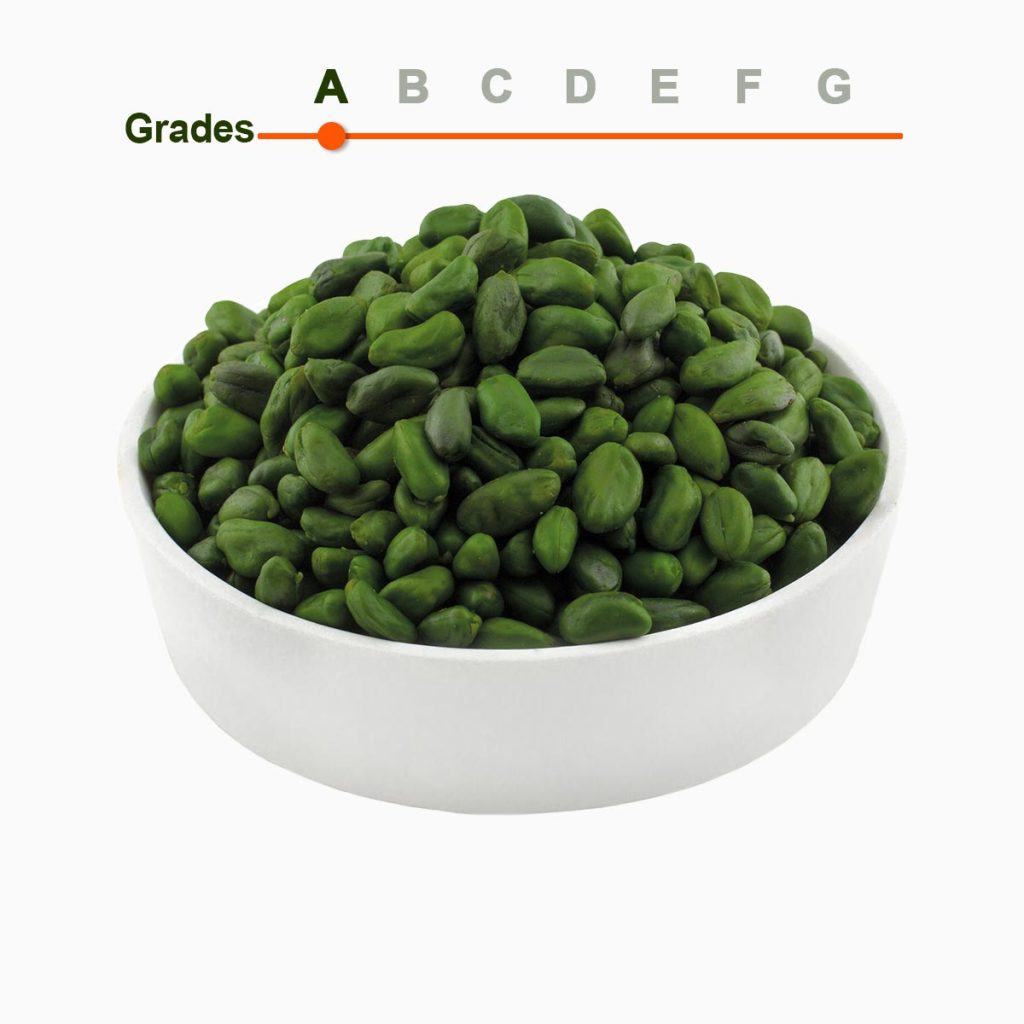
| A | Very green | Confirm the acceptable green range, kernel condition and intended visible use |
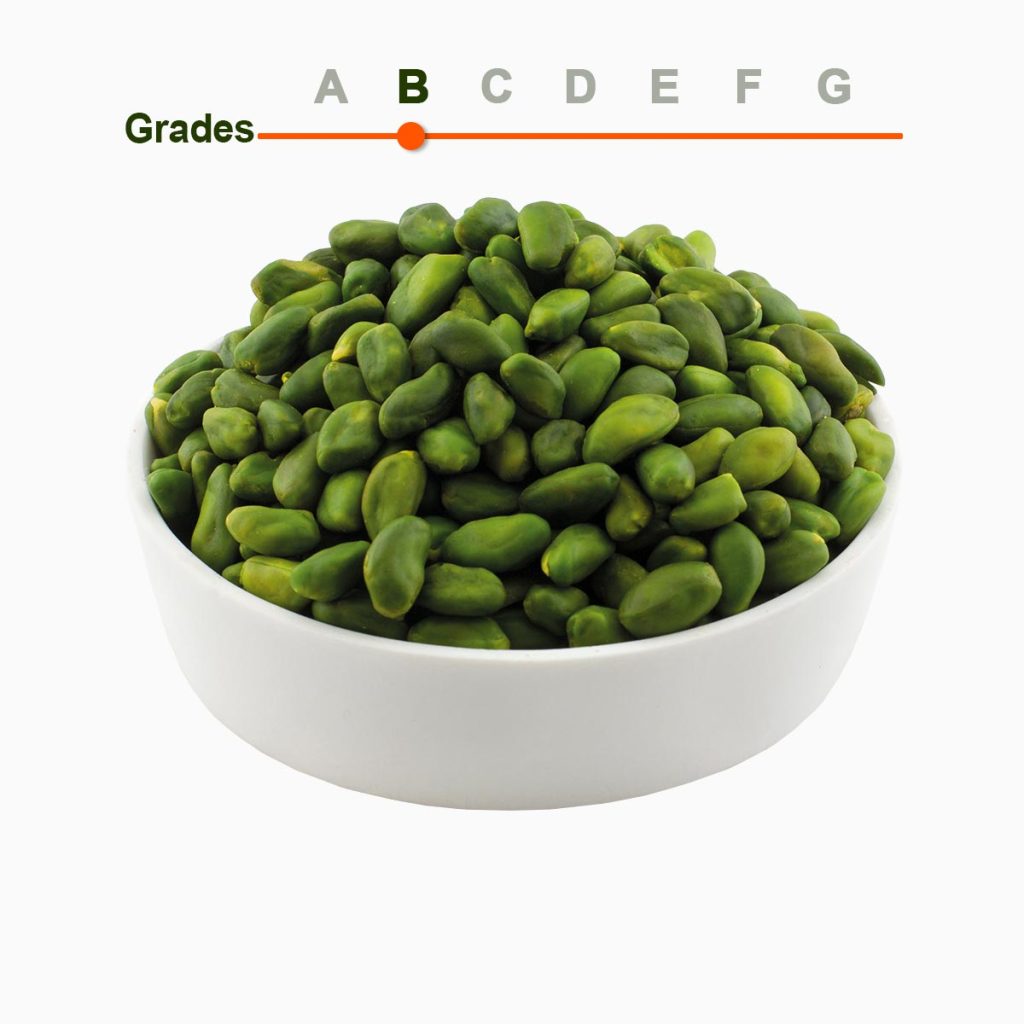
| B | Green | Compare with the approved product under controlled lighting and in the finished application |
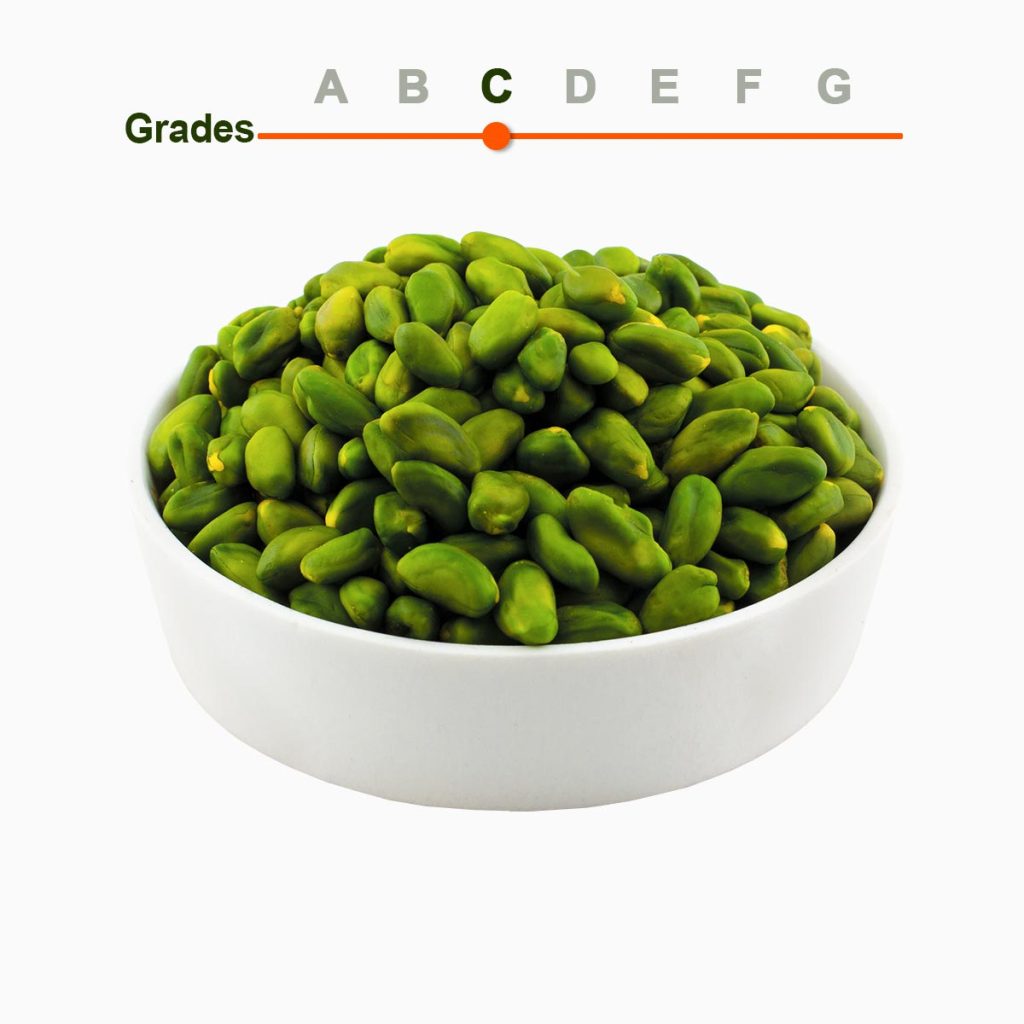
| C | Light green | Check whether the lighter appearance remains acceptable after processing or mixing |
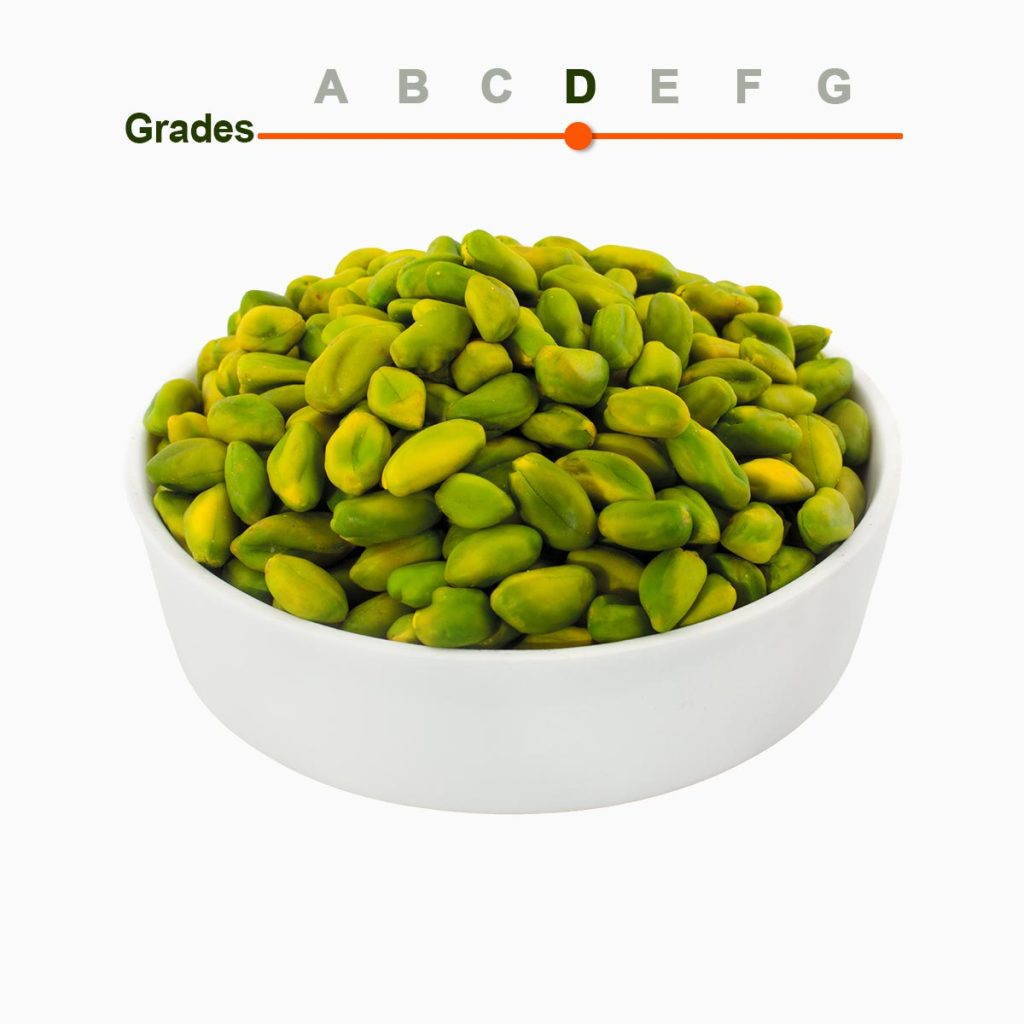
| D | Light green to very light yellow | Evaluate in the actual processed or blended product; keep flavor and specification checks separate from color |
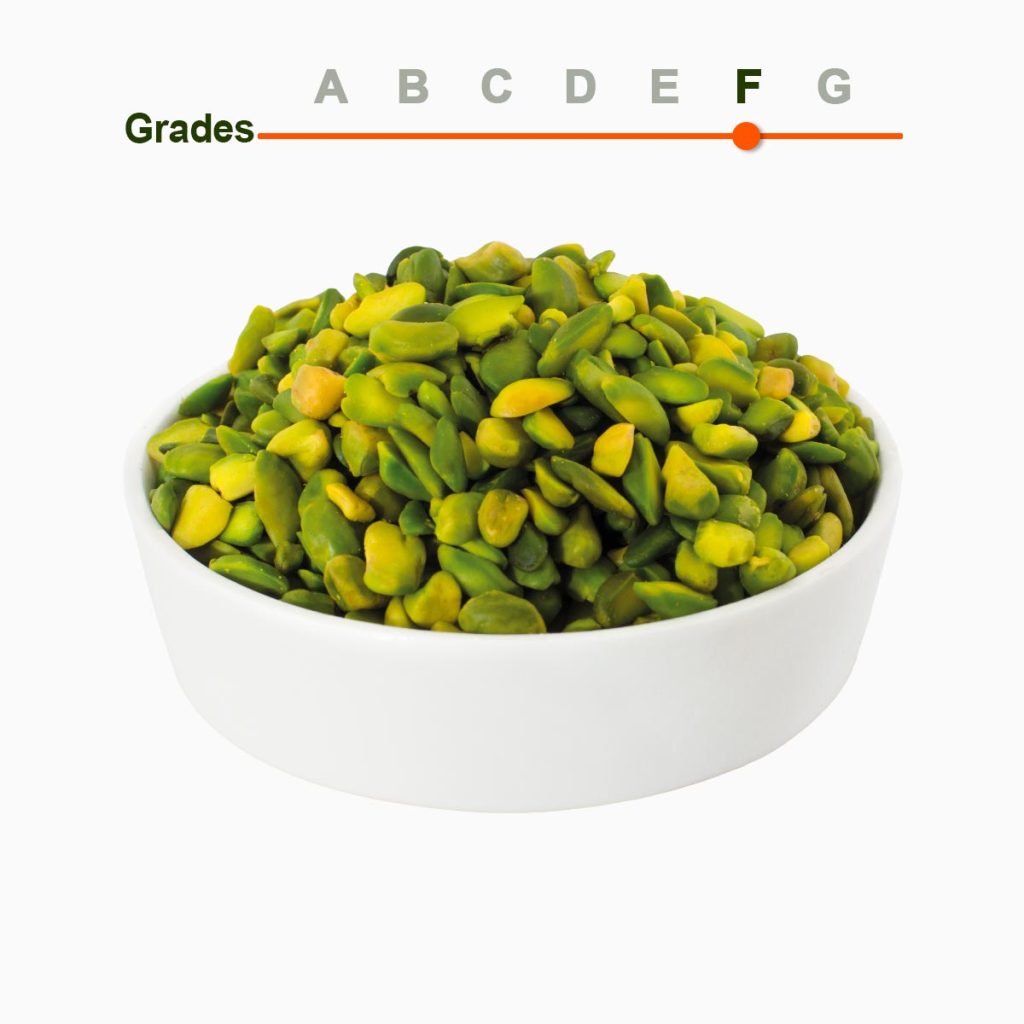
| F | Very light green to yellow | Use only when the finished application accepts this appearance and the sample passes all other requirements |
Some suppliers offer selected color bands. Confirm the available lineup and exact product code at the time of quotation.
Start with visibility in the finished product
Color has more weight when the kernel remains exposed. A whole kernel on a pastry, a sliver on baklava and a visible inclusion in white chocolate all present the ingredient directly to the buyer’s customer.
When the kernel is ground, covered, baked into a darker base or blended with other ingredients, the visual contribution may change. Test the processed result as a separate approval stage.
Use 3 questions:
- Can the customer see the pistachio?
- Does the product design require a defined green tone?
- What happens to that color after the real process?
The answers determine how narrow the approved color band needs to be.
Selection by application
Pastry and dessert decoration
A bakery or pastry manufacturer may use whole kernels, slivers or diced pieces on cakes, pastries, baklava or plated desserts.
Begin with samples that meet the required visible green reference. Then check piece shape, breakage, topping method, storage and appearance on the finished item. A darker green grade may have no commercial benefit when the product is covered by glaze, cocoa or another topping.
Gelato and ice cream
A gelato or ice cream brand can use green kernels as topping, decoration or a processed input.
For topping, assess color under display lighting, bite at service temperature and piece condition. For grinding or another processed use, evaluate the final gelato or ingredient output. The raw-kernel grade label describes only the input material.
Chocolate and confectionery
A chocolate or confectionery manufacturer may use green kernels in bars, pralines, truffles, nougat or enrobed products.
Check color against the chocolate type, piece visibility, cut or whole-kernel distribution, bite and process handling. White or light-colored systems can expose color differences more clearly than dark chocolate. The trial should use the intended formula and format.
Grinding and further processing
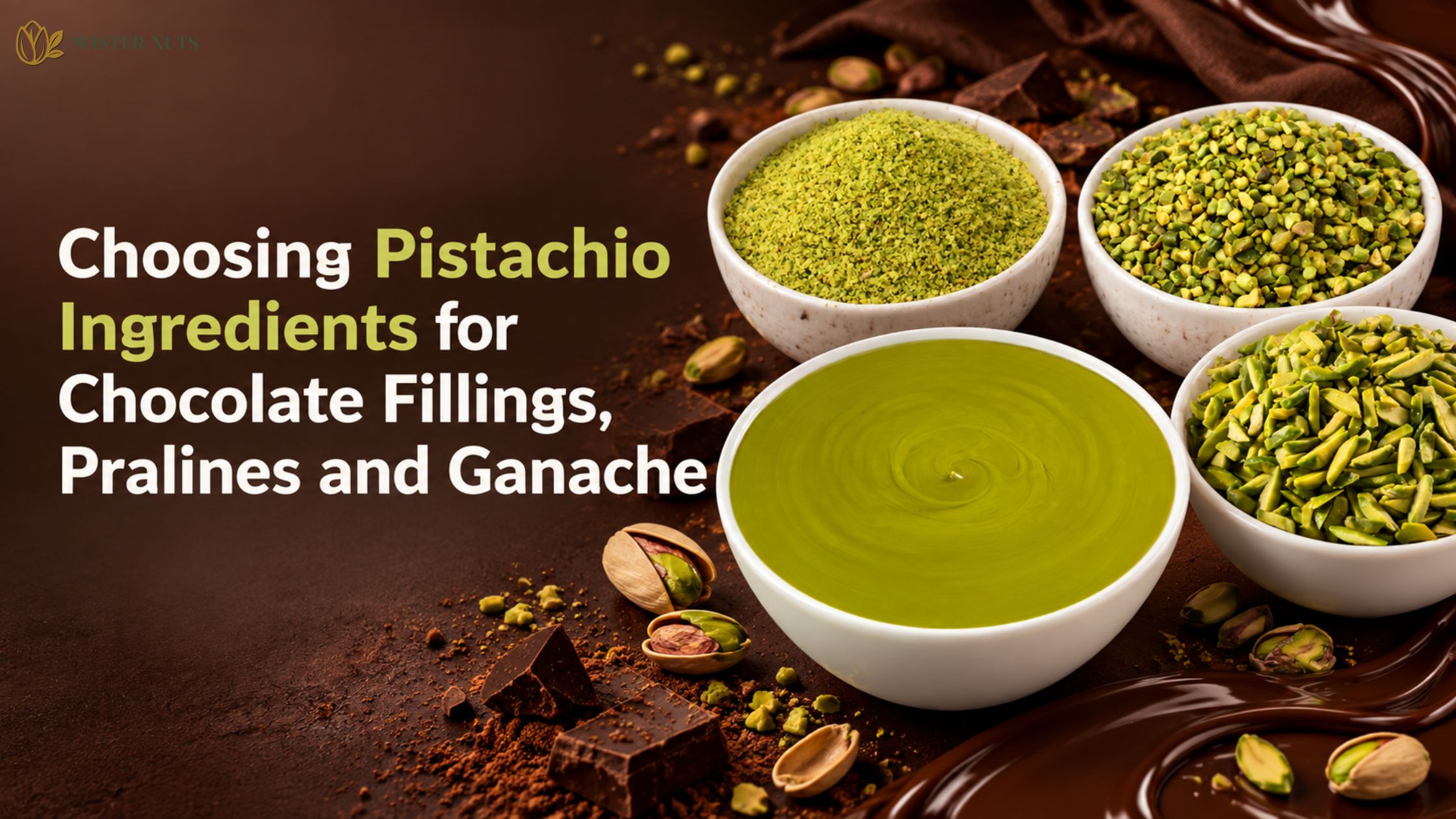
Kernels used for paste, powder, cream or fillings may be selected through the output they produce after processing. Color remains one input. Flavor, oil condition, particle result, yield and the applicable safety criteria also matter.
A lighter grade can be suitable for a defined processed product when it meets the buyer’s finished-product target. Use trial evidence and current commercial information for the purchasing decision.
Approve a physical reference sample
Words such as deep green, bright green and light green leave room for disagreement. A physical reference sample gives purchasing, QC and the supplier a shared comparison point.
Record:
- supplier and manufacturer
- product name and code
- grade
- sample or lot reference
- date received
- packaging and condition
- specification revision
- approved application
- approval date and reviewers
Store the reference under conditions that reduce avoidable color change and contamination. Follow the supplier’s documented storage guidance and the buyer’s retention procedure.
Photographs can support the record when lighting, background, exposure and distance remain fixed. Keep the approved physical sample as the primary color reference.
Set an incoming color check
Receiving teams need a repeatable method. Keep it simple enough to use on every relevant delivery.
Prepare the sample consistently
Use a defined sample amount and viewing container. Spread kernels to a similar depth for a consistent comparison.
Use fixed viewing conditions
Check under the same approved light source and neutral background. Record any major difference from the retained reference.
Separate color from defects
Record color match, broken pieces, skin or surface condition, foreign material, odor and packaging observations in separate fields. This prevents a single overall score from hiding the actual issue.
Escalate against agreed criteria
The receiver should know who reviews a borderline result and whether the material must be held. The escalation route belongs in the buyer’s receiving procedure or supplier agreement.
Use an operational approval table
| Review point | Evidence or method | Owner | Status |
|---|---|---|---|
| Product identity | Product name, code, grade and specification revision | Purchasing / QC | ☐ Pass ☐ Open |
| Color grade | Current physical reference under fixed lighting | QC / Product | ☐ Pass ☐ Open |
| Kernel condition | Whole/broken distribution and visible condition | QC / Production | ☐ Pass ☐ Open |
| Flavor and aroma | Defined sensory check suitable for the business | Product / QC | ☐ Pass ☐ Open |
| Finished-product trial | Actual topping, inclusion or processing test | R&D / Production | ☐ Pass ☐ Open |
| Food-safety documents | Applicable specification and required batch information | Food Safety / QC | ☐ Pass ☐ Open |
| Packaging and lot identity | Quotation, label and receiving check | Purchasing / Warehouse | ☐ Pass ☐ Open |
| Repeat supply | Later deliveries compared with the approved reference and specification | QC / Purchasing | ☐ Pass ☐ Open |
An open mandatory food-safety item blocks approval even when the color score is strong.
Compare formats after choosing the color band
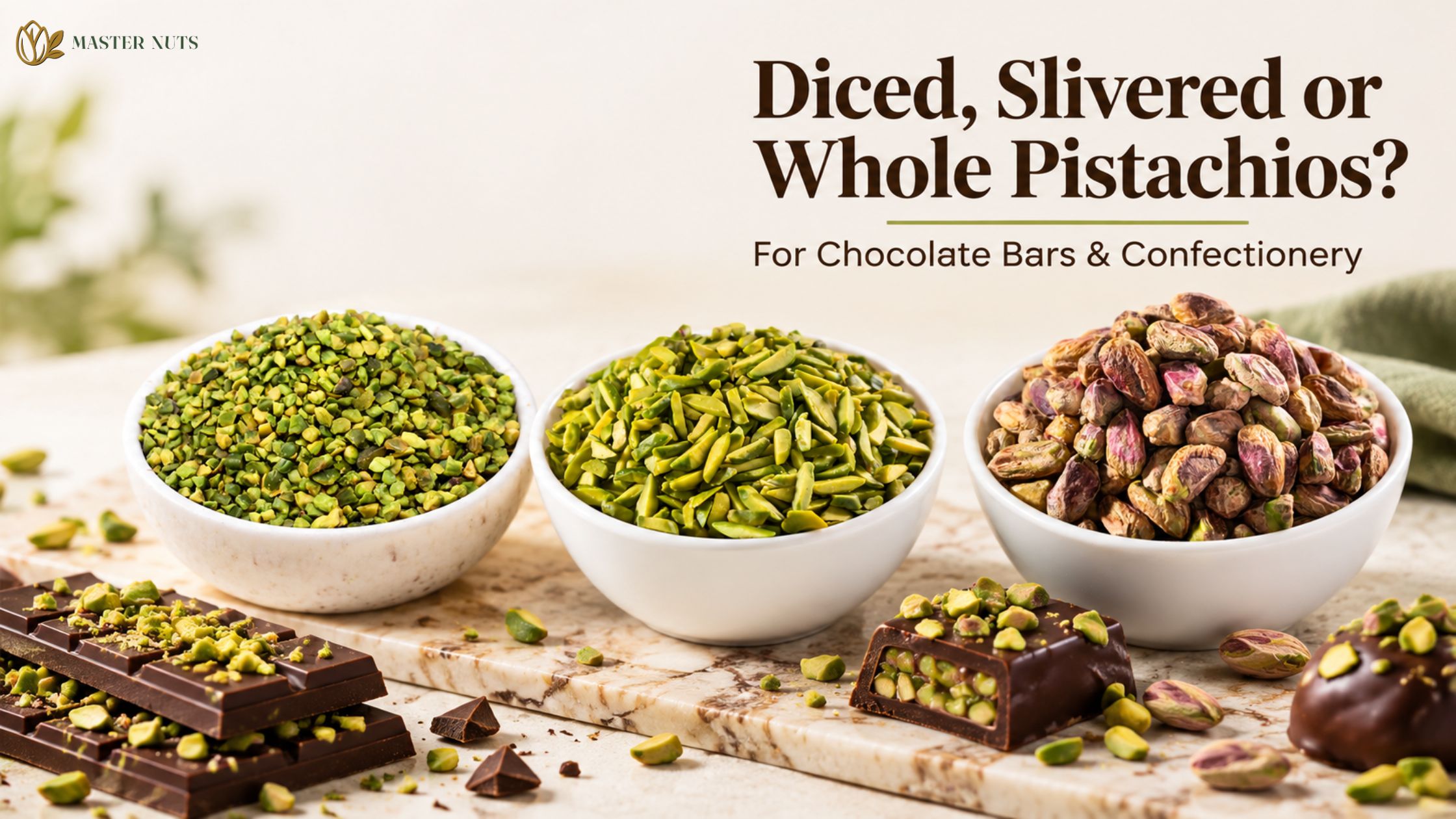
Green peeled kernels may be supplied as whole kernels or processed into diced pistachios, slivered pistachios or pistachio powder.
The format changes the visual result and process behavior. Approve the actual cut or powder offered for supply. A whole-kernel sample covers the whole-kernel product only.
Questions to send with a grade request
- Which current product code corresponds to the offered grade?
- How is the grade defined in the current specification?
- Can a reference sample be approved for later comparison?
- Which whole or processed formats are available in that color selection?
- What packaging and lot information apply?
- Which allergen and food-safety documents are available for qualification?
- Can a relevant batch document be supplied when required?
- How will availability and delivery timing be confirmed for the destination?
The usual delivery estimate is around 20 days from final order confirmation. Sales confirms timing for the current product, destination and shipment plan case by case.
Discuss the required kernel grade with Master Nuts
Share the finished application, required green reference, whole or processed format, expected volume, destination and required delivery timing.
Use the form at the bottom of the Green Pistachio Kernel page or contact Master Nuts through WhatsApp. The sales and product teams can confirm current grade options, document availability and sample availability for the proposed evaluation.
Frequently asked questions
Are green pistachio kernel grades standard across every supplier?
Each supplier defines its own grade mapping. Approve the offered product against its current specification and physical sample.
Is S grade always required for premium desserts?
The required grade comes from the finished-product color target and trial. A visible garnish may need a narrow deep-green reference, while a covered or blended application may accept a different band.
Can a photograph be used to approve kernel color?
A controlled photograph can support the record. Final color approval is stronger when it also uses a retained physical reference viewed under fixed lighting.
Should D or F grades be used only for powder?
The application should decide. Lighter color selections can be tested for powder, paste, fillings or other processed uses, provided the finished product and all mandatory specification requirements pass.
Does a greener grade guarantee stronger flavor?
The reviewed grade definition is primarily based on color. Flavor and aroma should be checked separately through the product specification, sample evaluation and finished-product trial.



Leave a Reply