
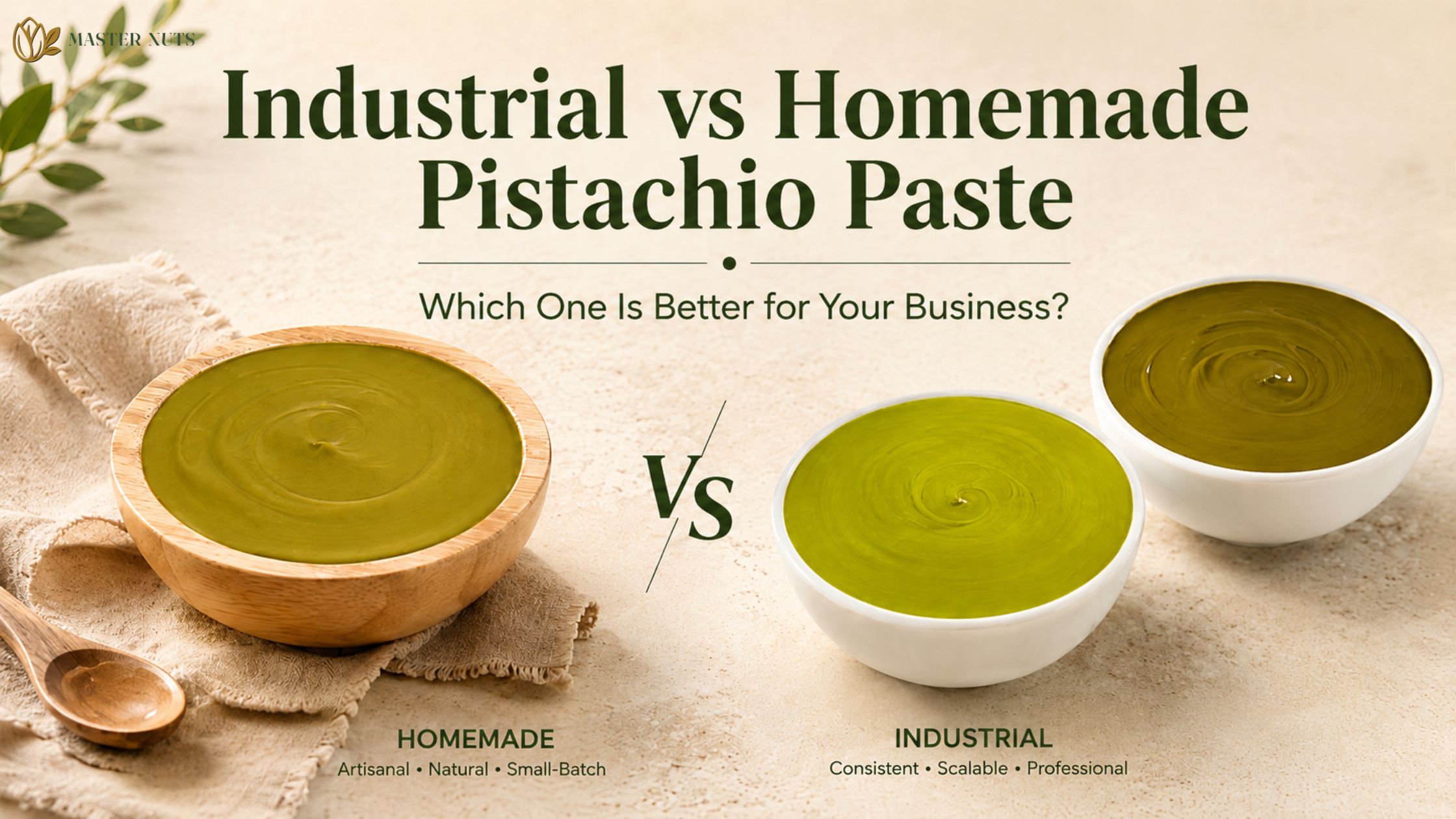
Pistachio paste can be made inside a food business, purchased from a specialist supplier, or sourced through a hybrid model. Each route moves work, cost and control to a different place.
A small pastry kitchen with spare grinder capacity faces a different decision from a gelato producer running several outlets. Production volume matters, but so do cleaning time, staff skill, documentation and the effect of the paste on the finished food.
Define the in-house process before comparing prices
“In-house” covers more than grinding kernels. The team receives and stores the nuts, prepares them for processing, runs the equipment, controls temperature and texture, cleans the line, records the batch and manages the output.
Map the process from intake to release. That map should name the equipment, operator time, usable yield, cleaning method, batch record and quality checks. It also exposes work that often disappears from a price-per-kilogram comparison.
Supplier-made paste arrives as a separate ingredient. Procurement and QC still need to qualify the product, approve a sample and check incoming deliveries. The grinding operation, however, sits with the manufacturer.
Capacity usually settles the first round
An internal grinder may be available for occasional development batches. Regular production can change the calculation quickly. Ask what else the equipment and staff could produce during the same hours, then include setup and cleaning in the capacity estimate.
Track a normal production week. Record waiting time, rework, interruptions and the amount of paste released for use. A theoretical machine rate says little when the line spends part of the shift cooling, cleaning or waiting for raw material.
Supplier-made paste reduces internal processing steps, although it creates its own planning needs. Lead time, storage space, approved stock and delivery reliability belong in the comparison.
Count total process cost
Kernel cost is only one line in an internal batch. A useful calculation also includes:
- direct labor for preparation, grinding, transfer and cleaning
- energy and routine equipment maintenance
- depreciation or lease cost for the processing equipment
- product lost during transfer, sampling or cleaning
- quality checks, records and retained samples
- downtime and production scheduling pressure
- storage and internal packaging, where required
Divide the total by the amount of approved paste released to production. Use the measured trial yield as the divisor.
For purchased paste, build the landed cost from the quoted ingredient, freight, duties where applicable, receiving work, storage and any cost tied to rejected or slow-moving stock. Compare both routes at the same point in the process.
The worksheet can stay simple:
In-house cost per approved kilogram = total batch cost ÷ approved paste released
Supplier-made landed cost per kilogram = purchase and delivery costs ÷ accepted quantity
The finished product may need a second calculation. Two pastes used at different levels can produce different costs per gelato tub, pastry or chocolate filling, even when their kilogram prices look similar.
Control means different things in each model
Internal production gives the team direct authority over kernel selection, grinding conditions and batch timing. That can suit a distinctive internal process or a product that depends on a specific texture. The business also carries responsibility for process knowledge, staff cover and batch release.
A qualified supplier gives the buyer a defined product code, specification and sample reference. The buyer controls the acceptance brief and incoming checks, while the manufacturer controls the paste-making process. Change notification and lot traceability deserve close attention because a supplier change can reach several finished products at once.
Quality approval in either model comes from the ingredient record and the finished-product trial.
Run one matched production trial
Prepare an internal paste and a supplier sample for the same application. Use the same recipe, batch size, equipment and process settings. Record every formula adjustment before the team interprets the result.
For gelato, review dispersion, color, pistachio character, texture and the result at serving temperature. A bakery or confectionery trial may focus on mixing, filling behavior, appearance after heat exposure and the finished texture.
Add operational observations beside the sensory notes: preparation time, equipment occupancy, cleaning, usable yield and waste. Repeat the comparison on another day if the decision will affect regular production.
Where a hybrid model fits
Some businesses keep a small grinder for development and limited releases, then purchase approved paste for regular production. The internal line remains useful for prototypes and special recipes. Supplier-made paste carries the base demand.
This model needs clear product control. A recipe developed with an internal paste should receive a separate approval when it moves to a supplied paste. Name the product code and approved application in the formula record.
Questions to answer before choosing
The production team should be able to answer these questions with records:
- How many approved kilograms are needed in a normal week and at seasonal peak?
- Which equipment and staff hours does internal production consume?
- What usable yield has the team measured?
- Which sensory and process traits define an acceptable paste?
- How much approved stock and lead-time cover does the supply model require?
- Which product documents, lot records and change controls are needed?
The result may differ by product line. A small signature item can justify internal work while a high-volume base recipe uses a qualified supplier.
Discuss the production model with Master Nuts
Share the finished product, present process, expected usage and destination with Master Nuts. The team can discuss current pistachio paste options, sample availability and the information needed for a matched trial. Gelato businesses can also review the ingredient range for gelato and ice cream production.


Leave a Reply