
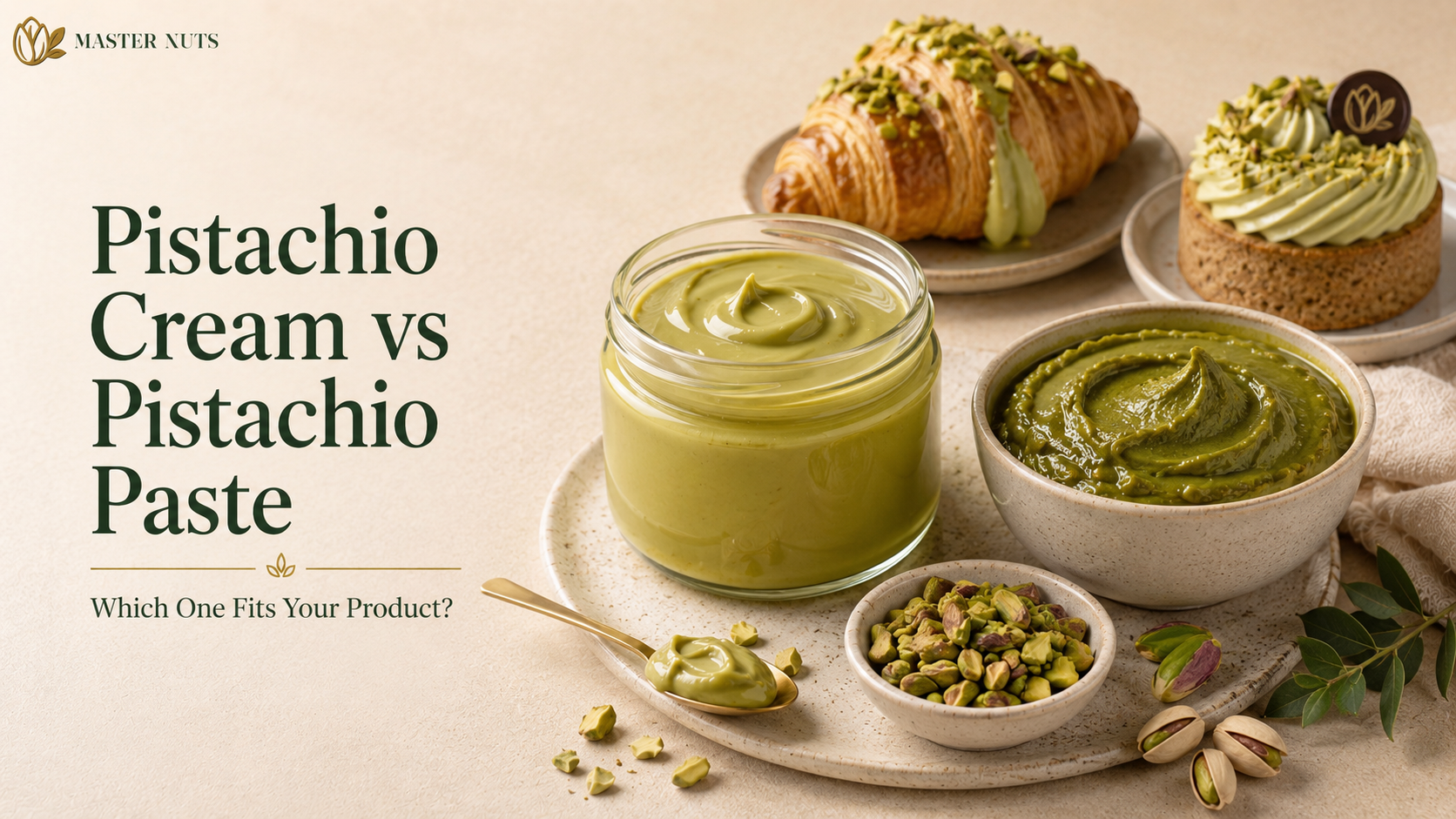
Pistachio cream and pistachio paste may look similar in a photograph, yet they enter a recipe in different ways. A product developer choosing between them should compare the current ingredient declaration, sweetness, texture and process requirements.
The product name alone is not enough. Formulations can vary between suppliers, so the current specification and a sample trial should control the decision.
The practical difference
Pistachio paste is a ground pistachio ingredient used as a base for further formulation. The current Master Nuts product page describes its main paste range as 100% pistachio kernel. Buyers should confirm the offered product code and current specification because separate paste types may have different ingredient declarations.
Pistachio cream is a formulated, sweet and spreadable product intended for direct use or for incorporation into a finished food. Its exact ingredients, pistachio content, sweetness and handling properties depend on the current formulation.
| Decision point | Pistachio paste | Pistachio cream |
|---|---|---|
| Recipe role | base ingredient for formulation | formulated component or ready-to-use filling/spread |
| Sweetness | set by the finished recipe | already influenced by the cream formulation |
| Texture work | recipe developer builds the final system | supplied texture may reduce preparation for a suitable use |
| Buyer control | greater control over sugar, fat and other recipe inputs | greater reliance on the supplied ingredient list and sensory profile |
| First document to review | current specification and ingredient declaration | current ingredient declaration, specification and use guidance |
This comparison describes the buying logic. It does not replace the documents for the exact product offered.
Choose paste when formulation control matters
Paste is often the clearer starting point when the pistachio ingredient must sit inside a controlled recipe. A gelato developer, chocolate manufacturer or bakery R&D team can set sweetness, fat balance, flavor intensity and texture through the full formulation.
For gelato and ice cream, paste may be evaluated in the complete base. The trial should use the intended sugar system, stabilizers, process and serving temperature. Color and sensory results should be judged after processing.
For chocolate or confectionery, the developer should check how the paste behaves with the intended chocolate, filling or fat system. Review mixing, texture, flavor, appearance and storage performance within the finished product.
Paste still requires development work. It does not give a finished recipe by itself, and a supplier dosage should be treated as a trial starting point when one is provided.
Choose cream when a formulated component suits the use
Pistachio cream can fit applications that need a sweet, spreadable component with less preparation at the point of use. Examples include croissant or pastry filling, crêpe topping, dessert assembly and selected café applications.
For cafés and dessert shops, service speed and portion control can matter as much as flavor. Test the cream with the actual dispensing method, service temperature and holding time. Check whether it spreads, pipes or portions as required.
Bakery teams should test filling stability, bake or post-bake use, moisture interaction and the appearance of the finished item. The supplied cream may suit direct filling in one product and require adjustment in another.
The ingredient declaration deserves close review. Sugar, fats, dairy ingredients, emulsifiers or other components can affect allergen management, nutrition, labeling and compatibility with the finished recipe. Confirm the current formulation for the product under consideration.
Compare them inside the finished product
A spoon test can show color, aroma and immediate texture. It cannot predict every production result. Use a short controlled trial:
- Define the target application and the pistachio ingredient’s role.
- Review the current ingredient declaration, allergen information and specification.
- Set one recipe and process for each candidate.
- Record the amount used on a consistent batch basis.
- Check mixing, spreading, piping or dispersion during production.
- Evaluate sweetness, flavor, color and texture in the finished food.
- Repeat the check after the intended storage or display period.
- Calculate cost in the finished unit, including any extra ingredients and process time.
This method gives procurement and R&D a shared record. It also prevents a low price per kilogram from hiding a higher finished-unit cost.
Questions to ask before approval
- What is the exact ingredient declaration for this product code?
- Is the product intended as a formulation base or a ready-to-use component?
- What allergen statement applies?
- Which packaging, storage and handling instructions apply?
- Can a representative sample and current specification be supplied?
- Which batch documents are available for qualification?
- Has the formulation or product code changed since the sample was approved?
Detailed specifications can be reviewed confidentially during a qualified purchase discussion. Manufacturer certifications should be checked for current validity, scope and product coverage.
A simple selection rule
Choose paste when your team needs to build and control the finished formulation. Choose cream when the supplied sweet, spreadable formulation already fits the product and operating method.
Some businesses may use both across different products. Keep separate specifications, approved samples and receiving records for each one.
Discuss the right option
Share the finished product, process, desired sweetness, texture, expected volume and destination with Master Nuts. Use the form at the bottom of the relevant product page or contact the team through WhatsApp to request current documents and discuss sample availability.
Frequently asked questions
Is pistachio cream the same as pistachio paste?
They have different product roles. Paste is used as a base for formulation. Cream is a formulated sweet, spreadable component. Confirm the exact ingredient declaration for each offered product.
Which option is better for gelato?
Paste usually gives the developer more control over the gelato formula. The final choice should follow a trial in the complete base and at the intended serving conditions.
Which option is easier for a café or bakery?
Cream may reduce preparation when its supplied texture and sweetness fit the menu item. Paste may suit businesses that build their own filling, base or signature recipe.
How should the two prices be compared?
Compare finished-unit cost. Include usage rate, added ingredients, preparation time, waste and the yield of the completed product.


Leave a Reply