
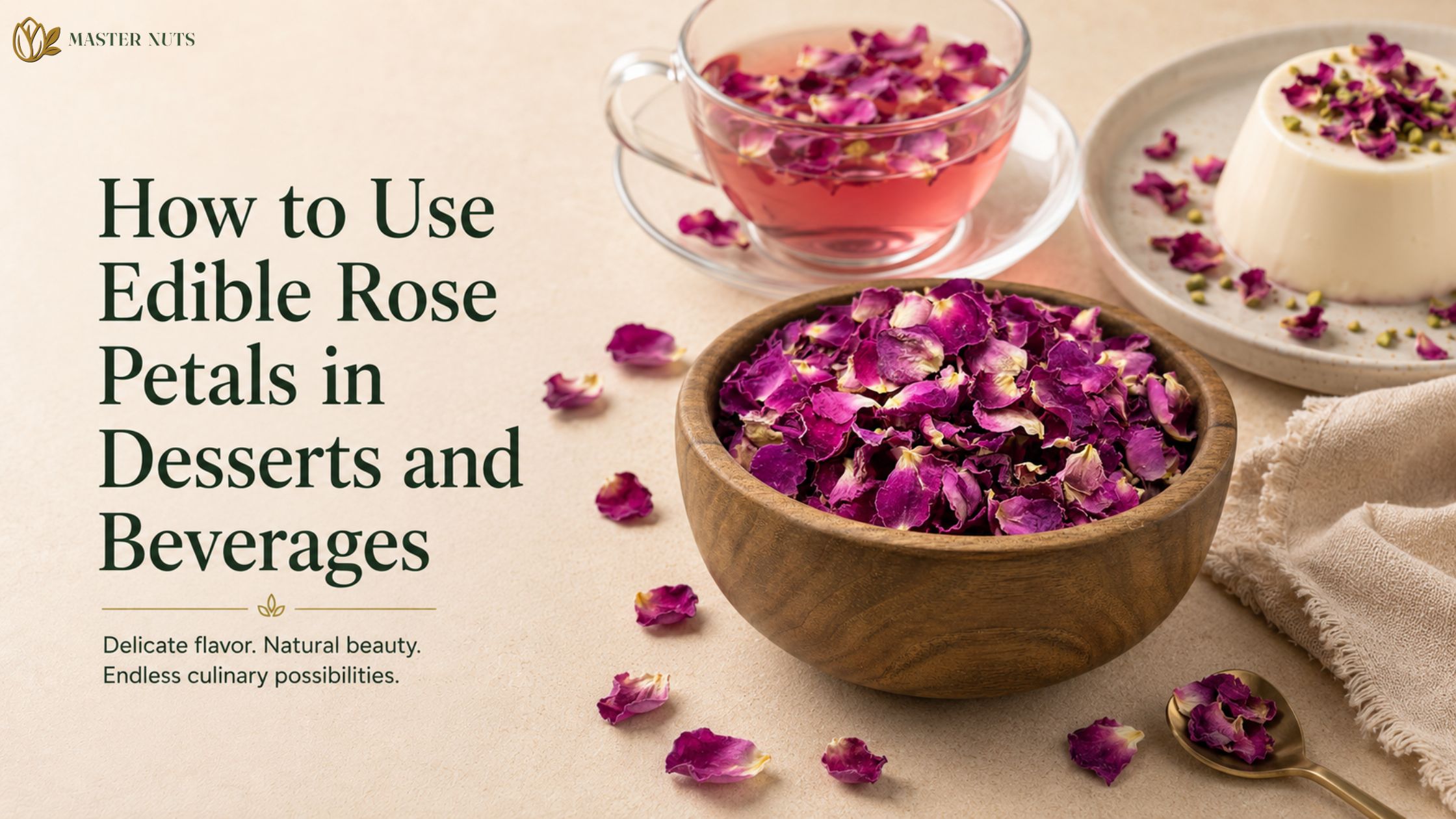
Rose petals bring something rare to food.
A small amount can change the whole feeling of a dessert or drink.
For cafes, bakeries, hotels, dessert shops, and food manufacturers, edible rose petals can add color, aroma, cultural depth, and a more refined finish. They work especially well in Middle Eastern menus, where rose has a long connection with tea, sweets, hospitality, and gifting.
Used well, rose petals can help a product feel more premium without making the recipe complicated.
Used carelessly, they can feel like confetti from a wedding table.
So the details matter.
- Why edible rose petals work in food products
- Use 1: rose tea and herbal drinks
- Use 2: milk-based drinks
- Use 3: cake and pastry decoration
- Use 4: Arabic sweets and traditional desserts
- Use 5: pistachio desserts
- Use 6: chocolate and confectionery
- Use 7: plated desserts and hotel service
- How to use rose petals without overdoing it
- Quality points buyers should check
- Choosing rose petals for your business
- Need edible rose petals for desserts or beverages?
Why edible rose petals work in food products
Edible rose petals have 2 main jobs.
They add a soft floral note.
They improve the look of the final product.
The aroma is delicate. It doesn’t hit the customer like cardamom or cinnamon. It sits in the background and gives the product a gentle, perfumed finish.
That’s why rose works so well in desserts and drinks with cream, milk, nuts, honey, saffron, pistachio, almond, and vanilla.
For B2B food businesses, rose petals also help with product positioning.
A dessert topped with rose petals often feels more suitable for:
- Hotel buffets
- Ramadan menus
- Eid gifting
- Premium cafe desserts
- Arabic sweets
- Wedding and event catering
- Specialty tea blends
Small ingredient. Big signal.
Use 1: rose tea and herbal drinks
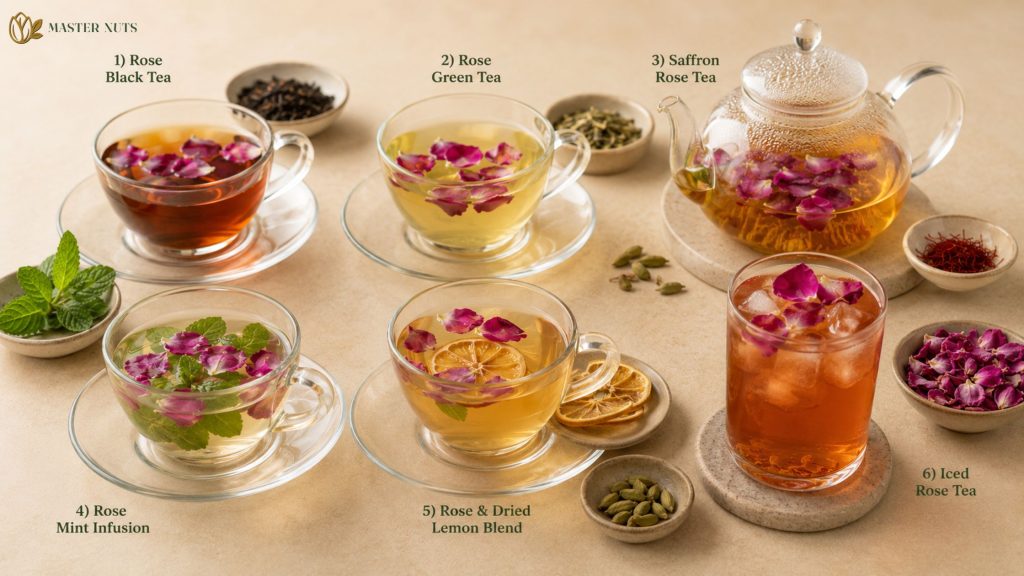
Tea is the easiest place to use edible rose petals.
Rose petals can be used alone as a herbal infusion or mixed with black tea, green tea, saffron, cardamom, dried lemon, or mint.
For cafes and tea brands, rose petals can help create a drink that feels calm, aromatic, and culturally familiar.
Good beverage uses include:
- Rose black tea
- Rose green tea
- Saffron rose tea
- Rose mint infusion
- Rose and dried lemon blend
- Iced rose tea
For hot tea, use petals that have a clean aroma and good color. The visual part matters because customers often see the petals inside the cup, pot, or packaging.
For iced drinks, rose petals work better as a garnish than as the main flavor source. You can pair them with rose syrup, milk, or fruit.
Use 2: milk-based drinks
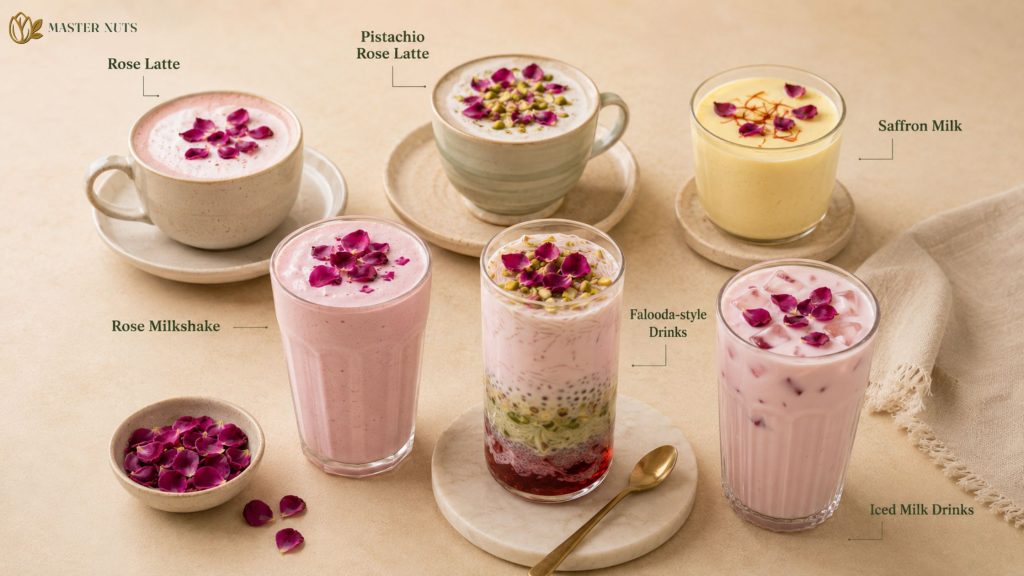
Rose pairs well with milk.
That’s one reason rose milk, rose latte, and floral milk drinks work across cafes and dessert menus.
Rose petals can be used as a topping for:
- Rose latte
- Pistachio rose latte
- Saffron milk
- Rose milkshake
- Falooda-style drinks
- Iced milk drinks
The petals give a clear visual cue before the customer tastes the drink.
For cafes, this helps menu photos. A pale pink or creamy drink with rose petals on top looks soft, clean, and easy to understand.
If you sell drinks through delivery apps, that top garnish can help the product look more special in photos.
Use 3: cake and pastry decoration
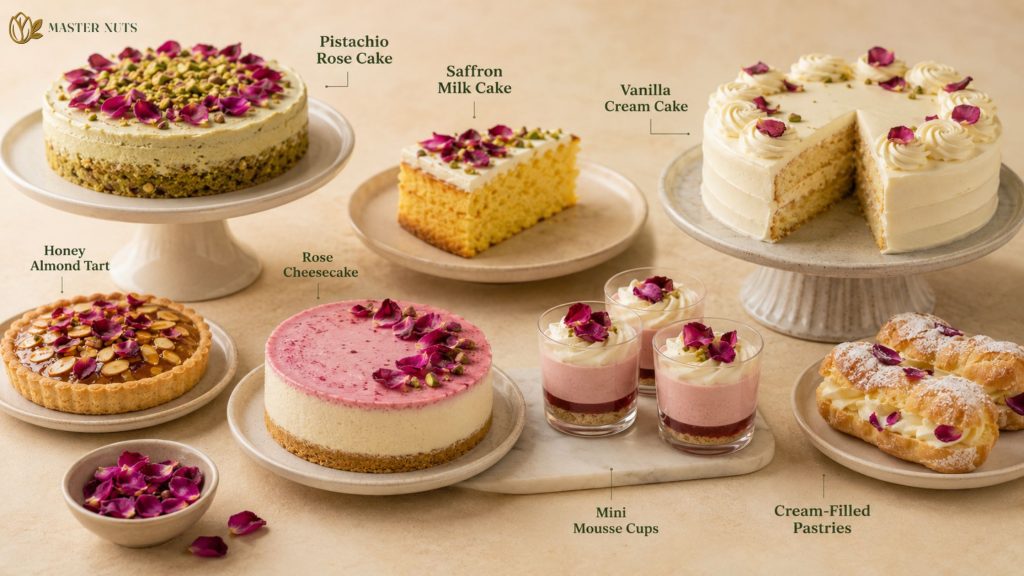
Rose petals are often used as a finishing ingredient.
They work well on cakes, tarts, mousse cups, cream pastries, and layered desserts.
Good examples:
- Pistachio rose cake
- Saffron milk cake
- Vanilla cream cake
- Honey almond tart
- Rose cheesecake
- Mini mousse cups
- Cream-filled pastries
The key is restraint.
A few petals can look elegant. Too many can make the product look busy.
For bakeries, rose petals are useful because they add a premium finish without adding heavy labor. Staff can apply them quickly during final decoration.
They also pair beautifully with green pistachios.
That color contrast, pink rose against green pistachio, feels natural for Middle Eastern and luxury dessert menus.
Use 4: Arabic sweets and traditional desserts
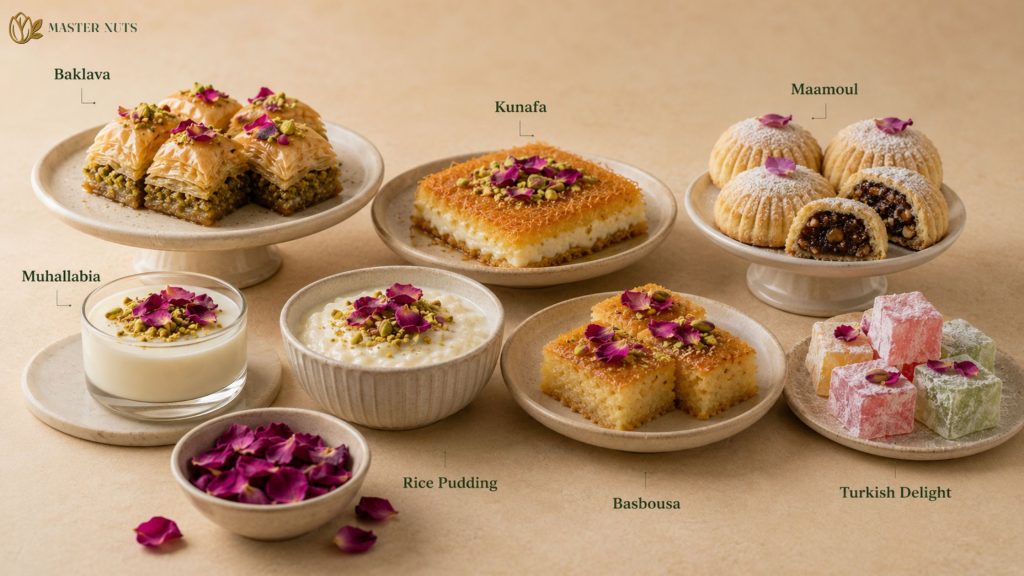
Rose has a strong place in Middle Eastern dessert culture.
It fits naturally with ingredients like pistachio, almond, dates, saffron, cardamom, honey, and cream.
You can use edible rose petals on:
- Baklava
- Kunafa
- Maamoul
- Halva
- Muhallabia
- Rice pudding
- Basbousa
- Turkish delight style sweets
For Arabic sweets, rose petals do more than decorate.
They connect the product to memory.
A small touch of rose can make a dessert feel closer to hospitality, family gatherings, Ramadan tables, Eid boxes, and hotel dessert stations.
That cultural link has business value.
Customers often pay more for products that feel giftable, seasonal, and rooted in tradition.
Use 5: pistachio desserts
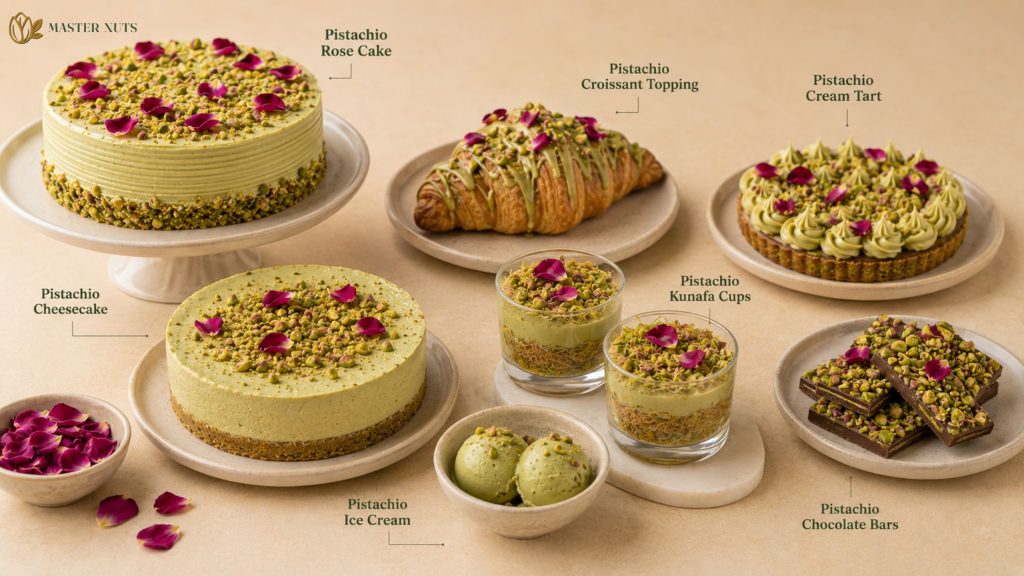
Rose and pistachio are a strong pair.
Pistachio gives richness. Rose gives fragrance and color.
For bakeries and dessert shops, this pairing works across many products:
- Pistachio rose cake
- Pistachio croissant topping
- Pistachio cream tart
- Pistachio cheesecake
- Pistachio kunafa cups
- Pistachio ice cream with rose garnish
- Pistachio chocolate bars
Rose petals should usually sit on the surface, especially when the pistachio element is expensive and visually strong.
Use rose petals as a final touch, then let pistachio carry the body of the dessert.
Use 6: chocolate and confectionery
Chocolate makers can use rose petals to create a more gift-ready look.
Dark chocolate with rose petals feels more dramatic. White chocolate with rose petals feels softer. Milk chocolate with pistachio and rose sits somewhere in the middle.
Good uses include:
- Chocolate bark
- Truffles
- Bonbons
- Chocolate tablets
- Date-filled chocolates
- Nut clusters
- Gift boxes
For chocolate, dry petals work better than fresh petals because they’re easier to store and apply.
They also reduce moisture risk.
Food manufacturers should test how petals behave during packing, storage, and transport. A topping that looks perfect on day 1 should still look good when the customer opens the box.
Use 7: plated desserts and hotel service
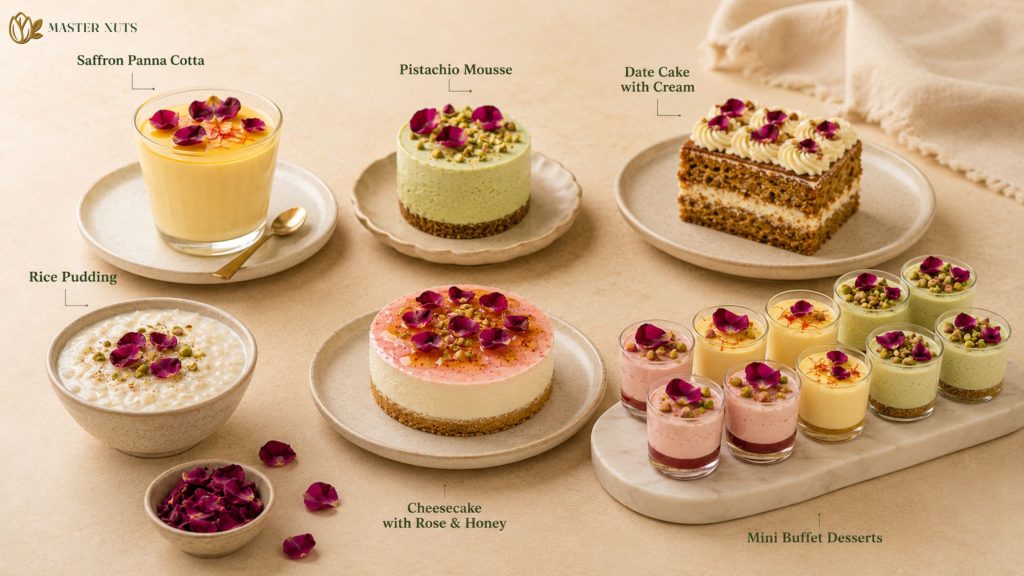
Hotels, restaurants, and catering teams often use rose petals for final plating.
They’re light, fast, and visually clear.
Good examples:
- Saffron panna cotta with rose petals
- Pistachio mousse with rose garnish
- Date cake with cream and petals
- Rice pudding with pistachio and rose
- Cheesecake with rose and honey
- Mini desserts for buffets
For buffet service, rose petals help desserts read better from a distance.
A plain cream dessert can disappear on a white plate. A few rose petals give it shape, color, and a sense of care.
How to use rose petals without overdoing it
Rose is delicate.
Too much can feel perfume-like. Too little can disappear.
For decoration, start small:
- 2 to 4 petals on a small dessert cup
- 5 to 8 petals on a cake slice
- A light sprinkle on a full cake
- A few petals in a tea blend, adjusted after tasting
For drinks, test aroma after brewing or mixing.
Heat can change floral notes. Cold drinks can mute them.
The best amount depends on your product, serving size, and customer taste.
Quality points buyers should check
For B2B buyers, edible rose petals should be judged by more than color.
Check:
- Aroma
- Clean appearance
- Food-grade suitability
- Dryness level
- Packaging
- Shelf life
- Consistency across batches
The petals should smell pleasant, clean, and natural.
They should also be free from dust, unwanted stems, and dull broken pieces.
For cafes and dessert shops, appearance matters because the petals are usually visible in the final product.
Choosing rose petals for your business
Choose edible rose petals based on how you’ll use them.
For tea and beverage blends, aroma matters most.
For dessert decoration, color and petal shape matter more.
For chocolate and packaged sweets, dryness and storage stability matter.
For hotels and catering, consistency matters because the product has to look the same across many plates.
A good supplier should help you match the rose petal grade to the application.
Need edible rose petals for desserts or beverages?
At Master Nuts, we supply edible rose petals for cafes, bakeries, dessert shops, hotels, tea brands, and food manufacturers across the UAE and Middle East.
You can use them in tea blends, premium desserts, Arabic sweets, chocolate, drinks, and decoration.
Request pricing, samples, or product specifications, and our team will help you choose the right rose petals for your menu or production line.
Leave a Reply