
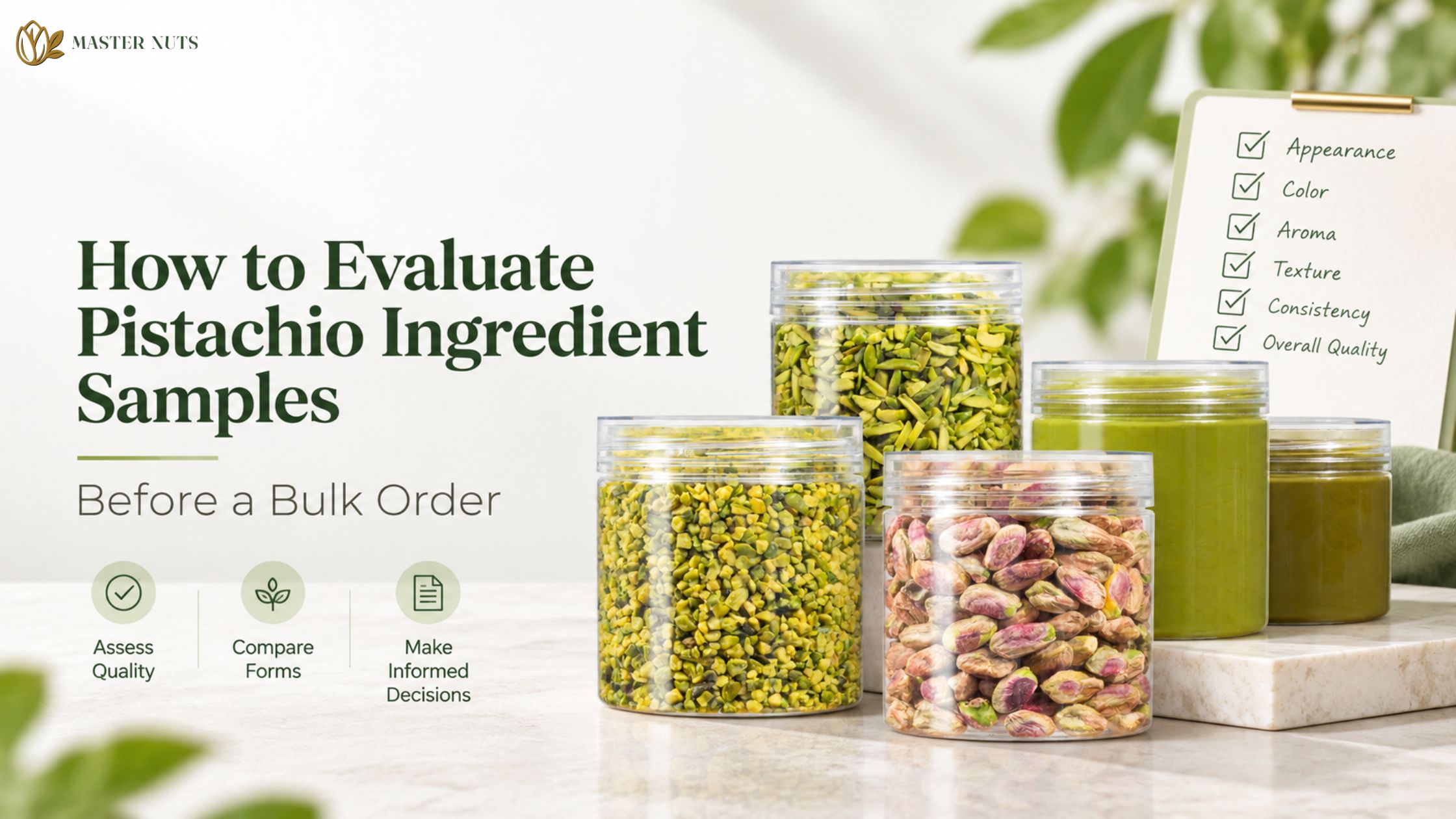
Tasting pistachio paste from a spoon or examining kernels under office lighting can expose an obvious defect. It tells you far less about the way the ingredient will behave in gelato, chocolate, bakery dough or a confectionery filling.
A useful sample evaluation reproduces the intended application, keeps the comparison controlled and records the result after production. That gives R&D, quality and procurement evidence they can use together before commercial volume is committed.
Define the purchase decision first
Write one sentence describing the decision the trial must support. You may be qualifying a second supplier, replacing an existing ingredient, choosing between formats or approving a new grade. Each purpose changes the test.
Build a short trial brief around the finished food. Include the target use level, normal processing conditions and the attributes that can cause approval or rejection. Pistachio paste may require checks for flavour release, flow and its effect on a filling. Diced kernels may require checks for cut distribution, visible coverage and breakage.
Name the reference as well. An approved production lot usually gives the team a more useful benchmark than a phrase such as “premium quality.” Keep a retained sample when your quality procedure permits it, together with a photograph and the original approval record.
Keep the comparison controlled
Use the same base recipe, equipment, operator, batch size and process sequence wherever practical. Bring samples to the agreed working temperature before comparing paste flow. Weigh each addition. Record every adjustment.
Changing one meaningful variable at a time keeps the result readable. If Sample A uses a higher dose and a longer mixing time, the team cannot tell which change produced the difference.
Keep enough material for confirmation. A small trial can be distorted by an uneven scoop, handling error or an unrepresentative portion. An unopened reserve also helps when the first run raises a question.
| Trial stage | What to record | Why it affects approval |
| Receipt | Product code, lot, pack condition and documents | Confirms the identity of the tested material |
| Raw check | Appearance, aroma, texture and visible separation or fines | Screens the sample before production time is used |
| Process | Dose, temperature, time, transfer and equipment behaviour | Shows how the ingredient works in the real operation |
| Finished product | Flavour, colour, texture, distribution and saleable yield | Connects the ingredient to the product customers receive |
| Follow-up | Result after cooling, freezing, baking or storage | Captures changes that appear after production day |
Use blind codes for sensory work
Price, supplier name and colour expectations can influence a tasting panel. Give the samples neutral codes when sensory preference is part of the decision. Randomise the serving order and keep the preparation method consistent.
Choose reviewers who understand the product brief. A small trained group can describe roasted notes, bitterness, sweetness balance and flavour persistence with more precision than a large unbriefed group.
Ask for observations before a general score. “Stronger pistachio aroma at the approved dose” gives R&D something to work with. “Sample B is better” leaves the reason open.
Inspect each format on its own terms
The incoming check depends on the ingredient.
For paste, record aroma, homogeneity, visible particles, oil separation and handling at the agreed temperature. Natural oil movement can occur in a 100% nut paste. Stir samples through the same defined method before comparing consistency.
For whole kernels and cuts, inspect colour distribution, foreign material, broken pieces, dust and the quoted size or grade. Take portions from more than one area of the sample pack where the procedure allows.
For pistachio powder, check flow and agglomeration. Pistachio powder still contains the nut’s natural oil, so its handling differs from a defatted cereal flour. The pistachio ingredients guide can help the team separate format choice from supplier choice.
Photographs work when the setup stays fixed. Use the same light, background, camera position and sample depth. A bright window for one sample and warm factory lighting for another will make the record misleading.
Run the sample through the real product
Sugar, cocoa, dairy fat, water, heat and freezing change the way a pistachio ingredient performs. Prepare the closest practical version of the commercial process.
Chocolate and praline teams should watch mixing, viscosity, set, flavour balance and the cross-section of the finished piece. Gelato trials need a check after freezing and at serving temperature. Bakery trials should follow the normal mixing and baking profile, with attention to aroma, structure, spread and the final surface.
Visible pieces add another set of checks. Watch feeder performance, distribution through the batch and breakage during mixing or depositing. Examine several finished units from the beginning, middle and end of the run.
Any extra oil, liquid, heat or processing time belongs in the trial record. A hidden correction will return as a surprise during scale-up.
Review the result after production day
Some differences appear after cooling or storage. Set review times that reflect the product’s real route to sale. Track the attributes likely to move, such as oil migration, texture, flavour intensity, topping adhesion, moisture pickup or sedimentation.
Use the same packaging and storage conditions for each candidate. A short sample trial can screen options; the chosen formula should then follow the company’s normal shelf-life validation.
Measure yield and waste at the same time. Paste left in the pail, excess fines, blocked equipment or additional cleaning can change cost per saleable unit. These observations belong beside the sensory result.
Decide how much variation the process can accept
Pistachios are agricultural ingredients, so commercial lots will show some variation. The approval record should define the operating window your formula and equipment can handle.
Ask whether the submitted material represents normal production and compare more than one lot when consistency carries high risk. Connect measurable criteria to the product specification and describe sensory expectations with a retained reference.
An unusually strong sample can create an unrealistic benchmark. A representative sample gives procurement a fairer basis for future receiving checks.
Close the trial with a usable record
Record the sample code, supplier lot, date, formula, dose, equipment, settings, evaluators and results. Separate critical acceptance criteria from preferences.
Choose a clear outcome: approved, approved with stated conditions, or further work required. List any open action, such as another lot, an additional document or a larger line trial, together with its owner.
Use the pistachio ingredients page to tell Master Nuts which product you make, the format you want to test and your expected usage. Request representative samples through the inquiry form or WhatsApp, then run them under the same conditions before placing a bulk order.


Leave a Reply