
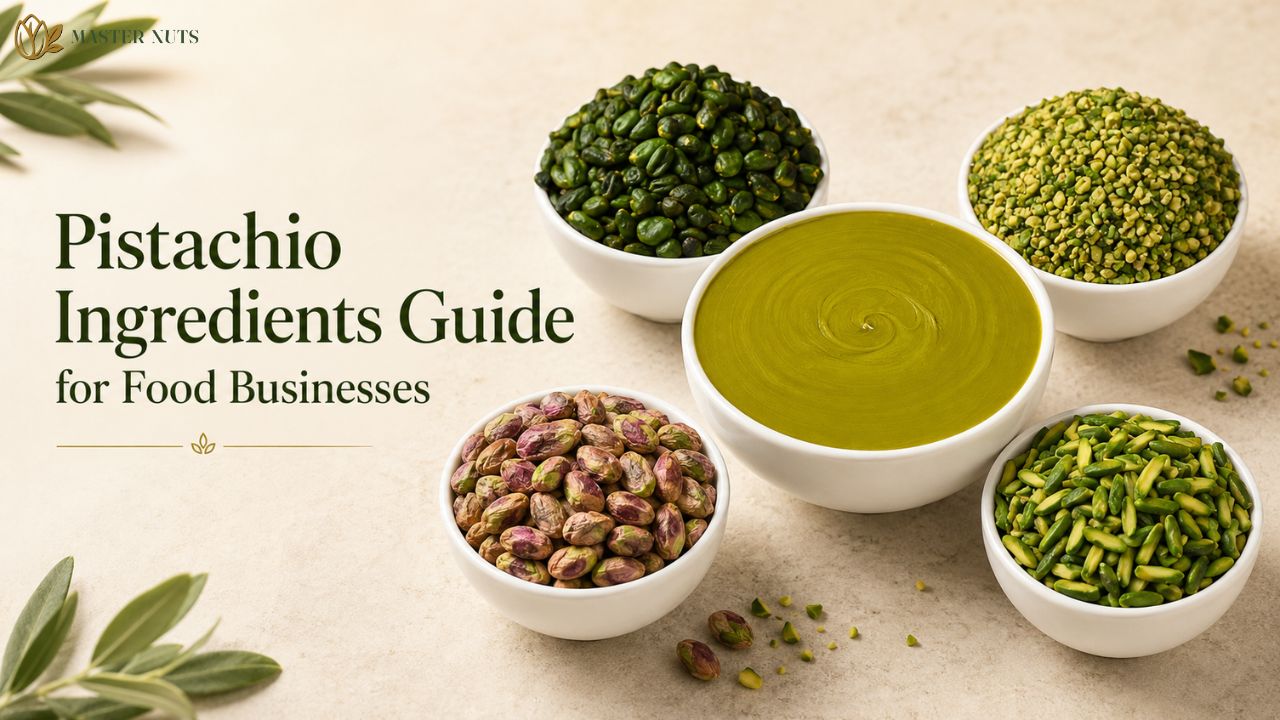
“We need pistachio” is too broad for a supplier brief. A praline filling, gelato base, croissant topping and packaged cake may each need a different format.
Begin with the job the ingredient must perform. Flavor through the formula points to a different shortlist from visible pieces, a clean garnish or a ready-to-use sweet component.
The Master Nuts pistachio ingredients range covers paste, cream, peeled and skin-on kernels, diced pieces, slivers, splits and powder. This guide maps those formats to practical B2B decisions and directs final approval to the current specification and production trial.
- Choose by function before choosing by grade
- Pistachio paste: flavor distributed through a formula
- Pistachio cream: a formulated sweet component
- Green peeled kernels: visible color and whole-piece presentation
- Skin-on pistachio kernels: natural appearance and further processing
- Diced pistachios: controlled pieces for mixing and topping
- Slivered pistachios: narrow pieces for a deliberate finish
- Pistachio splits: visible halves and larger inclusions
- Pistachio powder: a fine-particle format
- Format comparison for a first shortlist
- Map formats to the production environment
- Review the documents behind the sample
- Test cost in the finished product
- Build the sample request around one decision
- Discuss the right pistachio format with Master Nuts
- Frequently asked questions
Choose by function before choosing by grade
A short product brief can eliminate unsuitable formats before samples are requested.
Define:
- the finished product and its sales format
- whether pistachio must provide flavor, color, texture, appearance or several of these
- whether the ingredient remains visible
- how it enters the process
- the heat, mixing, freezing or handling steps it will face
- the target piece size or texture
- ingredient-declaration and allergen requirements
- the expected purchasing pattern and delivery destination
One format can play more than one role. The brief should still identify the primary job. That keeps the trial focused and makes cost comparison easier.
Pistachio paste: flavor distributed through a formula
Pistachio paste is a ground pistachio product with a paste-like consistency. Master Nuts lists several paste options, and the current specification must be checked for the selected product.
Paste is a logical starting point when pistachio flavor and color need to move through a base, cream, filling or chocolate system. Applications can include:
- gelato and ice cream bases
- bakery creams and layered fillings
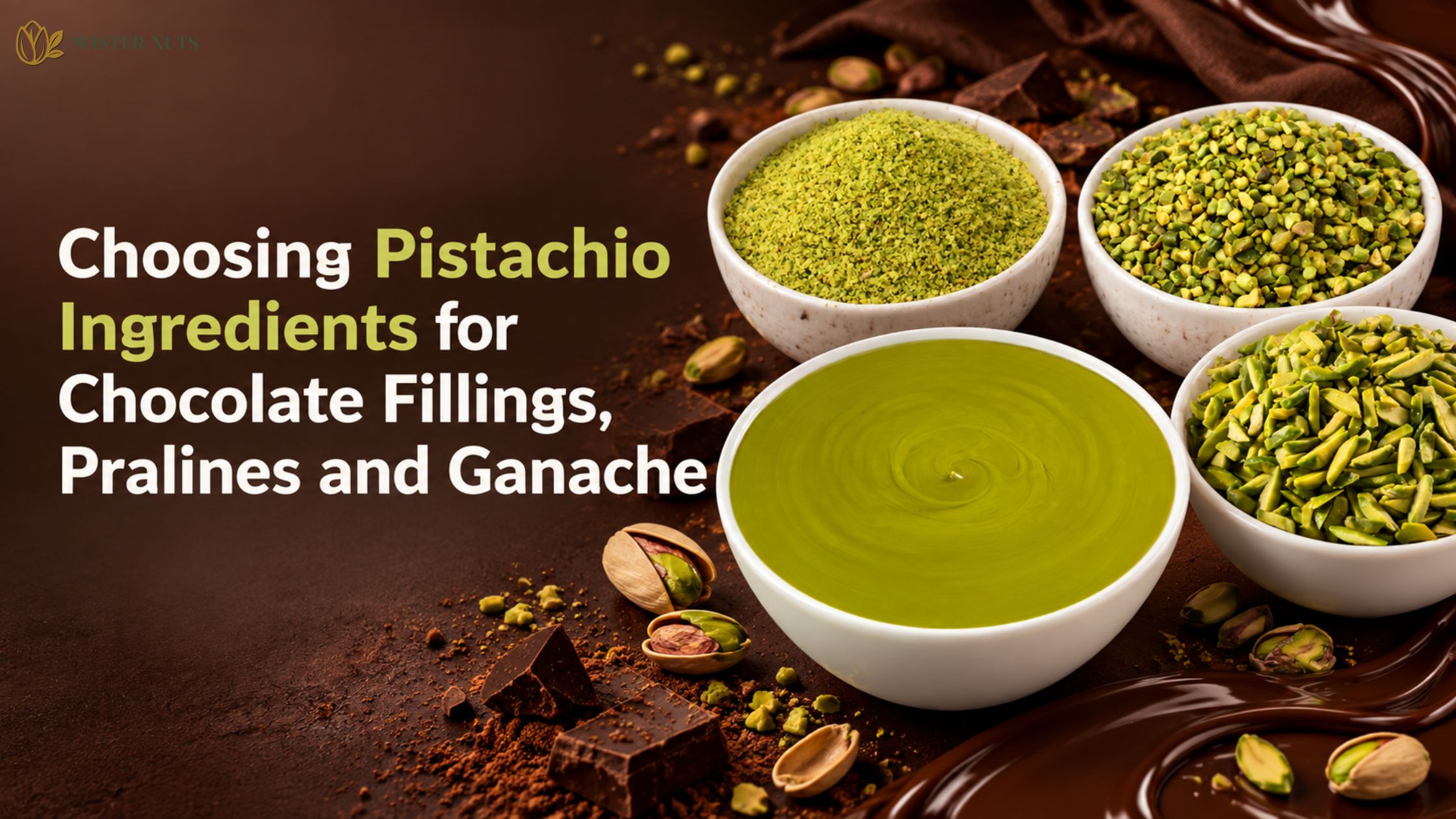
- praline-style centers and ganache-style systems
- flavored dessert components
- recipes that need pistachio without visible nut pieces
Trial questions include dispersion, flavor after processing, final color, texture, free oil, dosage and finished-batch cost. A paste that works in a gelato base may need a separate trial in chocolate or bakery filling because the surrounding formula changes the result.
The separate guide to pistachio paste for gelato gives a controlled frozen-product trial method.
Pistachio cream: a formulated sweet component
Pistachio cream is presented in the current Master Nuts range as a ready-to-use, spreadable product for sweet applications. Its composition may vary by formulation, so buyers should review the current ingredient declaration, allergen information and specification for the quoted option.
Potential uses include:
- croissant and pastry filling
- cake layers and dessert cups
- waffle, crepe and cheesecake topping
- confectionery centers
- frozen-dessert ripples or layers, subject to recipe testing
- specialty beverage applications, subject to dispersion and service testing
The main buying questions concern sweetness, pistachio content, viscosity, process fit, label declaration and behavior in the finished product. Cream and paste can have different compositions and functions, so compare their current documents and samples separately.
Green peeled kernels: visible color and whole-piece presentation
Green pistachio kernels are peeled kernels sorted into color grades. They suit products where the kernel remains visible or where the buyer will process a selected green raw material into another format.
Applications can include:
- whole-kernel decoration on pastries and plated desserts
- visible inclusions in chocolate bars, nougat or confectionery
- gelato and ice cream topping
- premium bakery finishing
- further cutting, grinding or processing
Color grade, kernel condition, size distribution and intended use should be agreed through a reference sample and current specification. Grade letters are supplier-specific. The green pistachio kernel grades guide explains how to compare the Master Nuts range through product definitions and reference samples.
Skin-on pistachio kernels: natural appearance and further processing
Pistachio kernels retain their natural skin. They can be used whole, chopped or ground when the finished product accepts that appearance and the process needs a general kernel input.
Possible uses include:
- chocolate and confectionery inclusions
- bakery and cookie pieces
- snack or coated-nut products
- chopped toppings
- in-house grinding or further processing
Compare the actual kernel sample for flavor, size, skin condition, foreign-material criteria and processing yield. Claims about cost advantage require current quotations and the buyer’s own yield data.
Diced pistachios: controlled pieces for mixing and topping
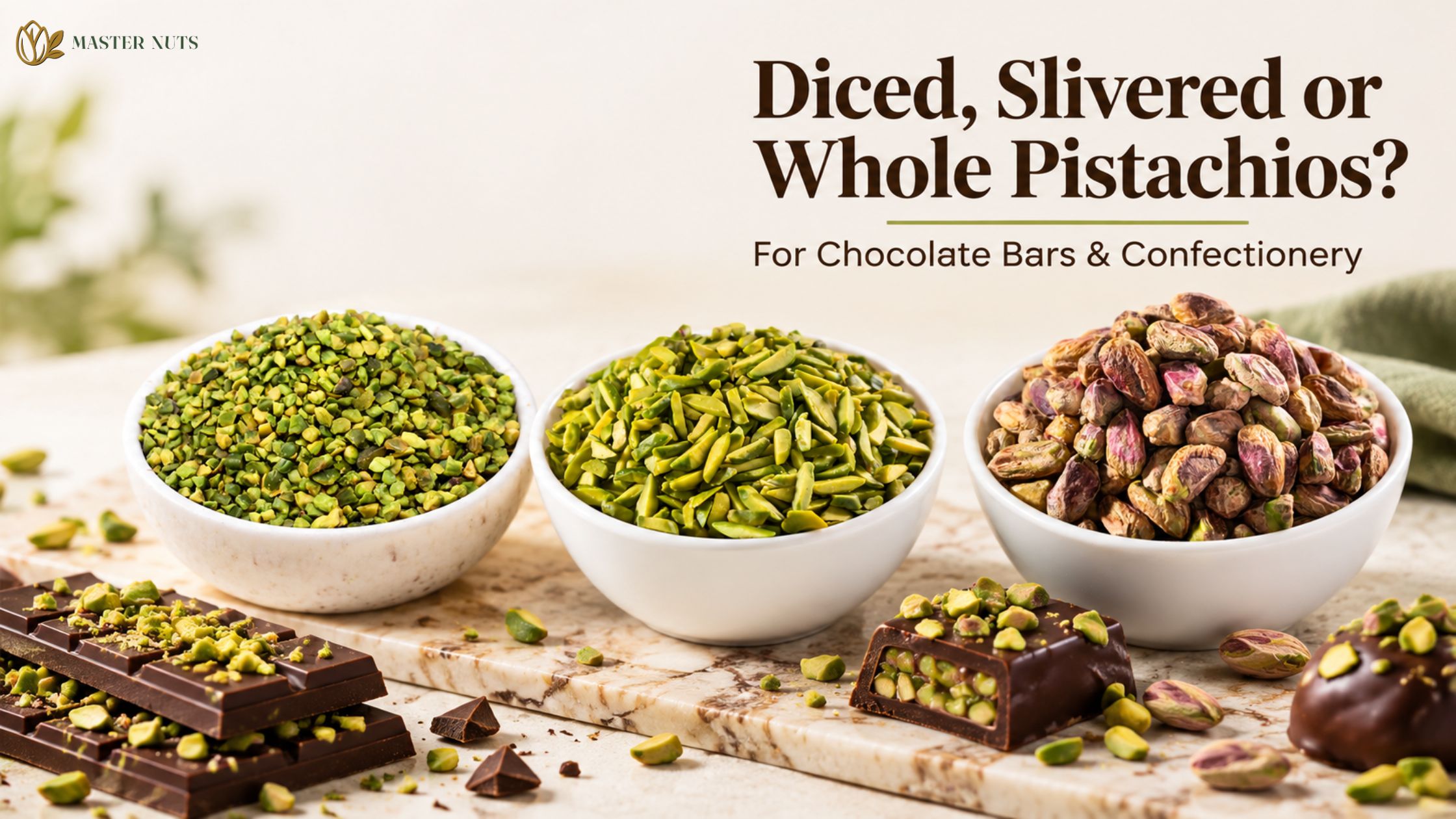
Diced pistachios are pre-cut pieces. The current Master Nuts range lists green peeled options in 2–4 mm and 4–6 mm sizes, plus a normal diced option.
The format can fit:
- chocolate bars, clusters and nougat
- praline and truffle inclusions
- pastry, cookie and cake toppings
- gelato mix-ins and surface finishing
- bakery fillings that need visible pieces
Confirm the cut range, color option and allowable fines in the current product specification or sample agreement. During trials, measure distribution, visual coverage, bite, handling breakage and actual usage per finished unit.
Slivered pistachios: narrow pieces for a deliberate finish
Slivered pistachios are thin pieces cut from selected kernels. They suit products designed around an elongated visual shape.
Applications can include:
- baklava, kunafa and pastry finishing
- cake and plated-dessert decoration
- chocolate surface decoration
- gelato and ice cream topping
- hospitality dessert presentation
Review slice shape, color, breakage, fines and application method. A thin piece can look clean on the finished product and still create handling loss if the production method is too rough. The trial should use the actual topping or placement process.
Pistachio splits: visible halves and larger inclusions
Pistachio splits are kernel halves. They sit between whole kernels and smaller cuts in visual size.
Possible uses include:
- visible inclusions in bars and confectionery
- bakery and dessert toppings
- nougat and coated products
- frozen-dessert topping
- products that need a larger natural nut piece
Evaluate size distribution, breakage, visible skin or color, bite and how the halves move through depositing, mixing or topping equipment. The supplied photo and sample should match the product offered for regular supply.
Pistachio powder: a fine-particle format
Pistachio powder is finely ground pistachio. Master Nuts lists green and normal options.
The format can be assessed for:
- bakery batters and cookie systems
- creams and fillings
- confectionery centers or coatings
- dusting and surface finishing
- products designed around fine pistachio particles
Powder remains a nut ingredient and contains naturally occurring oil. Check particle size, color, clumping, dispersion and the effect on the actual formula.
Format comparison for a first shortlist
| Required job | Formats to screen first | Key trial questions |
|---|---|---|
| Distribute pistachio flavor through a wet or fat-based system | Paste; cream when a formulated sweet component is intended | Composition, flavor, color, viscosity, dispersion, sweetness and finished-product texture |
| Keep whole pistachio visible | Green peeled kernel; skin-on kernel | Color, size, kernel condition, bite and processing yield |
| Add small visible pieces | Diced pistachios | Cut range, fines, coverage, distribution, bite and breakage |
| Add elongated decorative pieces | Slivered pistachios | Slice shape, color, breakage and placement method |
| Add larger kernel halves | Pistachio splits | Size distribution, breakage, appearance and equipment handling |
| Add fine pistachio particles | Powder | Particle size, clumping, color, dispersion and formula effect |
This is a screening table. The final choice comes from the current specification and a trial in the intended product.
Map formats to the production environment
Chocolate and confectionery
A chocolate or confectionery manufacturer may use paste or cream for centers and fillings, diced pieces for bars and clusters, powder for fine-particle systems, and kernels or splits for visible inclusions.
The trial should cover compatibility with the intended chocolate or filling system, piece distribution, bite, process temperature and finished-product appearance. Product developers should avoid making shelf-life claims from a short bench trial.
Gelato and ice cream
A gelato or ice cream brand can assess paste for the base, cream for a ripple or layer when its formulation fits, and kernels, diced pieces or slivers for finishing.
Run the trial through the normal freezing and service process. Record frozen flavor, color, texture, topping behavior and any relevant holding observations.
Bakery and pastry
A bakery or pastry manufacturer may use paste or cream in fillings, powder in batters or creams, diced pieces for toppings and inclusions, and slivers or kernels for decoration.
Test bake stability, color, flavor, moisture interaction, topping adhesion, cut breakage and handling on the real production line. Each point depends on the formula and process.
Cafés and dessert businesses
A café or dessert shop may need a smaller operational shortlist: a cream for an approved topping or filling, paste for a prepared dessert component, and a cut format for finishing.
Portion control, service speed, open-pack handling and visual consistency can matter as much as the ingredient price. These businesses should test the product using the same tools and portion method used during service.
Review the documents behind the sample
A sample decision needs product identity. Record the product name, grade or format, supplier code, sample reference, date and storage condition.
Before approval, review the current documents required by your process. They may include:
- product specification
- ingredient and allergen declaration
- packaging and label information
- storage and shelf-life guidance
- contaminant and microbiological criteria
- relevant batch document, when available or required
- manufacturer food-safety documents required by the buyer
Complete specifications can contain commercially sensitive information. Master Nuts shares relevant technical files directly during supplier evaluation and keeps the full documents off the public website.
Test cost in the finished product
The lowest price per kilogram may produce a higher cost per finished unit when dosage, breakage, waste, rework or yield differ. Use your own trial data.
For each candidate, record:
- purchase and delivered input cost
- amount used per batch
- usable yield
- breakage or fines where relevant
- processing time affected by the format
- rework or rejected units observed in the trial
- units produced and accepted
Keep the calculation tied to a defined formula and process. Trial records provide the relevant cost evidence for each bakery, gelato or chocolate system.
Build the sample request around one decision
Send the supplier a concise brief:
- finished product
- role of the pistachio ingredient
- preferred format or formats to compare
- target color, piece size or texture
- process conditions that may affect the result
- document requirements
- expected volume and destination
- required delivery timing
This gives the sales and product teams enough context to propose a relevant option. It also reduces the chance of testing a sample that was never suitable for the application.
Discuss the right pistachio format with Master Nuts
Use the form at the bottom of the relevant product page or contact Master Nuts through WhatsApp. Share the finished product, required ingredient role, process, target appearance, expected volume and destination.
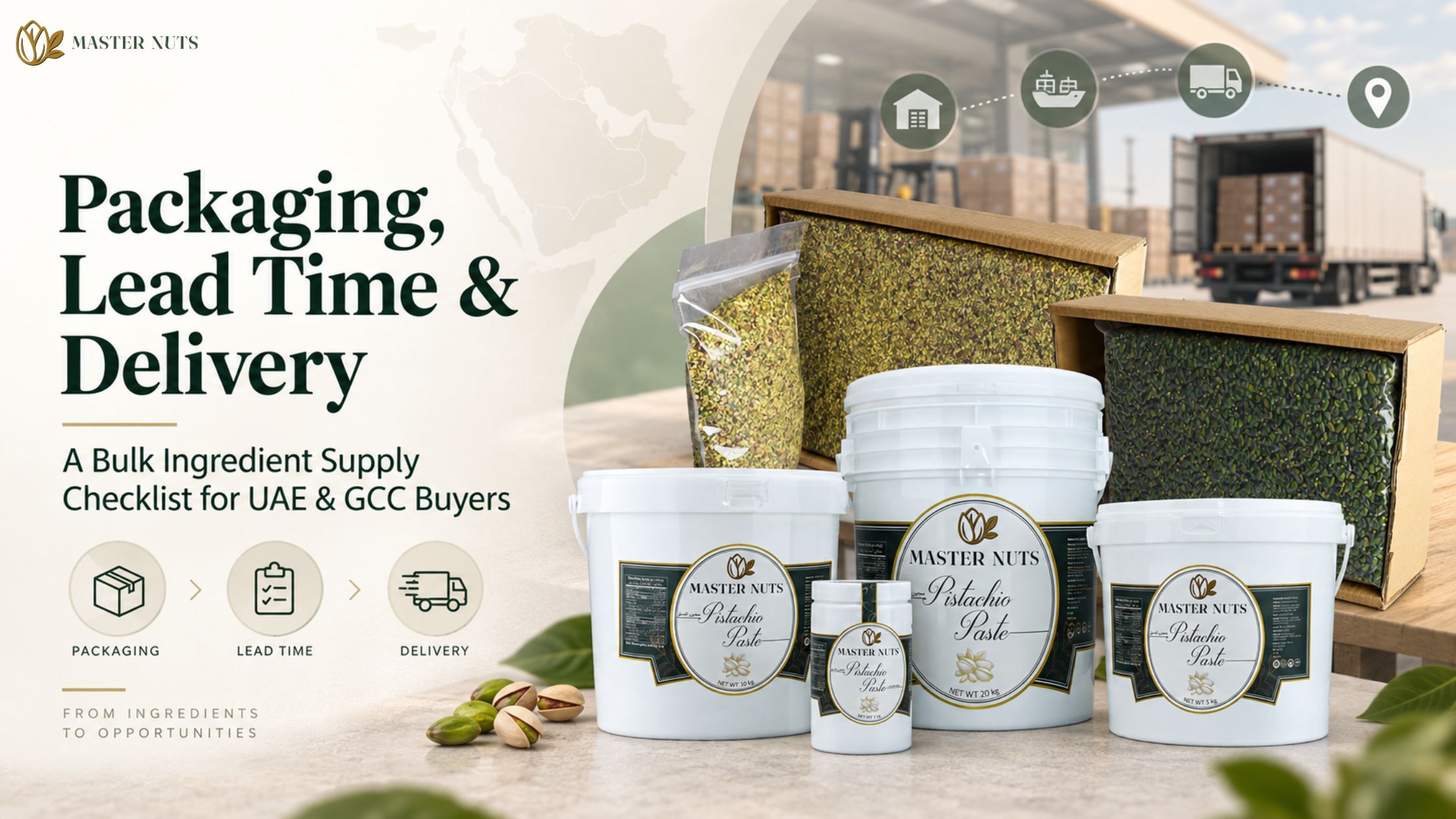
The sales team can confirm current options, sample availability, applicable documents and an estimated delivery plan for the selected product.
Frequently asked questions
Which pistachio ingredient is best for bakery fillings?
Paste and cream are common starting points, but they have different compositions and functions. Powder or diced pieces may also fit a filling that needs fine particles or visible texture. Test the shortlisted format in the actual filling and bake process.
What is the difference between pistachio paste and pistachio cream?
Paste is a ground pistachio product. Pistachio cream is a formulated, ready-to-use sweet component in the current Master Nuts range. Review the ingredient declaration, sweetness, viscosity and intended use for the quoted cream.
When should powder be tested against paste?
Both formats remove large visible pieces, but they behave differently. Compare dispersion, texture, flavor, oil contribution and processing in the actual formula.
Which format works for visible pistachio pieces in chocolate?
Diced pistachios, splits and kernels are relevant starting points. Choose the size and shape through trials that cover distribution, bite, breakage and the intended bar, praline, nougat or coated product.
Can one sample trial approve all future deliveries?
A trial approves a defined product reference against recorded criteria. Later deliveries still need to match the agreed specification and any receiving or batch checks required by the buyer.


Leave a Reply