
A green pistachio garnish on a pale tart has a different job from a kernel mixed into a dark chocolate cluster. The first choice depends heavily on visible color; the second also needs a suitable size and bite. Buying the same kernel for both can leave you paying for a feature that one product barely shows.
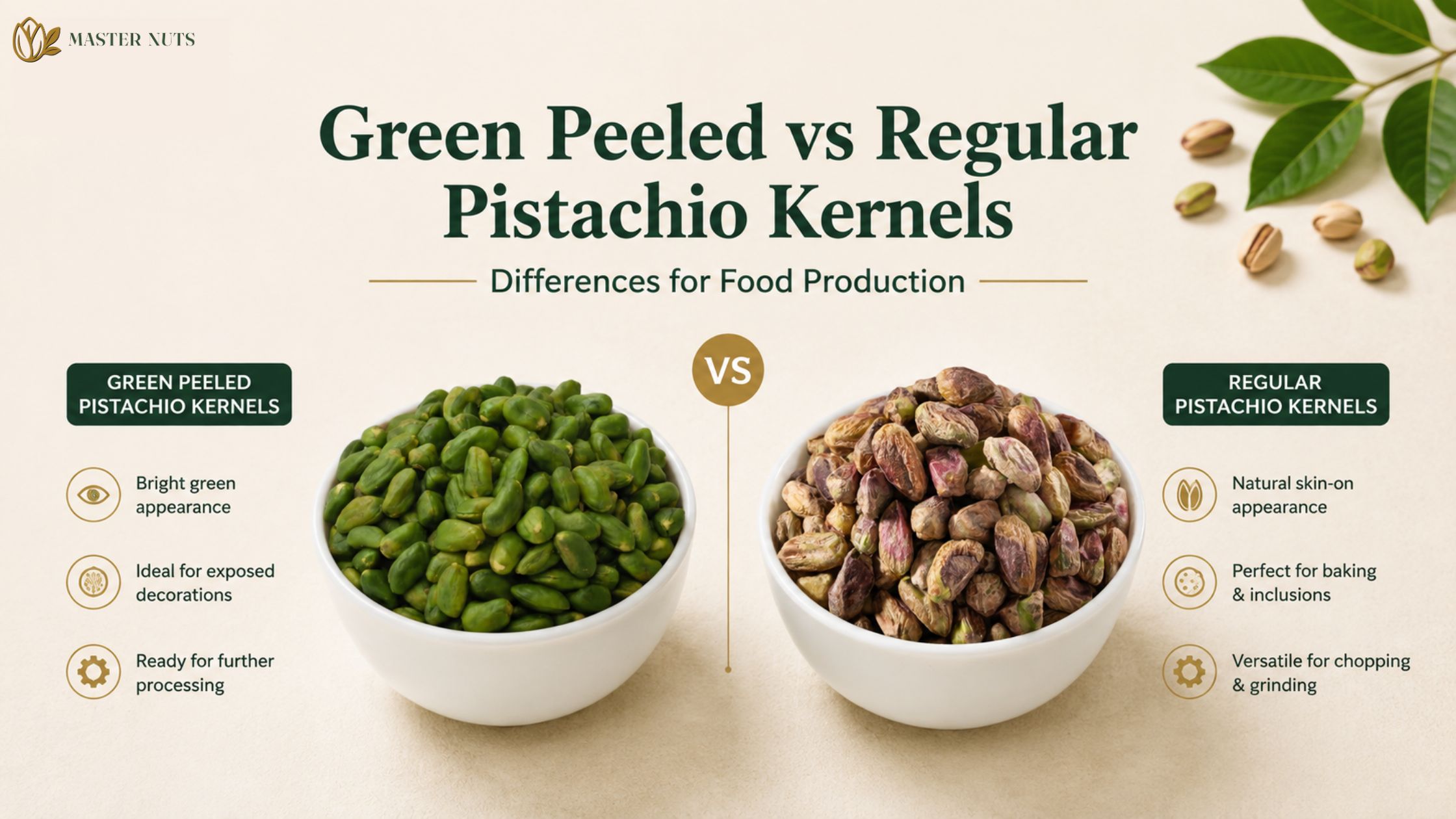
Green peeled kernels have their thin outer skin removed, exposing the kernel surface. Regular kernels are shelled pistachios that retain that skin. Both belong on a food producer’s shortlist. The useful question is how each one behaves in the food you sell.
What changes when the skin comes off?
Shelling removes the hard shell. Peeling removes the thin skin around the kernel. These are separate steps, so a shelled pistachio can still be skin-on.
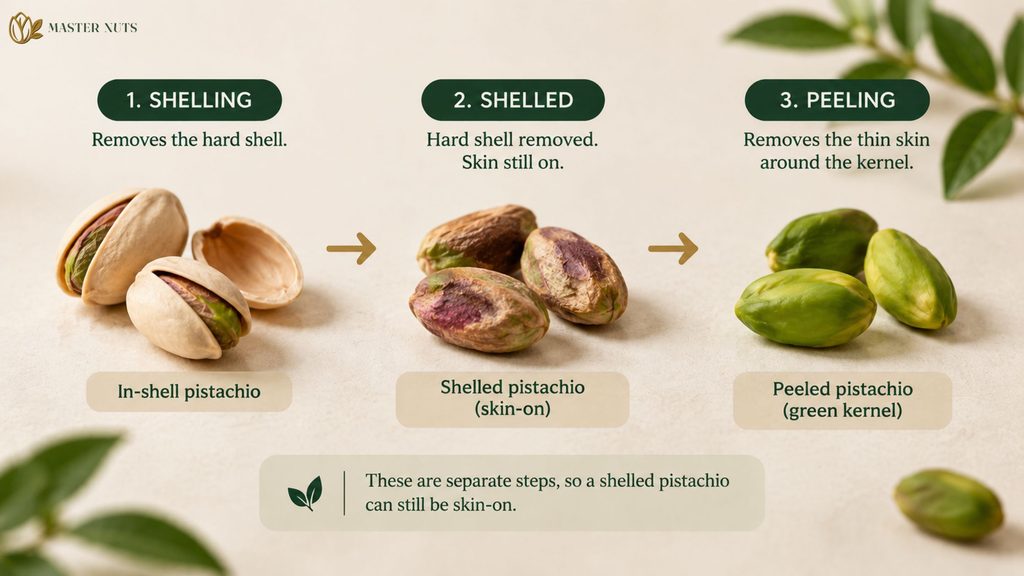
The exposed surface of a peeled kernel gives buyers a clearer view of its green-to-yellow color. Regular kernels combine the underlying kernel color with patches of natural skin. Chopping them exposes more of the interior, while leaving some skin on the pieces.
Peeled kernels also vary in color. Master Nuts lists several green kernel grades, and the separate green pistachio kernel grades guide explains that buying decision. A color grade doesn’t establish flavor intensity, freshness or suitability for every recipe.
| Buying point | Green peeled kernels | Regular skin-on kernels |
|---|---|---|
| Visible surface | Exposed kernel color | Kernel color plus natural skin |
| Decoration brief | Useful when exposed green surfaces are required | Useful when a mixed natural appearance fits the design |
| Further processing | Can be chopped or ground for the intended recipe | Can be chopped or ground with skin retained |
| Approval question | Does the selected color remain useful after processing? | Are skin fragments and finished appearance acceptable? |
Decide how much of the kernel the customer sees
For a pale cake, a white chocolate surface or a plated dessert, exposed green pieces can make the ingredient easy to recognize. Test the shortlisted peeled grade against the actual background: a bowl of kernels and a finished pastry are different viewing conditions.
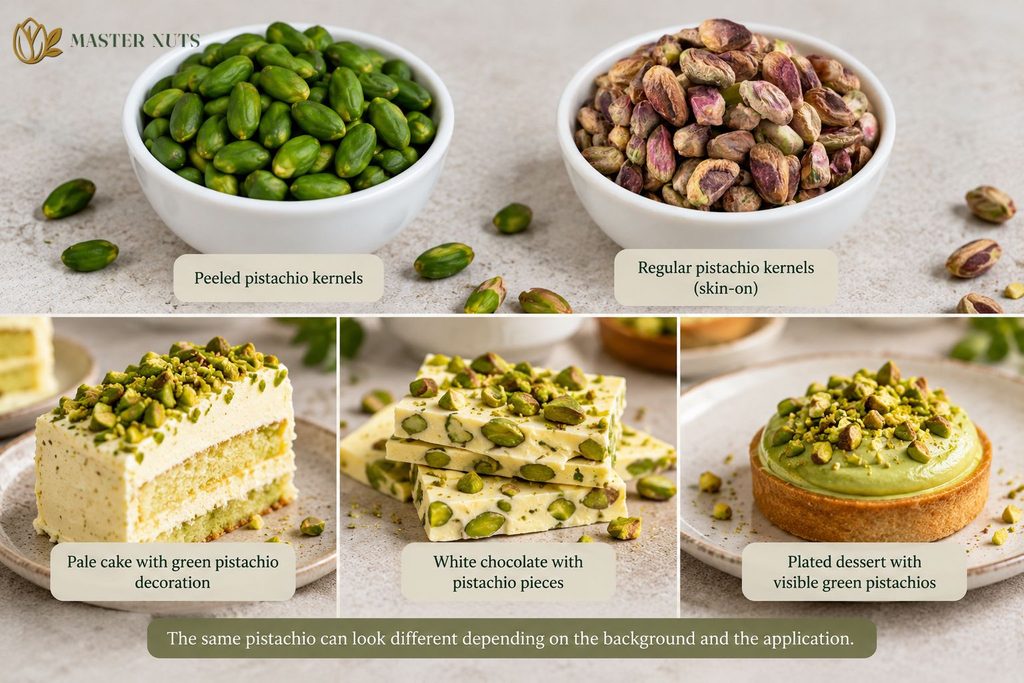
Skin-on kernels deserve a trial in chocolate clusters, cookies and fillings where their appearance fits the product. They can also be a deliberate decorative choice. A mixed skin-and-kernel finish may be exactly what a bakery wants on a rustic loaf or cookie.
For bakery and pastry production, check the stage at which pistachios are added. A garnish applied after cooling avoids the same oven exposure as nuts baked into the dough. Compare the samples at the point of sale, under the light customers will see.
Where the kernel will be ground, evaluate the resulting paste or filling. Skin fragments can remain visible, depending on the grinding process. The finished color also depends on the other ingredients and the amount of pistachio used.
Taste the candidates in the recipe
Peeling status alone doesn’t tell you which sample will taste stronger, sweeter or more roasted. Ask whether the candidates are raw, roasted or otherwise treated, and record those differences before comparing them.
Begin with samples cleared for tasting under your quality procedure. Assess their aroma and flavor using coded portions, then prepare the intended food at the same pistachio use level. Record any bitterness, roasted character or unwanted aftertaste alongside the pistachio flavor.
A pale cream and a cocoa-rich filling can make the same kernel seem very different. When the recipe contains several strong flavors, a purchase decision based only on tasting whole kernels leaves too much unanswered.
Keep color and flavor scores separate. If the greener sample looks better but produces no preferred flavor difference, the team can decide how much that visual result is worth. This also stops an attractive sample from dominating the tasting discussion.
Include the work your factory will do
Buying kernels for further processing brings your own equipment into the decision. Check the usable pieces after chopping, the amount left in the machine and the texture after grinding. Repeat the normal transfer and mixing steps so the trial includes routine handling losses.
If your process requires peeled kernels, buying regular kernels and removing the skin in-house adds work. Cost the labor, equipment, drying where applicable and material loss before selecting that route. Keep the peeling method and any treatment requirements in the production specification.
For purchased peeled kernels, ask how the supplied product is prepared and whether further treatment is needed for your intended use. Peeling and food-safety treatment are separate product attributes. Get the ingredient declaration, allergen information and applicable product documents for the actual item being quoted.
Whole kernels also need a size and breakage brief. A large intact kernel for visible decoration and material destined for grinding have different acceptance points, even when both carry the same color description.
Compare cost against an approved finished result
Request matched quotations covering the product identity, delivery destination and required quantity. Then add the pistachio used in the trial, preparation labor and observed losses to the cost record.
For a decorated tart, record the amount needed to meet the agreed appearance. For a filling, record the use level and output that meet the flavor and texture brief. Comparing both candidates at the same initial dose helps isolate their differences; a later trial can establish the dose needed for approval.
A retained product photograph, a sample code and brief acceptance notes give procurement a usable reference. Keep the approved application attached to that record. A kernel selected for a cookie filling hasn’t automatically been approved for a pale dessert garnish.
Choose samples around your production brief
Use the green peeled kernel page or the regular pistachio kernel page to send Master Nuts your requirements through the inquiry form or WhatsApp. Include the finished product, intended processing and desired appearance, together with expected usage and destination. Ask for suitable sample options and the documents needed for your approval process.
Leave a Reply