
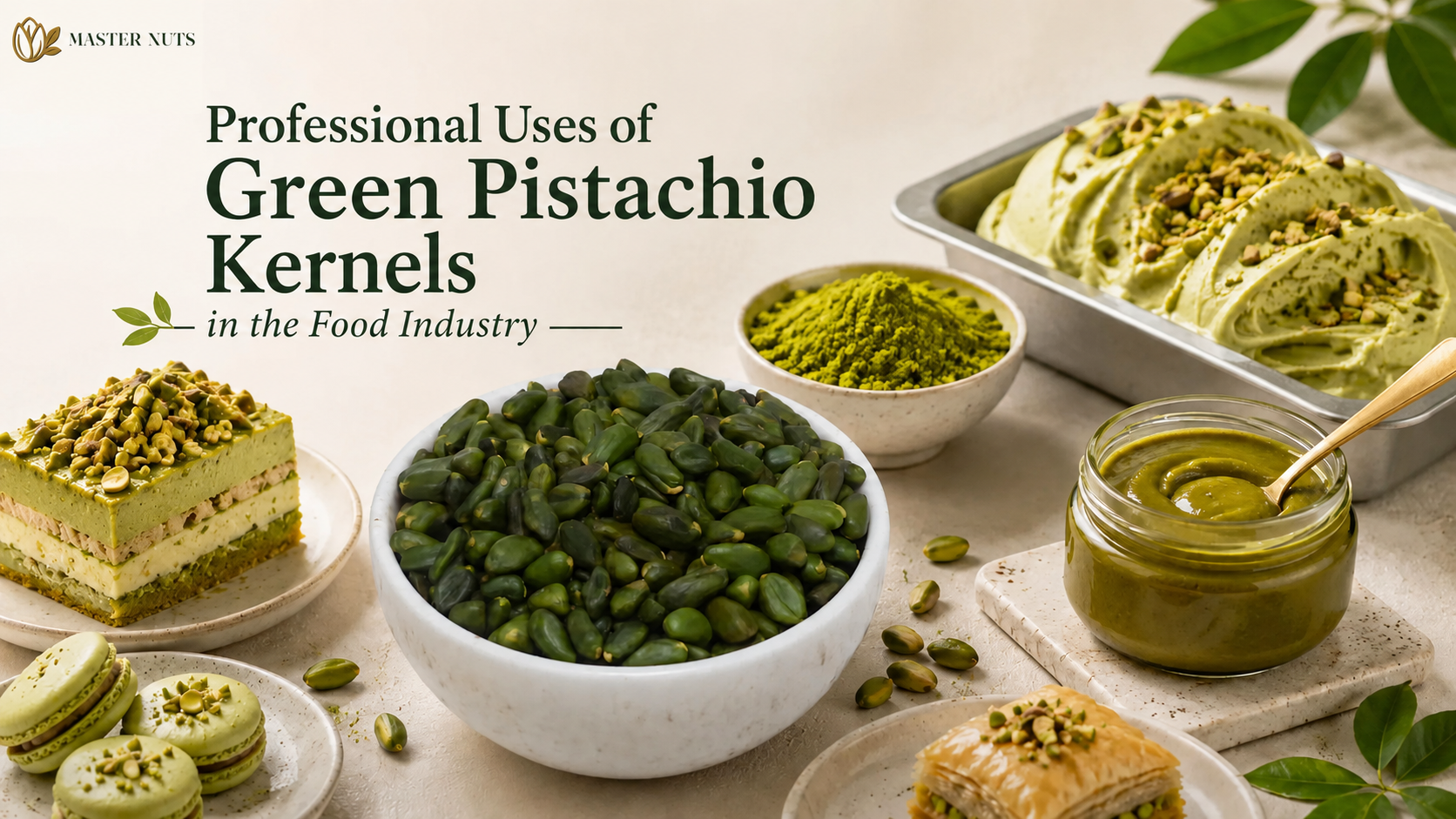
Green pistachio kernels can do several jobs in a commercial food product. They may provide a visible finish, add a defined piece size, create contrast inside a chocolate bar or become the input for a ground ingredient.
The application should guide the purchase brief. Buyers can begin with the point where the customer sees or experiences the pistachio, then work back to the kernel format, color reference and receiving checks.
- Start with the kernel's role
- Application guide by food industry
- Bakery and pastry production
- Chocolate and confectionery
- Gelato and ice cream
- Cafés and dessert shops
- Further processing
- Select format and grade separately
- Build a short production trial
- Questions for a supplier
- Discuss your kernel application
- Frequently asked questions
Start with the kernel’s role
Three roles cover most professional applications:
- Garnish or topping: The kernel remains visible on the finished product. Color, piece shape and breakage have direct commercial impact.
- Inclusion: Whole kernels or cut pieces sit inside dough, chocolate, confectionery or a frozen dessert. Distribution, bite and process handling need a production trial.
- Processing input: Kernels are cut, ground or blended into another ingredient. Buyers should approve the output from the intended process, as well as the incoming kernel.
The same kernel can produce different results across these roles. A reference sample that works on a pastry may behave differently after cutting, baking or frozen storage.
Application guide by food industry
| Industry | Common role | Useful starting formats | Trial focus |
|---|---|---|---|
| Bakery and pastry | topping, filling inclusion, decoration | whole, slivered, diced | appearance after baking, adhesion, breakage |
| Chocolate and confectionery | visible inclusion, cluster, praline or nougat piece | whole, diced, slivered | distribution, bite, coating and finished appearance |
| Gelato and ice cream | topping, swirl inclusion, processed input | whole, diced, slivered or ground | bite at service temperature, display appearance, distribution |
| Cafés and dessert shops | garnish, plated finish, beverage or dessert component | whole, diced, slivered or ground | portion control, service speed, holding conditions |
| Food processors | input for cuts, powder or paste | whole or selected processed format | process yield, output consistency, lot traceability |
This table is a starting brief. The supplied format and its current specification control the purchase decision.
Bakery and pastry production
Bakeries and pastry manufacturers may use green kernels on cakes, laminated pastries, cookies, baklava and other sweets. Whole kernels create a distinct decoration. Slivers cover a wider surface. Diced pieces can support repeatable portioning across a production line.
Run the trial on the actual product. Check whether pieces stay in place, how the surface looks after heat exposure and whether the chosen cut creates excess loose material during handling. A kernel hidden under cocoa, glaze or a dark topping may need a different color brief from an exposed garnish.
Chocolate and confectionery
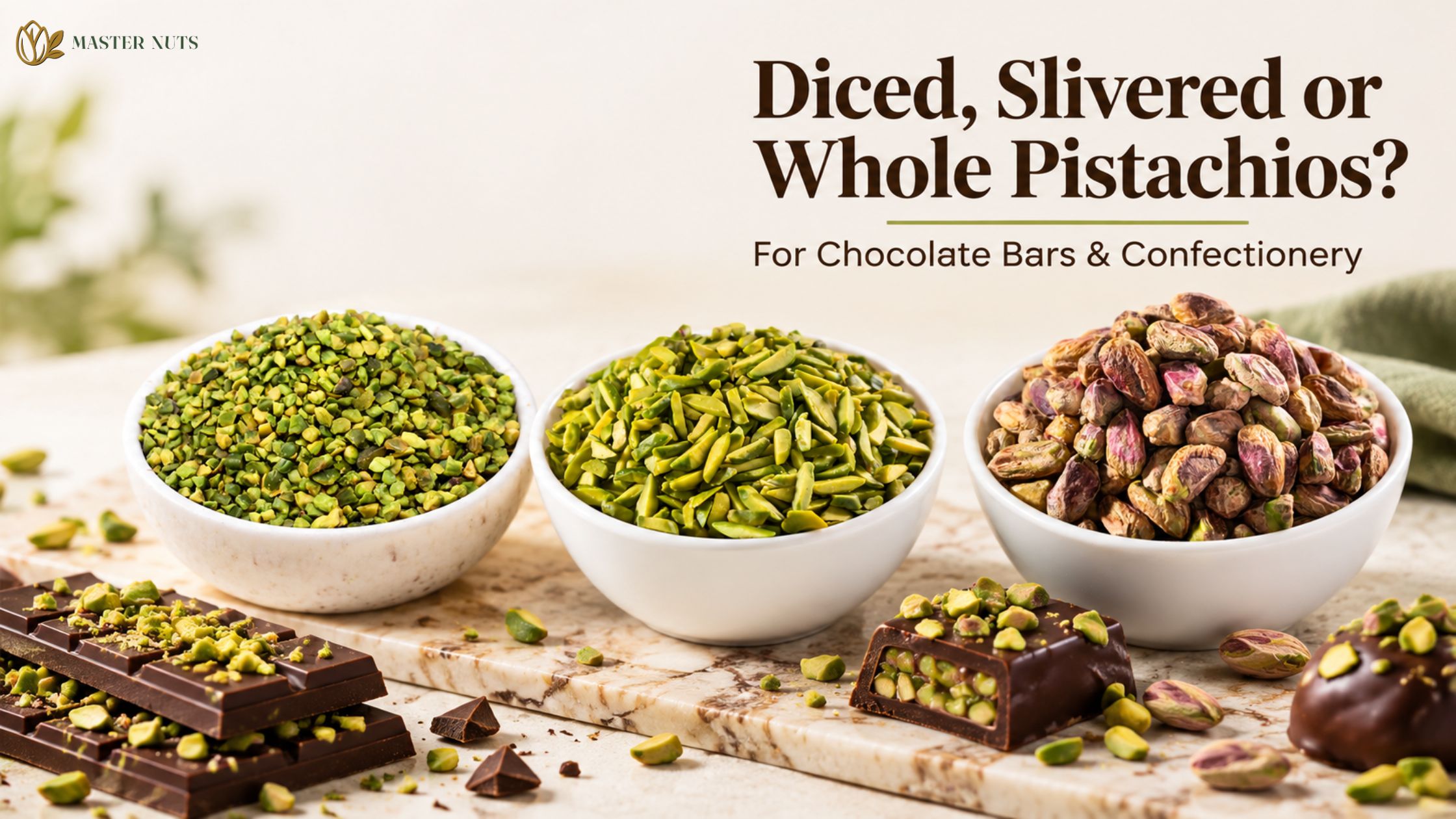
For chocolate and confectionery manufacturers, pistachio can appear in bars, clusters, pralines, truffles and nougat. Light-colored chocolate can make kernel color differences more visible. Dark chocolate changes the visual contrast.
Test the actual piece size in the intended mould, coating or filling. Record distribution, breakage, bite and appearance after the planned storage period. A whole-kernel sample covers that product only; diced or slivered material requires its own approval.
Gelato and ice cream
Gelato and ice cream brands may use kernels as a topping, a visible inclusion or an input for further processing. Toppings should be checked at service temperature because a piece that feels acceptable at room temperature can give a different bite on a frozen product.
Display lighting, portioning and contact with the finished gelato can also change the result. For a ground application, assess the ingredient produced from the kernel and the finished recipe. The raw-kernel grade describes the incoming material only.
Cafés and dessert shops
Cafés and dessert shops often need a format that staff can portion quickly across plated desserts, pastries, shakes or beverages. Diced pieces and slivers can support measured finishing. Whole kernels may suit a more distinct decoration.
The service trial should cover spooning or dispensing, holding time, appearance and waste at the workstation. Check allergen controls and storage instructions within the business’s own food-safety procedure.
Further processing
Food manufacturers may purchase kernels as an input for diced pistachios, slivers, powder or paste. In this case, incoming appearance is one part of approval. Process yield, the condition of the output, flavor and aroma, lot identity and the required safety documents also matter.
Approve the actual processed result. A whole-kernel reference does not automatically approve the powder, cut or paste produced from it.
Select format and grade separately
Format describes the physical form: whole, diced, slivered or ground. Grade names usually describe a supplier’s product grouping, often with color as a visible factor. Grade letters are supplier-specific.
Use the dedicated green pistachio kernel grades guide to set a color reference and incoming check. Avoid assigning one grade to an entire industry. The required selection comes from the finished-product target, current specification and approved sample.
Build a short production trial
Keep the trial comparison controlled:
- Use the same recipe, process settings and batch size.
- Record the supplier, product code, lot and sample date.
- Compare appearance before and after the real process.
- Measure usable yield and record loose pieces or fines where relevant.
- Check flavor, aroma, texture and piece distribution in the finished product.
- Review allergen, traceability, packaging and applicable food-safety documents.
- Retain the approved sample under documented conditions.
The approved record should name the application. Approval for a pastry topping should not be copied to a chocolate inclusion without a relevant trial.
Questions for a supplier
- Which current product code matches the requested format?
- How is the offered grade defined in the current specification?
- Can a physical reference sample be retained for receiving checks?
- Which whole and processed formats are currently available?
- What packaging, storage and lot information applies?
- Which manufacturer certifications and batch documents are available for qualification?
- How will delivery timing be confirmed for the destination?
Detailed product specifications can be reviewed confidentially during a qualified purchase discussion.
Discuss your kernel application
Share the finished product, required format, visibility, process, expected volume and destination with Master Nuts. Use the form at the bottom of the Green Pistachio Kernel page or contact the team through WhatsApp to discuss current options and sample availability.
Frequently asked questions
Which green pistachio kernel format is best for decoration?
Whole kernels create a distinct focal point. Slivers and diced pieces cover more surface and can support measured portioning. Test the format on the real product before approval.
Can one kernel grade cover every application?
Each application has its own color, format and process requirements. Approve the offered grade against the current specification, reference sample and finished-product trial.
Should processors approve the incoming kernel or the final output?
Both records are useful. Incoming approval controls the supplied material, and output approval shows whether it produces the required cut, powder, paste or finished food.



Leave a Reply