
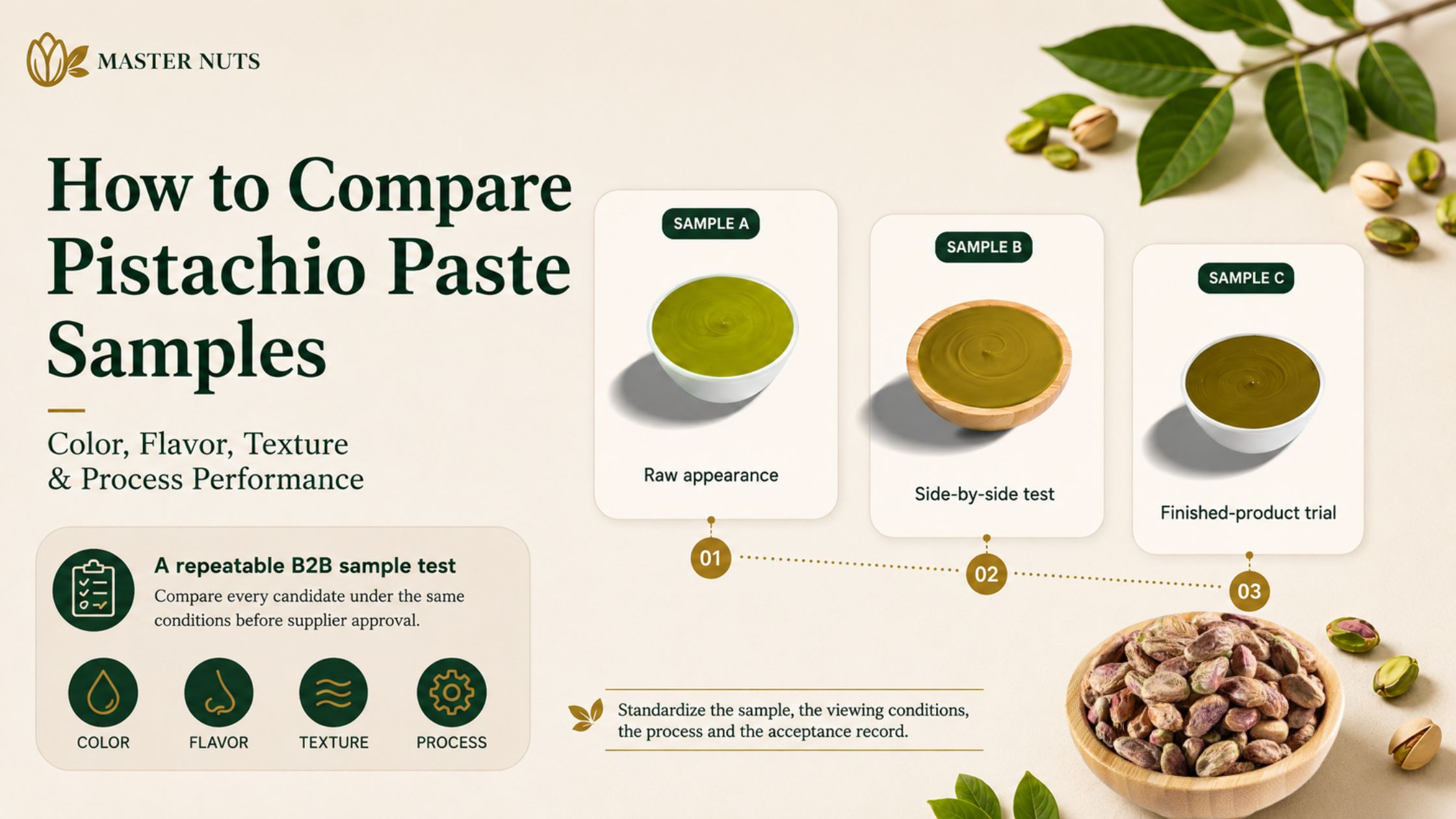
Pistachio paste samples can look close in their containers and produce different results in gelato, chocolate or pastry. A useful comparison joins three views: the raw ingredient, its behavior during production and the finished food.
Write the acceptance brief before the samples arrive. Color, pistachio character, texture, ingredient declaration, process needs and finished-unit cost should come from the product target. A grade name or supplier claim is too loose for approval.
- Keep identity attached to the sample
- Set a fair viewing condition for color
- Taste and aroma need a simple protocol
- Texture has two parts
- The finished-product trial carries the decision
- Check the result again after production day
- Put cost beside performance
- Turn the chosen sample into a receiving reference
- Request paste samples for a controlled comparison
Keep identity attached to the sample
Assign a code to each candidate and record the supplier, manufacturer, product name, product code, lot, date received and storage condition. Photograph the sealed container and label before opening.
Check packaging condition, lot identity and the documents required by the buyer’s quality system. The specification defines the offered product. A batch document, when requested and available, reports the tested lot. Keep those roles separate in the approval record.
If a mandatory document or identity field is missing, hold the sample out of the formal comparison until the gap is closed. R&D can still explore it, but procurement should know that the qualification record is incomplete.
Set a fair viewing condition for color
Color changes with bowl depth, surface shape, temperature, surrounding colors and light. Place equal amounts of paste in matching neutral containers. Let the samples reach the same agreed temperature and view them under one fixed light source.
Compare the paste against a physical target or an approved retained sample. Descriptions such as “green” or “bright” are hard to repeat across people and purchase cycles. A reference gives the team something concrete to accept or reject.
Record raw color first, then repeat the observation in the finished product. Milk, cocoa, sugar, heat and freezing can change what the customer sees.
Taste and aroma need a simple protocol
Screen the raw paste for pistachio aroma, roasted character, bitterness, sweetness where relevant and any foreign note. Use small coded portions and the same serving temperature. Water and a neutral pause between samples help reduce carryover.
Raw tasting has limits. A paste that seems intense on its own may sit differently inside white chocolate or a dairy base. Finish the sensory decision in the real recipe.
Choose a small review panel that understands the product brief. Ask each person to record observations before discussion. Group conversation at the start can pull quieter reviewers toward the first confident opinion.
Texture has two parts
The first part is the paste itself. Look for homogeneity, visible particles, oil separation, flow and spoon or spatula feel. Use the same tool and sample amount for every candidate.
The second part appears during processing. Record ease of weighing, transfer and dispersion. Note material left on the container or equipment when it affects usable yield. If the line uses a pump, depositor or dosing system, test the sample with the relevant equipment before commercial approval.
Avoid turning a casual bench observation into a technical limit. If particle size, viscosity or another physical property controls the process, use the agreed test method and acceptance range in the controlled specification or buyer protocol.
The finished-product trial carries the decision
Matched batches make the candidates comparable. Keep the recipe, batch size, equipment and process settings fixed. Record every adjustment, including a change in use level or mixing order.
For gelato, review dispersion, color, flavor, texture and the result at serving temperature. Chocolate and confectionery teams may focus on mixing, filling behavior, appearance, bite and the result after storage. Bakery trials can include handling before baking, color after heat exposure and the texture of the finished filling, sponge or pastry.
Photograph the same stage for every batch. Use the same camera position and light where visual comparison matters. Keep product photos as supporting records and the physical sample as the receiving reference.
Check the result again after production day
Some differences appear during display, holding or storage. Define the review points from the finished product’s real life and food-safety plan. Then check the same attributes again.
Treat a short bench trial as an observation under stated conditions. Formal shelf-life decisions need the business’s approved study and test program.
Put cost beside performance
Price per kilogram belongs in the worksheet, but procurement also needs the amount used, usable yield, added processing work and finished output. Calculate cost per approved finished unit for each trial.
A higher-priced paste may reach the target at a different use level. Another sample may need formula changes or create more transfer loss. Show those differences on separate worksheet lines.
Turn the chosen sample into a receiving reference
After approval, name the winning product code, specification revision, approved application and any critical acceptance points. Retain a sample under documented conditions when the quality system permits it.
Receiving QC can use that record to check later deliveries for identity, packaging, lot, appearance, aroma and required documents. Set an escalation route for a sample or delivery that falls outside an agreed point.
Approval should stay application-specific. Paste approved in one gelato base may need another trial for a chocolate filling or baked product.
Request paste samples for a controlled comparison
Master Nuts can discuss current pistachio paste options, available product documents and samples for qualified food businesses. Share the finished product, target, process, expected usage and destination. The guides to paste grades and supplier evaluation can support the wider qualification record.

Leave a Reply